

Yoga for sleep and winding down
Most evenings, the body is ready to rest before the mind is. This page gathers the quiet end of the practice on YogaMag: a ten-minute wind-down routine, slow breathing with the exhale a little longer than the inhale, yoga nidra, and a handful of floor poses that ask very little of you. Choose one thing, do it slowly, and stop when you feel settled. These practices may help some people relax, but they are not a treatment for insomnia or any sleep disorder. If sleep is a persistent problem, please talk to a doctor.
Start tonight: sleep wind-down, 10 minutes 10 min · 7 poses · Beginner A ten-minute sequence for the last half hour of the day. Go slowly and stop when you feel settled. Start now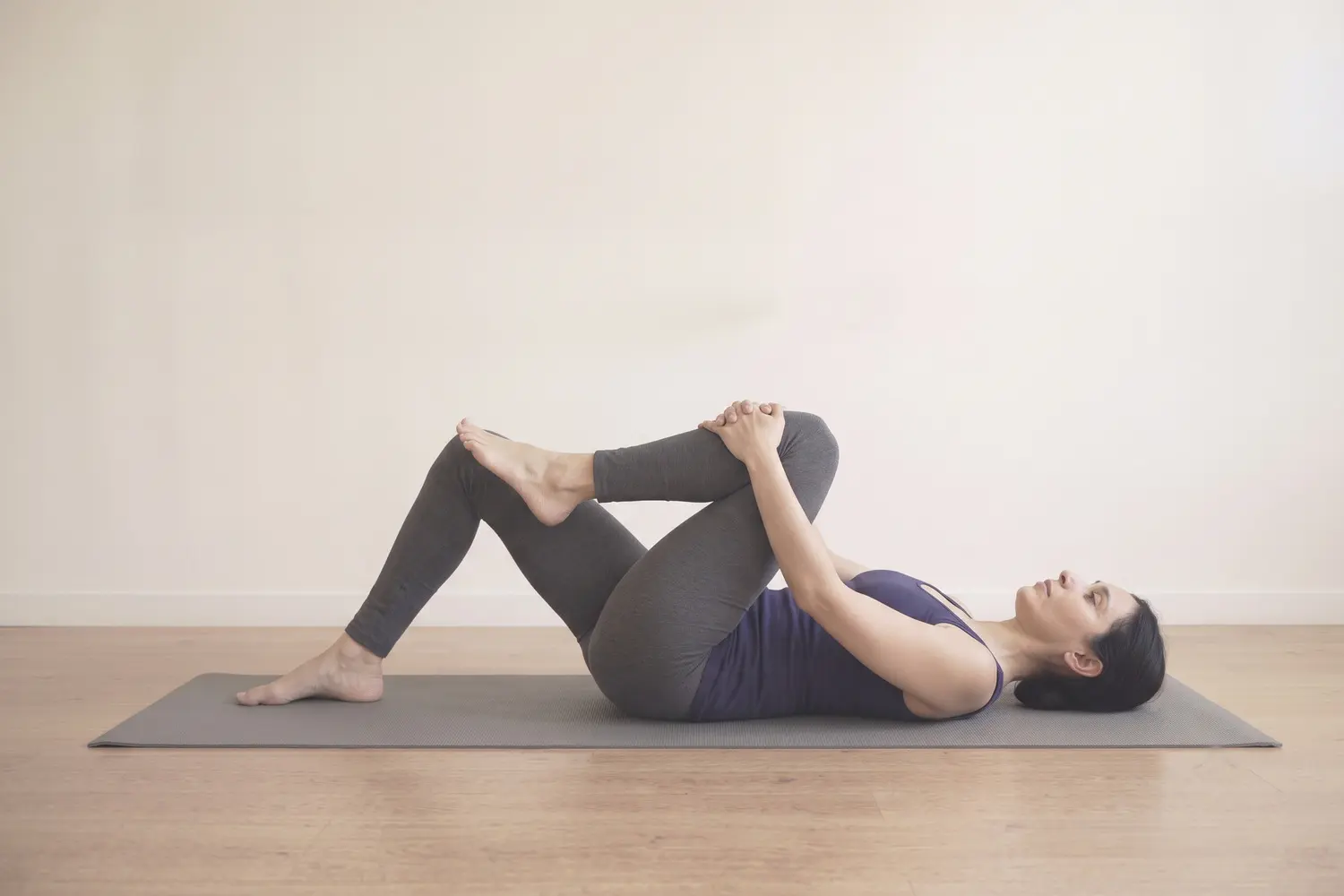
A simple evening plan
- Do the ten-minute wind-down routine above, with the timer and spoken cues. Read its Check first cautions before you start.
- If you like, follow it with three to five minutes of slow breathing, with the out-breath a little longer than the in-breath and no holds.
- Then lie down for a ten-minute yoga nidra recording, or simply rest in Corpse Pose (on your side if you are pregnant).
Keep the lights low and the pace slow, and stop when you feel settled.
Free: a printable for seven quiet evenings
A one-page tick sheet for the plan above, to keep by the bed. Leave your email and we will send the PDF, then an occasional email when we publish something new. Everything on this page is free to read, with or without it.
Evening routines
Short, unhurried sequences for the last half hour of the day. The wind-down routine is at the top of this page; the seated one below is done in a chair.
10-Minute Seated Relaxation Routine
10 min · 9 poses · Beginner
Slow breathing and gentle seated movement for the neck, shoulders and spine, ending with a humming breath and a seated body scan. Everything is done in a chair, so no floor is needed.
Open routine and timer
- Yoga for better sleep: 7 poses before bed An article on seven gentle poses to do before bed.
- Poses and breathing techniques to wind down An article that pairs gentle poses with slow breathing, with a printable sequence.
- All routines All our timed routines, 5 to 20 minutes, with a voice that calls out each pose.
Slow breathing for the evening
Breathing with a slightly longer exhale is a traditional way to slow down, and may help some people relax. Keep it gentle and never strain.
Some patterns here include breath holds (4-7-8, box, challenge days 4 to 6). Skip holds if you are pregnant or have a heart or lung condition, high blood pressure or epilepsy, and ask your doctor first if unsure. Stop if you feel dizzy.
Before you begin
Stop and return to normal breathing if you feel dizzy, tingly or anxious. The 4-7-8 and box patterns include holds; the 7-day challenge has hold days (days 4 to 6).
- 4-7-8 breathing Breathe in for 4, hold for 7, out for 8, for four rounds. Includes a long hold.
- Box breath vs 4-7-8 How equal-count box breathing differs from 4-7-8, and when to use each. Both include holds.
- Bee breath Bhramari: a soft hum on a slow out-breath, for 5 to 10 rounds.
- Three-part breath Fill the belly, ribs and chest, then empty slowly, for 3 to 5 minutes lying down or seated.
- Ocean breath Ujjayi: breathe through the nose with a soft sound at the back of the throat.
- Pranayama ratio calculator Work out counts for the in-breath, hold and out-breath. It includes a hold, so skip that part if the caution above applies to you.
- Free 7-day breathing challenge One guided breathing timer a day for seven days, 1 to 5 minutes. Days 4 to 6 include holds.
- Breathing hub Breathing techniques picked by goal, with step-by-step counts, safety notes and free timers. Some include holds.
Yoga nidra and deep rest
Yoga nidra is a guided, lying-down practice. Press play on a recorded practice of 10, 20 or 30 minutes, or read the script aloud.
- Yoga nidra guide What yoga nidra is, how to set up, and how long to practise.
- Guided yoga nidra: 10, 20 and 30 minutes (audio and script) Three guided practices with free audio, 10, 20 and 30 minutes, or read the scripts aloud.
- Yoga Nidra by Swami Satyananda Saraswati: book summary Our summary of Swami Satyananda Saraswati's book on the practice.
- Corpse pose Lying still on your back, with props for comfort and a side-lying version for pregnancy.
- Constructive rest Resting on your back with knees bent and feet flat on the floor.
Gentle poses for bedtime
Floor poses held for a few slow breaths each. Use cushions or a folded blanket, and skip anything that does not feel comfortable.
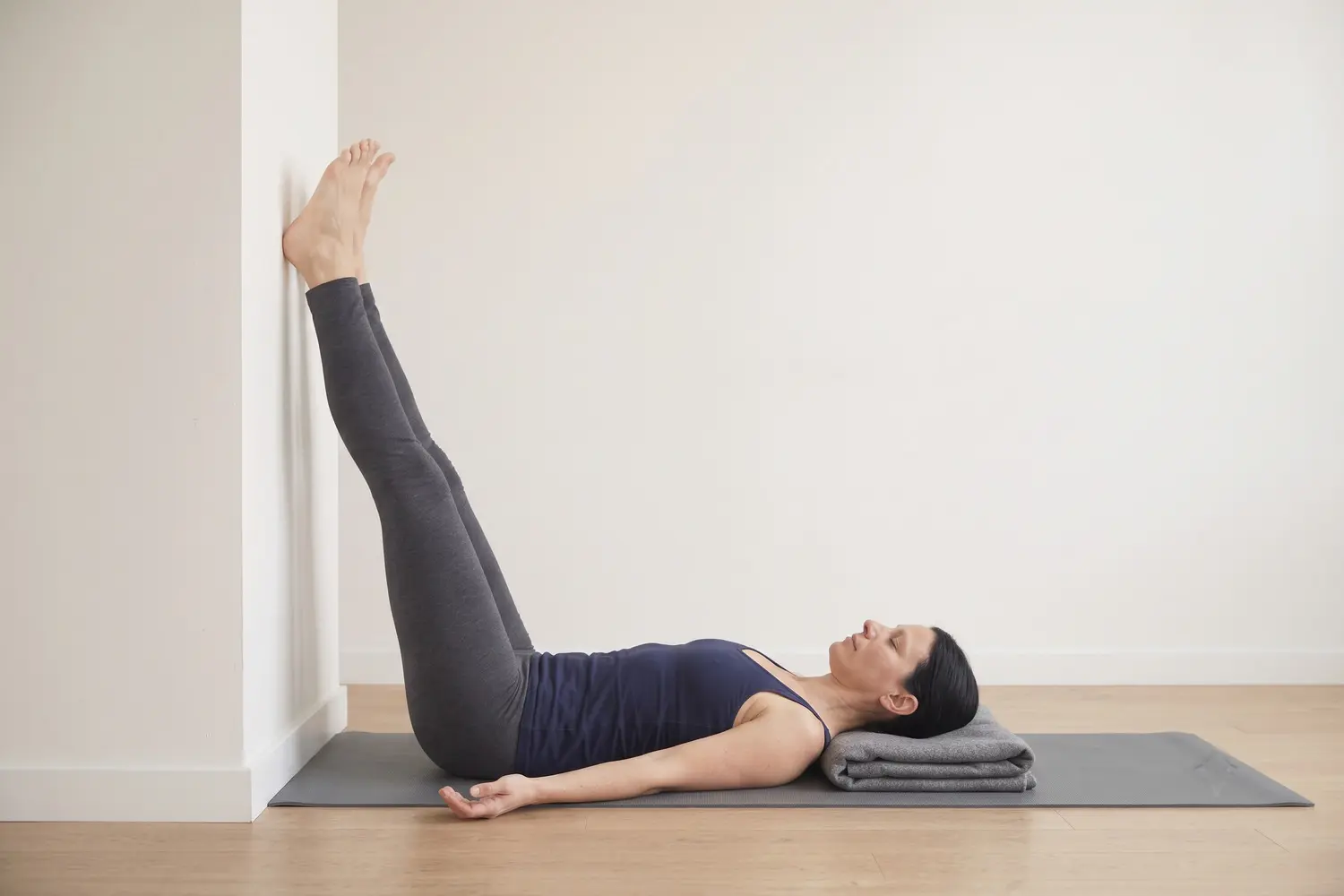
Legs up the wall: ask your doctor first if you have glaucoma, uncontrolled high blood pressure or are pregnant. Pregnant, or have glaucoma or uncontrolled high blood pressure? Read Before you begin first.
Before you begin
In pregnancy, avoid long spells lying flat on your back, and skip happy baby, reclined twist and wind-relieving pose unless a prenatal teacher says otherwise. Go easy on knees and hips in child's pose and bound angle.
- Legs up the wall Legs resting up a wall, with a chair version. Check with a doctor first if you have glaucoma, uncontrolled high blood pressure or are pregnant.
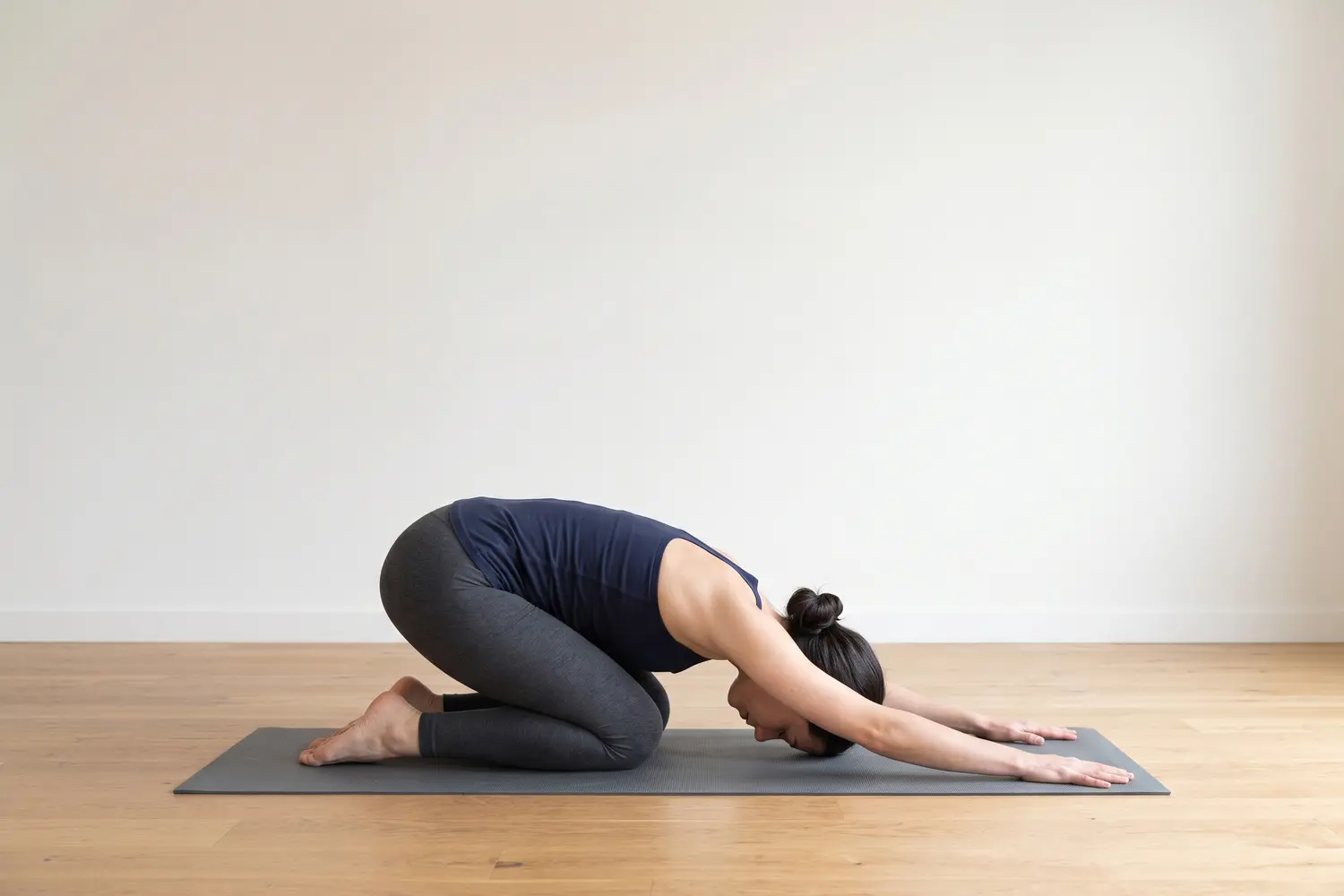
- Child's pose A kneeling forward rest, with props for tight hips or sore knees.
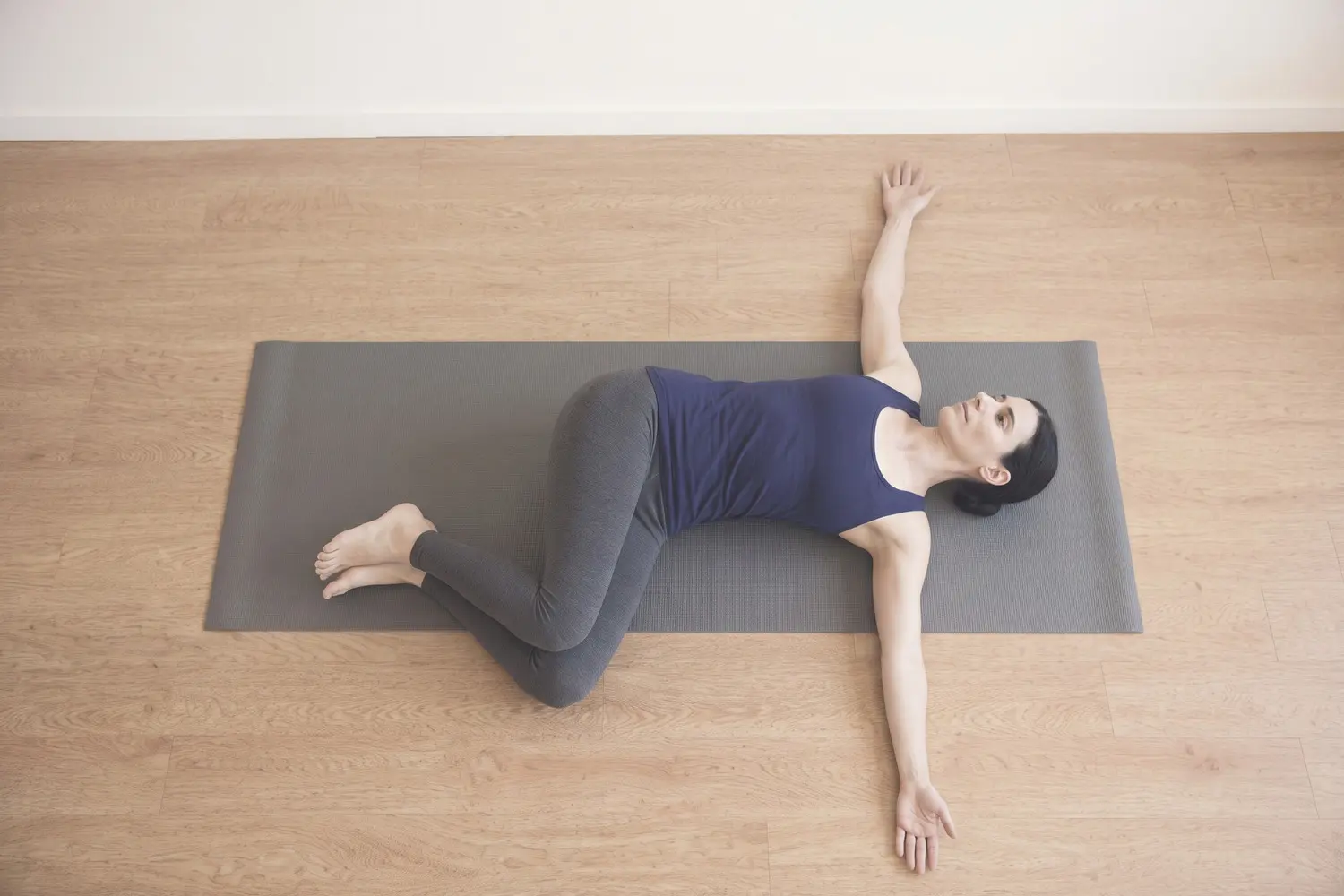
- Reclined twist A gentle twist lying down, one side and then the other.
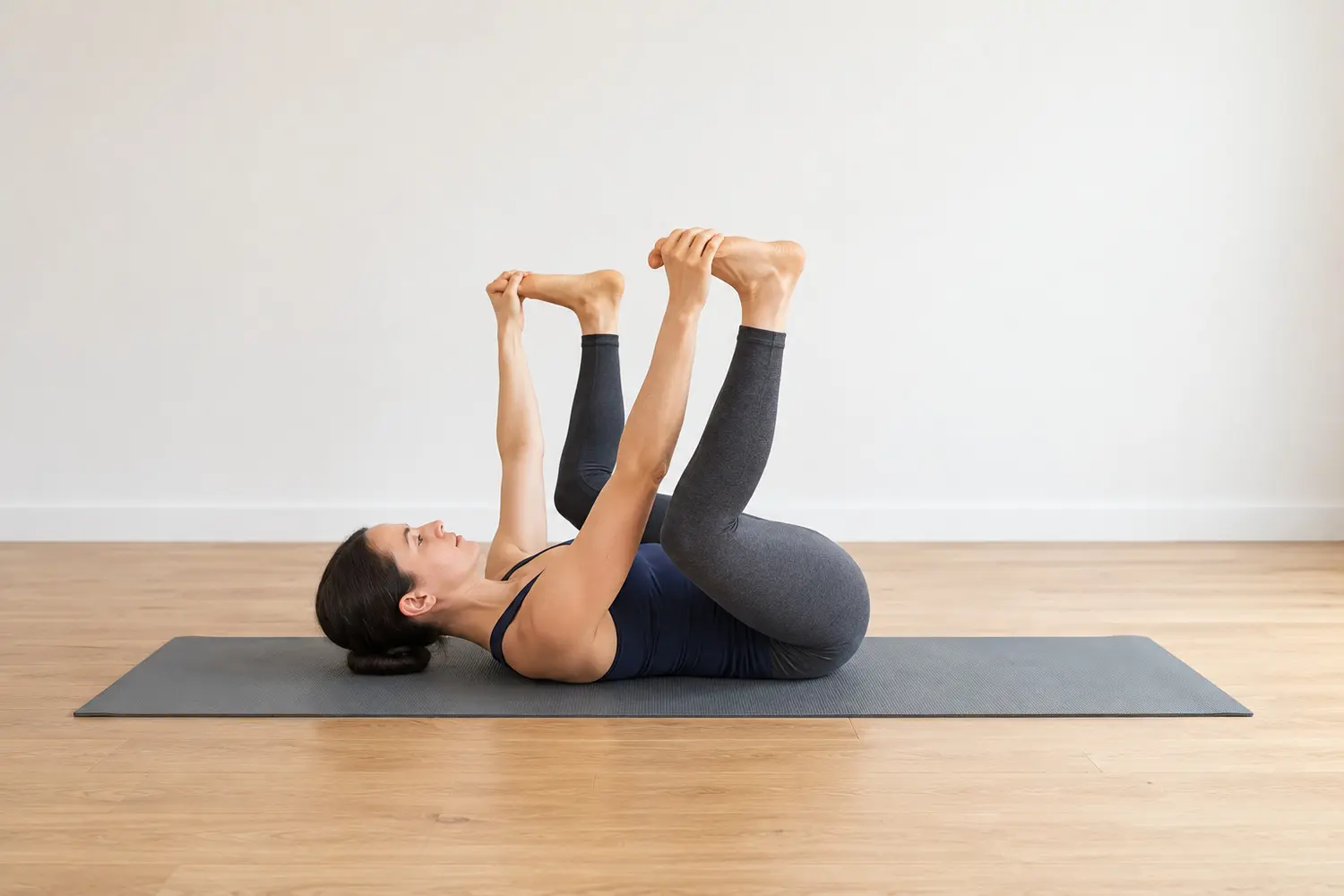
- Happy baby On your back holding your feet, with an easier one-leg version.
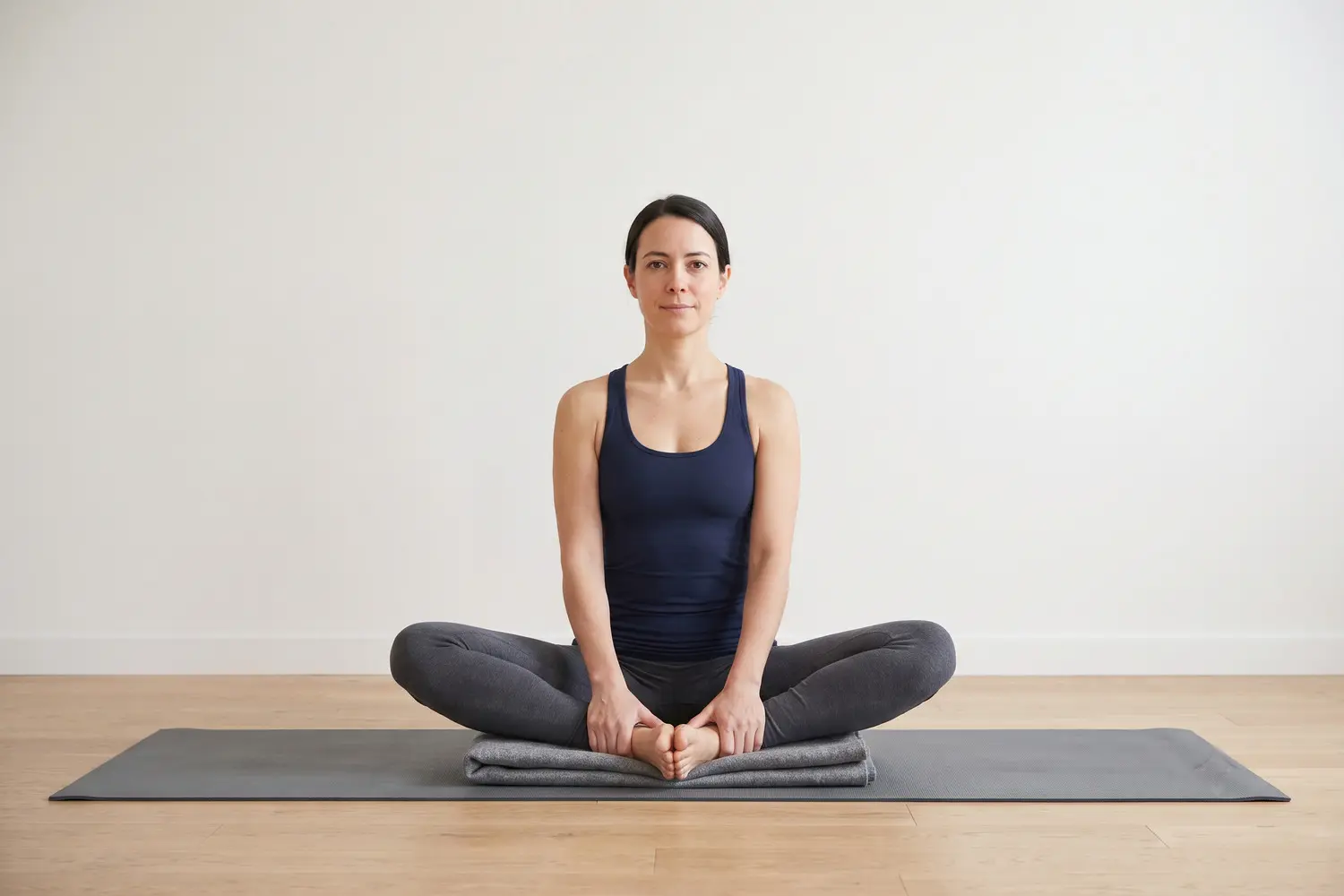
- Bound angle Soles of the feet together, knees out, with blocks under the knees if needed.
- Wind-relieving pose Hugging one or both knees to your chest.
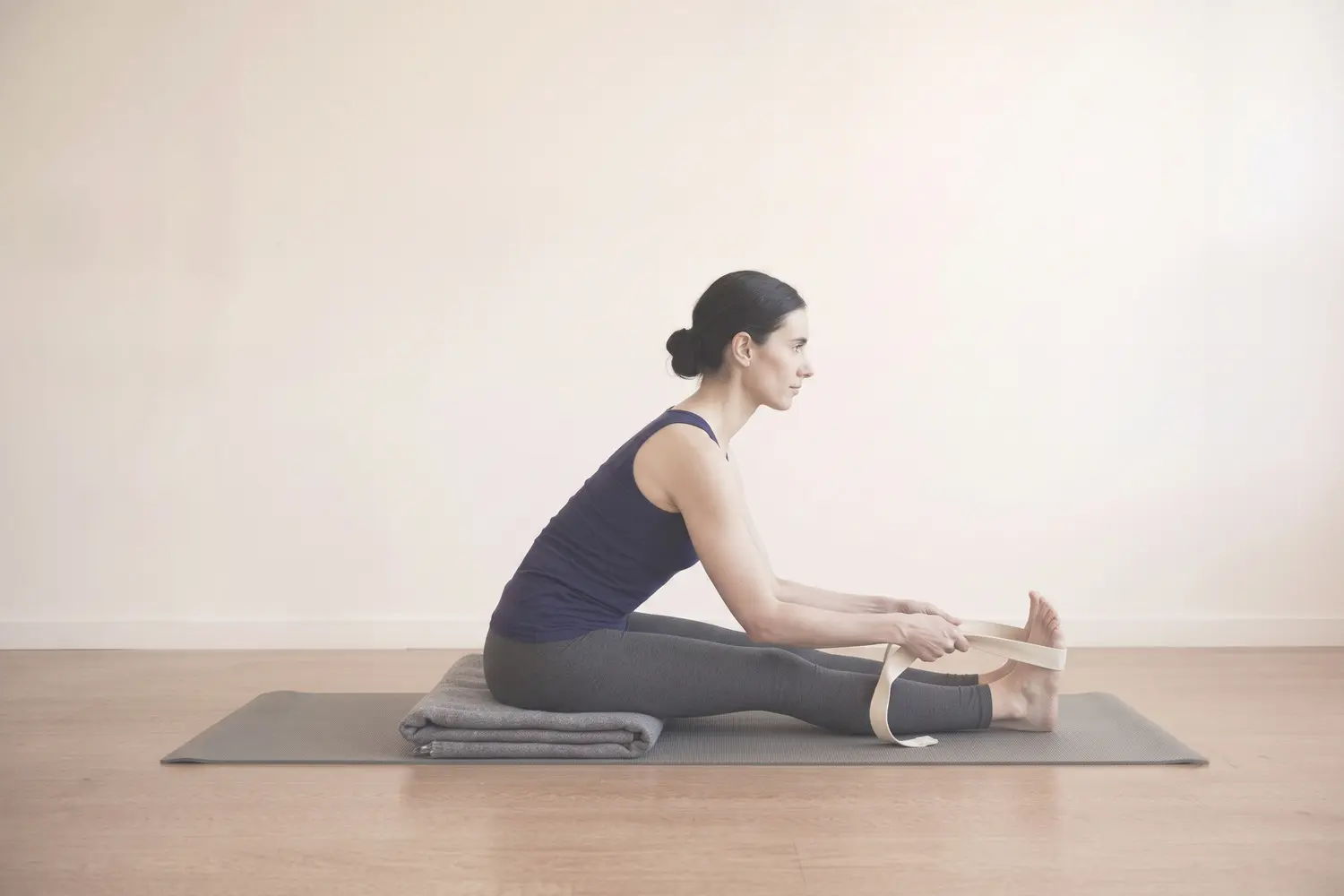
- Seated forward fold Folding forward with bent knees and a strap. Skip it with osteoporosis or a disc problem.
- Restorative sequence Supported, restful poses held for several minutes each. A short glossary entry; no full sequence yet.
Slower styles and a quieter mind
If evenings feel busy in your head, these pages cover the slower styles and a simple meditation start.
- Restorative yoga A few poses, fully supported by bolsters and blankets, held for several minutes.
- Yin yoga A slow style with floor postures held for several minutes. It is a stretch, not a rest, so go gently and come out if anything pinches.
- Yin vs restorative yoga How the two slow styles differ in props, hold times and intent.
- Yoga for stress relief: poses to calm your mind An article on poses and tips for a busy mind.
- Introduction to meditation for beginners Simple techniques to start a meditation practice.
- Meditation hub Guided yoga nidra audio, breathing timers and beginner guides in one place.
Questions
Can yoga help me sleep?
Some people find a slow evening practice may help them relax before bed. It is not a treatment for insomnia or any sleep disorder, and results vary. If you have trouble sleeping for more than a few weeks, or you snore loudly, stop breathing in your sleep or feel very sleepy by day, please see a doctor.
When should I practise, and for how long?
Ten minutes, a little before bed, is plenty. Keep the lights low and the pace slow. Finish at least a few minutes before you want to be asleep.
Is yoga nidra the same as sleeping?
No. It is a guided practice done lying down, with the body at rest and attention moving gently. Some people drift off during it. That is fine, but it is not the aim.
Which breathing practice is best at night?
There is no single best one. Many people start with a gentle, even breath and a slightly longer exhale. Avoid breath holds if you are pregnant or have a heart or lung condition. Stop if you feel dizzy or strained, and return to normal breathing.
Do I need a mat?
No. A bed edge, a rug or a folded blanket works. Comfort matters more than equipment.
This page is for general relaxation and education. It is not medical advice and not a treatment for insomnia, sleep apnoea or any sleep disorder. If you are pregnant, have a health condition, or have trouble sleeping, check with a doctor before starting breathwork or new poses, and stop if anything hurts.