

Yoga for Stress Relief: Best Poses to Calm Your Mind

Stress has become an unavoidable part of modern life. From demanding jobs to family responsibilities, digital overload, and uncertain futures, almost everyone struggles with mental pressure at some point. While short-term stress can sometimes boost productivity, long-term stress harms both mental and physical health. That’s where yoga steps in — not just as a form of exercise but as a complete mind-body practice to manage stress naturally.
In this article, we’ll explore how yoga relieves stress, the best yoga poses for stress relief, and practical tips to make yoga part of your daily lifestyle for long-term peace and balance.
Why Yoga is Effective for Stress Relief
Yoga isn’t just about flexibility and physical fitness — it’s a holistic practice that connects the body, breath, and mind. Stress activates the sympathetic nervous system (the “fight or flight” mode), increasing cortisol levels and leaving you restless.
Through deep breathing, mindful movements, and meditation, yoga activates the parasympathetic nervous system (the “rest and digest” mode). This lowers heart rate, reduces blood pressure, and calms the nervous system.
Here are a few science-backed benefits of yoga for stress:
- Lowers cortisol levels (stress hormone)
- Improves sleep quality
- Boosts mood and mental clarity
- Increases mindfulness to stay present instead of worrying
- Releases physical tension from stiff muscles caused by stress
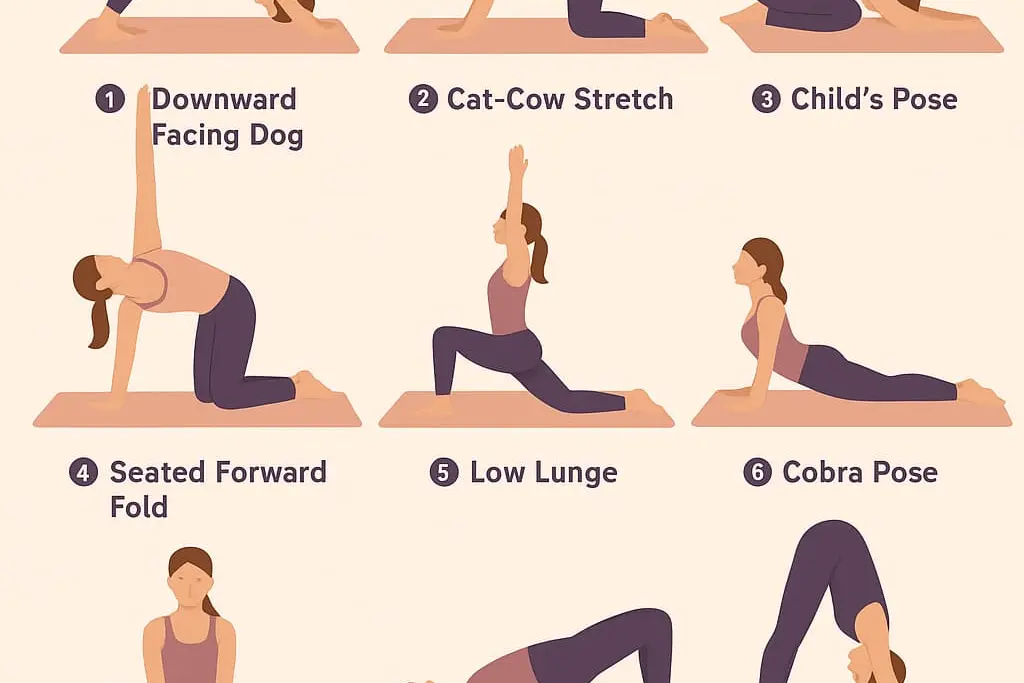
Best Yoga Poses for Stress Relief
Let’s dive into some of the most effective yoga poses that calm the mind and reduce stress. These are beginner-friendly, require minimal space, and can be practiced daily.
1. Child’s Pose (Balasana)
Why it works: This gentle resting pose calms the nervous system, relaxes the spine, and relieves tension in the lower back, shoulders, and neck.
How to do it:
- Kneel on the floor, sit back on your heels.
- Bend forward and stretch your arms in front of you.
- Rest your forehead on the mat and breathe deeply.
- Stay for 1–3 minutes.
👉 Perfect for instant relaxation after a stressful day.
2. Cat-Cow Pose (Marjaryasana-Bitilasana)
Why it works: This flowing movement between arching and rounding the spine improves circulation, eases tension in the back, and promotes mindful breathing.
How to do it:
- Start on hands and knees, with wrists under shoulders and knees under hips.
- Inhale, arch your back (Cow), lifting your chest and tailbone.
- Exhale, round your back (Cat), tucking your chin and tailbone.
- Repeat for 1–2 minutes with slow breathing.
👉 A great way to release stress stored in the spine.
3. Standing Forward Bend (Uttanasana)
Why it works: Inversions increase blood flow to the brain, helping calm the mind and reduce anxiety. This pose also stretches hamstrings and relieves back tension.
How to do it:
- Stand tall, inhale, then exhale and fold forward from the hips.
- Let your arms dangle or hold opposite elbows.
- Keep knees slightly bent if needed.
- Stay for 30–60 seconds.
👉 Excellent for calming racing thoughts.
4. Legs Up the Wall Pose (Viparita Karani)
Why it works: This restorative inversion reduces fatigue, improves circulation, and activates relaxation. It’s known as one of the best yoga poses for stress and insomnia.
How to do it:
- Sit sideways against a wall.
- Lie down and swing your legs up the wall.
- Keep your arms relaxed by your sides.
- Close your eyes, breathe deeply, and stay for 5–10 minutes.
👉 Ideal before bedtime to unwind.
5. Seated Forward Bend (Paschimottanasana)
Why it works: This pose stretches the entire backside of the body while encouraging inward focus and stillness. It reduces anxiety and promotes calmness.
How to do it:
- Sit with legs stretched out in front.
- Inhale, lengthen your spine.
- Exhale, fold forward, reaching toward your feet.
- Hold for 1–2 minutes.
👉 Helps let go of mental chatter.
6. Bridge Pose (Setu Bandhasana)
Why it works: This heart-opening pose reduces fatigue, opens the chest, and improves circulation. It also balances the nervous system.
How to do it:
- Lie on your back, bend knees, and place feet hip-width apart.
- Press into your feet, lifting your hips upward.
- Keep shoulders grounded.
- Hold for 30–60 seconds.
👉 A natural stress reliever for both body and mind.
7. Corpse Pose (Savasana)
Why it works: The ultimate relaxation pose that helps the body absorb benefits of the practice. It’s deeply restorative and relieves tension.
How to do it:
- Lie flat on your back, arms by your sides.
- Close your eyes, relax your body, and focus on breathing.
- Stay for 5–10 minutes.
👉 Essential to complete any yoga practice for stress relief.
Breathing Techniques for Stress Relief
Yoga isn’t complete without pranayama (breathing exercises), which are powerful tools to calm the nervous system.
1. Deep Belly Breathing
Sit comfortably, place one hand on your belly, inhale deeply so your belly rises, then exhale slowly. Repeat for 5 minutes.
2. Alternate Nostril Breathing (Nadi Shodhana)
Balances left and right brain, reduces anxiety, and increases focus.
3. Box Breathing (4-4-4-4)
Inhale for 4 counts, hold for 4, exhale for 4, hold for 4. Great for quick stress resets.
Tips to Build a Daily Yoga Routine for Stress Relief
- Start small: 10–15 minutes daily is better than an hour once a week.
- Practice in the morning or evening: Both are great times to reset your mind.
- Create a calming space: Use a mat, candles, or soft music to set the mood.
- Stay consistent: Stress relief comes with regular practice.
- Combine yoga with meditation: Even 5 minutes of mindfulness adds deep benefits.
Lifestyle Benefits of Yoga for Stress Management
Yoga is more than just poses — it’s a way of living. Incorporating yoga into your lifestyle brings long-term benefits:
- Better emotional balance → You respond, not react, to stressful situations.
- Improved sleep quality → Stress-related insomnia reduces with regular yoga.
- Healthy habits → Yoga naturally motivates better eating and self-care.
- Enhanced productivity → A calm mind leads to sharper focus.
- Stronger resilience → Life’s challenges feel lighter when your mind is steady.
FAQs on Yoga for Stress Relief
1. How long should I practice yoga for stress relief?
Even 15–20 minutes daily can significantly reduce stress levels.
2. Do I need to be flexible to start yoga?
No. Yoga is for everyone, and flexibility improves over time.
3. Can yoga replace meditation for stress relief?
Yoga and meditation complement each other. Practicing both is most effective.
4. What’s the best time for yoga for stress relief?
Morning energizes your day, evening helps release daily stress.
5. Is yoga scientifically proven to reduce stress?
Yes, studies show yoga reduces cortisol, improves heart health, and enhances mental well-being.
Final Thoughts
Stress is a reality we all face, but it doesn’t have to control your life. Through simple yet powerful yoga poses like Child’s Pose, Legs Up the Wall, and Savasana, combined with mindful breathing, you can build a daily practice that restores calm, focus, and balance.
The beauty of yoga lies in its accessibility — whether you’re a busy professional, a student, or a homemaker, you can start anytime, anywhere.
Make yoga not just a practice, but a lifestyle choice, and you’ll discover that managing stress becomes effortless.

Download the infographic
Want new practices by email?
We email now and then when we publish a new routine, practice or guide. No spam, unsubscribe any time.
Join the YogaMag newsletterFrequently Asked Questions
Popular posts
Related posts




No comments yet. Be the first to comment!