

Meditation for beginners
Meditation is the practice of resting your attention on one thing, such as your breath, a voice or your body, and coming back to it each time your mind wanders. The wandering is normal. Noticing it and coming back is the practice. Start with a few minutes.
Meditating in the evening? Our sleep and winding-down guide brings together yoga nidra, slow breathing and gentle floor poses, with safety notes.
Start here
Guided yoga nidra: 10, 20 and 30 minutes
Press play, lie down and follow along. Each practice has a recording with timed pauses and the full script.
Yoga nidra for beginners
What yoga nidra is, how to set up, and what the research does and doesn't show.
Breathing exercises with timers
Ten breathing techniques explained simply, with paced timers for square (box) breathing and more.
Hand positions for sitting practice
A mudra is a hand position used in Indian meditation and breathing traditions. Several of the nine below belong to a modern system of finger mudras taught in books and classes, and the effects often claimed for them have not been shown in good-quality research. Treat them as a way to hold your hands, not a treatment. Keep the touch light, and release at once if your fingers ache, tingle or go numb. Books differ on some of the forms (Prithvi and Surya in particular), so follow your own teacher's version. Each has a page with steps and sources, and all of our mudras are listed together.
- Gyan Mudra: the tip of the index finger touches the tip of the thumb and the other fingers stay extended.
- Chin Mudra: the same thumb-and-index touch with the palms facing up on the knees. Gyan Mudra vs Chin Mudra explains the palm-down and palm-up convention, and why teachers use the two names differently.
- Prana Mudra: the ring and little fingertips touch the thumb tip while the index and middle fingers stay extended.
- Prithvi Mudra: the ring fingertip touches the thumb tip and the other three fingers stay extended.
- Shuni Mudra: the middle fingertip touches the thumb tip and the other three fingers stay extended.
- Varuna Mudra: the little fingertip touches the thumb tip and the other three fingers stay extended.
- Surya Mudra: the ring finger folds to the base of the thumb and the thumb rests over it.
- Vayu Mudra: the index finger folds to the base of the thumb and the thumb rests over it.
All meditation articles
-
 Foundational Yoga: Top 50 Yoga Poses Everyone Should Know
Yoga has been a cornerstone of holistic health for thousands of years, offering physical, mental, and spiritual benefits. Whether you're a b...
-
 Yoga for Better Sleep: 7 Poses Before Bed
Sleep is the foundation of health. Yet in today’s fast-paced world, many people struggle with insomnia, restless nights, or poor-quality sle...
-
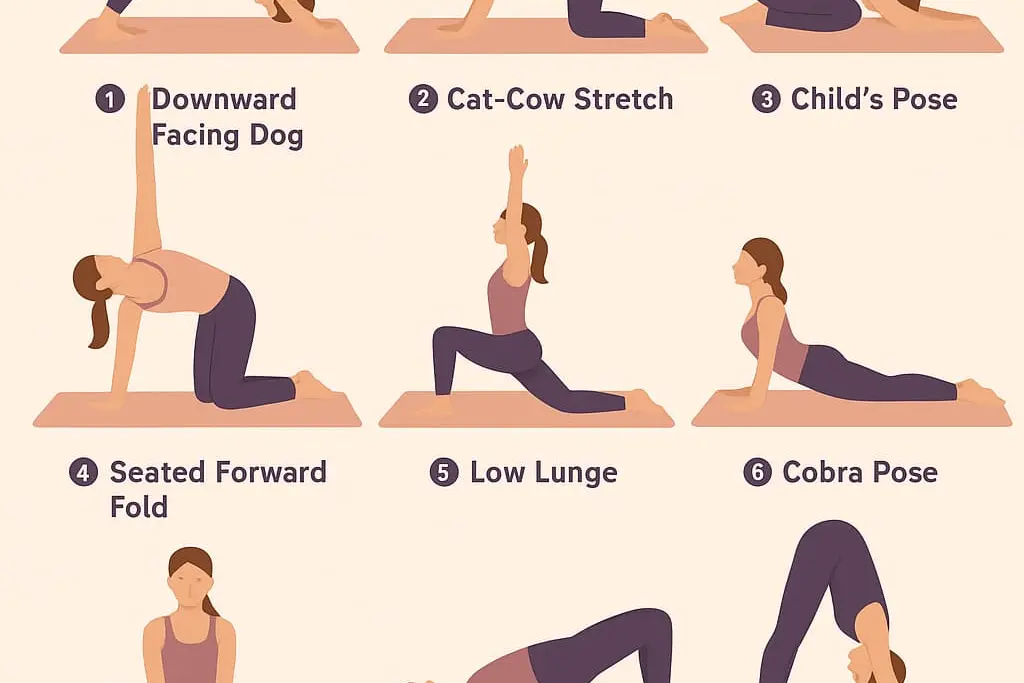 Yoga for Flexibility: 15 Poses by Body Area, Plus 10- and 20-Minute Routines
Fifteen beginner-friendly yoga stretches for your hamstrings, hips, spine, and shoulders, with easier versions and two ready-made routines....
-
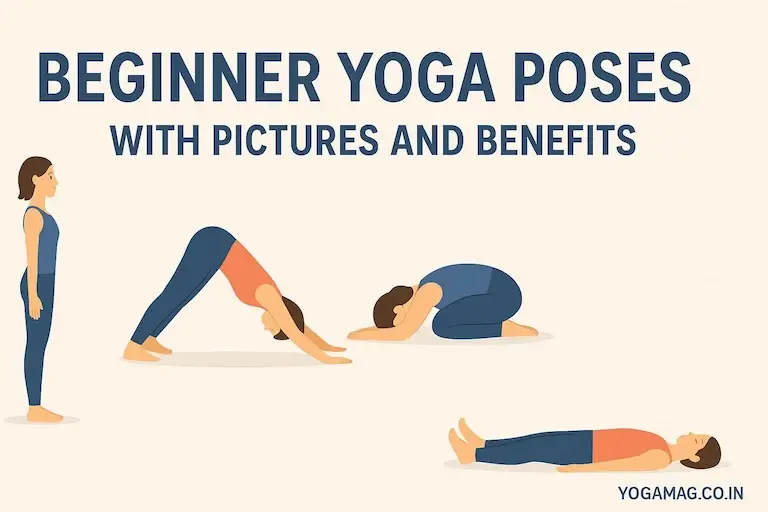 Beginner Yoga Poses and Their Benefits: 15 Poses With Steps, Hold Times, and Who Should Skip Each
Fifteen basic yoga poses, each with numbered steps, how long to hold it, an easier version, and a plain note on who should skip it. A 15-min...
-
 Introduction to Meditation for Beginners
Meditation offers a powerful way to reduce stress, improve focus, and enhance emotional well-being. This beginner’s guide introduces simple,...
-
 What is Yoga? The Complete Guide to Foundational Yo Ga for Beginners and Beyond
Yoga, often spelled as yo ga in search, is one of the oldest and most powerful practices for uniting the body, mind, and spirit. But what is...
-
 The 8 Limbs of Yoga Explained: It’s More Than Just Poses
The 8 Limbs of Yoga, as outlined in Patanjali’s Yoga Sutras, offer a holistic path to spiritual growth and self-realization beyond physical...
-
 What to Eat Before and After Yoga: Fueling Your Practice the Right Way
Knowing what to eat before and after yoga is key to boosting energy, improving flexibility, and supporting muscle recovery. For a pre-yoga m...
-
 How a Yogis home/place should be based on Yogic traditions.
A yogi's home, as described in ancient texts like the Shiv Samhita, Hatha Yoga Pradipika, Gheranda Samhita, and Patanjali Yoga Sutras, is a...
-
 Benefits of chanting AUM
Chanting AUM transcends time and culture, offering profound physical, mental, and spiritual benefits. This sacred sound embodies the essence...
-
 From Chaos to Calm: How to Stay Consistent with Meditation at Home
This article offers practical tips to help you build a consistent meditation practice at home, turning daily chaos into calm. It covers crea...
-
 50 Tips to excel in the journey of Yoga.
Yoga is not about achieving; it’s about becoming. With every breath, pose, and moment of stillness, we unravel the layers of who we thought...
-
 Powerful Yoga Practices for Strength and Energy: A Lifestyle Guide
In today’s fast-paced world, most of us juggle busy work schedules, personal responsibilities, and constant digital distractions. It is no w...
-
 How to meditate for dummies.
Meditation is a simple yet transformative practice to reduce stress, improve focus, and promote well-being. Begin by finding a quiet space,...
-
 Morning vs Evening: When’s the Best Time for Mindful Meditation at Home?
Discover the best time to practice mindful meditation at home —morning or evening—to establish a consistent meditation routine. Learn the be...
-
 Discover the Magic of Breath: 5 Pranayama Techniques for Your Inner Peace
Discover the transformative power of pranayama with five simple techniques: Deep Abdominal Breathing for relaxation, Nadi Shodhana to balanc...
-
 5-Minute Mindfulness: Quick Meditation Tips for Busy People at Home
In a fast-paced world, 5-minute mindfulness practices offer a simple way to reduce stress and improve well-being without requiring a signifi...
-
 How to Become a Yoga Instructor
Becoming a yoga instructor is a transformative journey that combines your passion for yoga with the desire to guide others. Start by reflect...
-
 What to Expect in Your First 30 Days of Home Meditation and Yoga: A Beginner’s Roadmap
Starting meditation and yoga at home can be rewarding yet challenging. In the first 30 days, expect to build a routine, face initial restles...
-
 Breathwork and Stillness: Yoga Techniques That Deepen Home Meditation
Enhance your home meditation with two powerful yoga techniques: pranayama (breathwork) and yoga nidra (yogic sleep). Pranayama calms the min...
-
 Yoga Poses for Flexibility and Strength: Build a Balanced, Strong Body
This blog explores the top yoga poses for flexibility and strength, highlighting how a balanced practice enhances mobility, posture, and mus...
-
 How to schedule your day as a full dedicated Yogi.
This daily yogic schedule offers a balanced path to physical, mental, and spiritual well-being. Beginning at dawn, it integrates invigoratin...
-
 5-Minute Morning Meditation to Find Calm and Clarity
Feeling overwhelmed by life’s fast pace is common, but morning meditation offers a simple way to regain calm and focus. Just five minutes ea...
-
 Mindful Meditation and Yoga: A Daily Ritual for Mental Clarity
Mindful meditation and yoga are powerful daily practices that promote mental clarity, reduce stress, and enhance emotional well-being. By co...
-
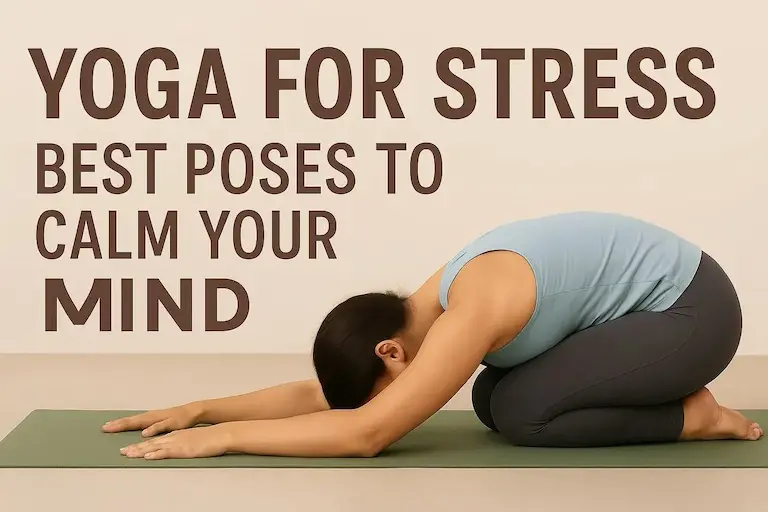 Yoga for Stress Relief: Best Poses to Calm Your Mind
Stress has become an unavoidable part of modern life. From demanding jobs to family responsibilities, digital overload, and uncertain future...
-
 Mindful Meditation Playlists and Soundscapes for a Home Practice
Creating a mindful meditation practice at home can be deeply enhanced with the right soundscape. Whether you prefer soothing meditative musi...
-
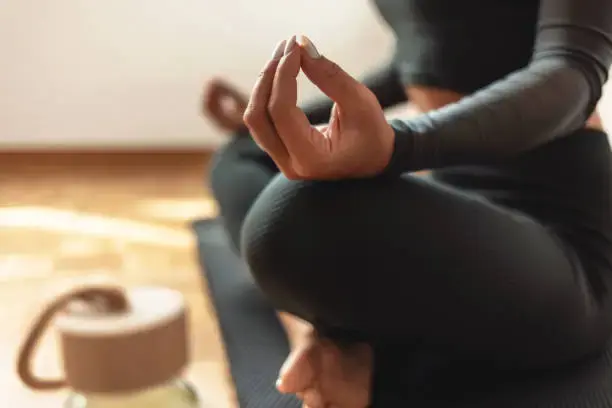 Yoga Poses to Prepare Your Body for Stillness in Meditation
Preparing your body with gentle yoga before meditation can significantly improve comfort, focus, and stillness. This blog explores 10 essent...
-
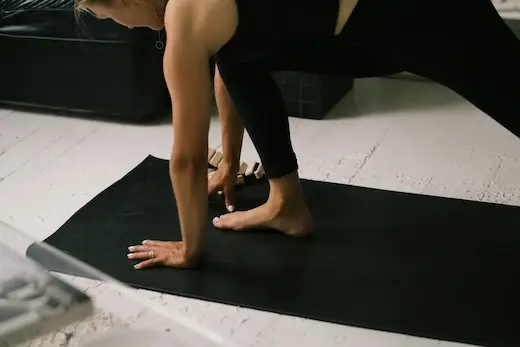 Best Yoga Mat for Busy Professionals (2026)
You’ve got fifteen minutes before your first meeting. Or a lunch break you’d rather not spend scrolling. You want to unroll, move, and feel...
-
 How to Create a Peaceful Home Space for Daily Meditation and Yoga
Create a peaceful home yoga and meditation space by choosing a quiet, clutter-free area with natural light and calming colors. Use essential...
-
 🧘♀️🧠 Why Your Mat Might Be the Best Therapy
Yoga isn’t just about physical fitness; it’s a powerful tool for mental health. Through breathwork, movement, and mindfulness, yoga can help...
-
 What Happens to Your Body After a Year of Yoga – A Transformational Journey
A year of daily yoga transforms your body, mind, and soul. Physically, it enhances flexibility, strength, posture, and balance while detoxif...