

In this article

Sleep is the foundation of health. Yet in today’s fast-paced world, many people struggle with insomnia, restless nights, or poor-quality sleep. The solution doesn’t always have to be medication or endless scrolling for sleep hacks. One practice that has been studied for sleep is Yoga.
A 2020 review of 19 trials in women found better self-reported sleep quality, but no clear effect on insomnia scores. Gentle yoga before bed gives you a slow, repeatable way to wind down: stretching, slow breathing and lying still. Many people find that a calming routine makes it easier to settle. By practicing a few gentle yoga poses before bed, you can signal your body to slow down, release tension, and prepare for rest.
In this article, we’ll explore how yoga helps with sleep and guide you through 7 effective yoga poses for better sleep. If you have occasional sleeplessness, these poses can be part of a bedtime routine. If trouble sleeping lasts for weeks, talk to a doctor.
Why Yoga Helps You Sleep Better
Yoga has been practiced for thousands of years to balance the mind, body, and spirit. Here are some reasons it may suit a bedtime routine:
- Slows your pace – Gentle stretches and slow breathing give you something quiet to focus on before bed.
- Gives the mind a task – Following your breath or a count can take attention away from busy thoughts.
- Loosens tight muscles – Many people feel stiff in the shoulders, neck and back by evening, and gentle stretching can ease that stiffness.
- Slows breathing – Counting your breath or lengthening the exhale slows the pace of your breathing.
- Creates a bedtime routine – Consistent practice before bed tells your brain it’s time to wind down.
Gentle movement, attention to the breath and a few minutes of lying still make a simple wind-down routine.
7 Yoga Poses for Better Sleep
Here are seven calming yoga poses that you can do before bed as a wind-down routine. You don’t need any equipment—just a quiet space and maybe a yoga mat.
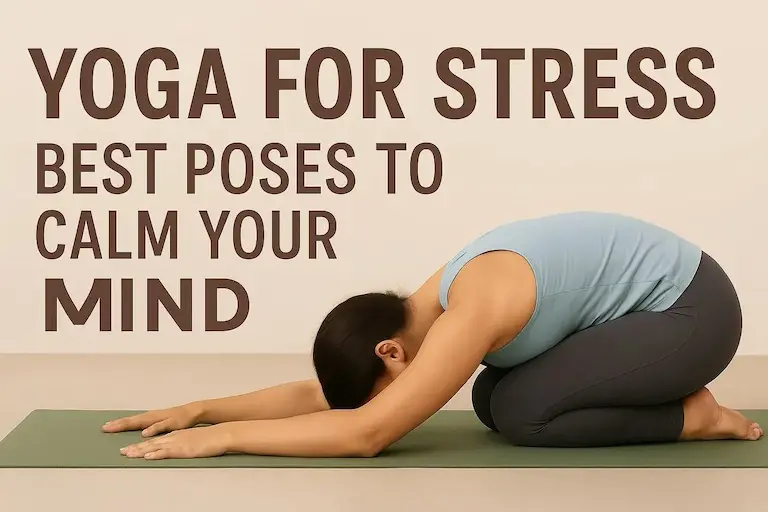
1. Child’s Pose (Balasana)
Child’s Pose is one of the most restorative yoga postures. It gently stretches the hips, thighs, and lower back and many people find it a restful shape.
How to do it:
- Kneel on the floor, big toes touching and knees apart.
- Sit back on your heels.
- Extend your arms forward and rest your forehead on the mat.
- Breathe deeply, relaxing your shoulders and spine.
Why it helps sleep:
Child’s Pose is a folded shape that lets the back and shoulders rest, which suits the end of the day.
2. Legs-Up-The-Wall Pose (Viparita Karani)
This gentle inversion improves circulation, reduces swelling in the legs, and calms the mind. It’s one of the best poses for people with insomnia.
How to do it:
- Sit sideways close to a wall.
- Lie down and swing your legs up against the wall.
- Keep your arms relaxed by your sides, palms up.
- Close your eyes and breathe slowly.
Why it helps sleep:
Stay for a few minutes while you breathe slowly; many people find the shape restful.
3. Seated Forward Bend (Paschimottanasana)
A forward bend gently stretches the spine and hamstrings and gives you a quiet place to breathe.
How to do it:
- Sit with legs stretched out in front.
- Inhale, lengthen your spine, and as you exhale, fold forward.
- Rest your hands on your feet or shins.
- Hold for 1–2 minutes, breathing deeply.
Why it helps sleep:
A slow fold with long exhales gives you a steady, repeatable focus as you wind down.
4. Reclining Bound Angle Pose (Supta Baddha Konasana)
Also known as Reclined Butterfly Pose, this posture opens the hips and chest while encouraging relaxation.
How to do it:
- Lie on your back.
- Bring the soles of your feet together, letting knees drop open.
- Place pillows under your knees for support if needed.
- Rest your hands on your belly or by your sides.
Why it helps sleep:
With pillows under your knees if you like, this is a restful shape to breathe in, and many people can stay in it for several minutes.
5. Supine Spinal Twist (Supta Matsyendrasana)
Gentle spinal twists stretch the muscles around the spine and hips.
How to do it:
- Lie on your back, arms extended to the sides.
- Bend your knees and drop them to the right side, keeping shoulders grounded.
- Hold for 5–10 breaths, then switch sides.
Why it helps sleep:
Rest on the floor and let the back muscles stretch. Come out of the twist if it pinches or hurts.
6. Cat-Cow Stretch (Marjaryasana-Bitilasana)
This gentle flow between two poses moves the spine through rounding and arching.
How to do it:
- Start on hands and knees.
- Inhale, arch your back and lift your head (Cow).
- Exhale, round your spine and tuck your chin (Cat).
- Continue for 5–10 breaths.
Why it helps sleep:
The rhythm of Cat-Cow links breath with movement, which gives you something steady to follow as you unwind.
7. Corpse Pose (Savasana)
Savasana, lying flat and still, is the usual way to end a yoga session.
How to do it:
- Lie flat on your back with arms relaxed at your sides.
- Close your eyes and take slow, deep breaths.
- Focus on each part of your body, releasing any remaining tension.
Why it helps sleep:
Savasana is a chance to rest in stillness and notice where you are holding tension.
Tips for Practicing Yoga Before Bed
- Keep the lights dim: Create a calm, sleep-friendly environment.
- Move slowly: Don’t push or strain—this is about relaxation, not workout.
- Breathe deeply: Use slow, deep breathing to enhance relaxation.
- Stay consistent: Make yoga part of your nightly routine if you enjoy it.
- Combine with meditation: Even 5 minutes of mindful breathing is a simple way to finish.
Yoga and Sleep: What the Research Shows
Research on yoga and sleep is encouraging but modest. A 2020 review of 19 randomised trials in women (1,832 participants, some with sleep complaints, some with health conditions, some healthy) found that yoga improved self-reported sleep quality compared with control groups, but the three trials that measured insomnia severity found no clear effect. Longer total class time went with better sleep quality, and results varied a lot between trials.
Outcomes researchers have looked at include:
- Self-reported sleep quality, where the review found the clearest result.
- Perceived stress in healthy adults, where NCCIH cites a 2020 review of 12 studies with benefits
- Insomnia severity scores, where trials so far show no clear effect.
- Total class time, where longer total time went with better sleep quality in the review
Yoga is not a replacement for medication or for a doctor's advice. If you have trouble sleeping most nights, see a doctor or a sleep specialist.
Building a Yoga Sleep Routine
If you want a bedtime yoga routine to follow, try this one:
- Turn off screens at least 30 minutes before bed.
- Dim the lights and play calming music if you like.
- Practice the 7 poses in sequence (about 15–20 minutes).
- End with Savasana or a short meditation.
- Go straight to bed afterwards.
Repeating the same steps each night makes the routine familiar.
Lifestyle Tips for Better Sleep with Yoga
In addition to practicing yoga, a few lifestyle changes can enhance your sleep quality:
- Follow a regular sleep schedule. Go to bed and wake up at the same time daily.
- Avoid caffeine and heavy meals in the evening.
- Stay active during the day—save active yoga for earlier in the day and keep evening practice gentle.
- Try slow breathing before bed, such as alternate nostril breathing without breath holds.
- Practice mindfulness. Yoga and meditation are two ways to wind down.
Final Thoughts
If you’re struggling with restless nights, yoga may be the missing piece of your bedtime routine. The 7 yoga poses for better sleep—Child’s Pose, Legs-Up-The-Wall, Seated Forward Bend, Reclining Bound Angle, Supine Spinal Twist, Cat-Cow, and Savasana—are gentle poses to ease into the evening.
Practising these poses regularly gives you a quiet routine at the end of the day. It may help you settle, though it will not suit every sleep problem.
Remember, yoga is not about perfection. It’s about presence, relaxation, and listening to your body. Start tonight with just a few minutes and see how it feels.

Download the infographic
Something wrong or unclear? Tell us.
Frequently asked questions


No comments yet. Be the first to comment!