

Tantra Yoga for Beginners - A Complete Guide

1. What is Tantra Yoga?
Tantra Yoga for Beginners is an approach to yoga that purposefully works with subtle energy, ritual, mantra, and embodied practices to expand awareness and transform the whole person — body, mind, emotion, and spirit. The word Tantra (Sanskrit) roughly means “to expand” or “to weave,” referring to practices that weave ordinary experience into a path of liberation.
Unlike purely physical yoga approaches that prioritize asana only, Tantra Yoga intentionally uses breath (pranayama), sound (mantra), visualization, and simple rituals to awaken and direct inner energy (often called kundalini) for healing and personal growth.
2. Tantra vs. Other Yogas — what's different
- Hatha Yoga often emphasizes physical postures to prepare the body for meditation. Tantra includes asana but mixes it with mantra, ritual, and energy practices.
- Bhakti Yoga emphasizes devotion and surrender; Tantra can include devotional elements but also uses energetic techniques.
- Jnana Yoga focuses on discernment and philosophy; Tantra is experiential — it uses practices to awaken direct experience rather than only intellectual understanding.
3. Key principles of Tantra Yoga
- Everything is sacred: The ordinary world is usable for awakening.
- Use energy intentionally: Practices aim to move and refine life force (prana).
- Embody the practice: Tantra works through the body and senses, not only the mind.
- Balance polarities: Recognizes masculine/feminine, active/receptive aspects and their union within the practitioner.
- Ritual and repetition: Repeated practices (mantras, kriyas) condition nervous system and energy channels.
- Ethical foundation: Compassion, consent, and personal integrity are central.
4. Common myths and misconceptions
- Myth: Tantra is just sex.
- Reality: While some tantric lineages include sexual practices, classic Tantra is a broad spiritual system. Sexual techniques are only one small (and often misunderstood) aspect. Beginners should focus on breath, mantra, and meditation first.
- Myth: Tantra is dangerous (awakens kundalini violently).
- Reality: When practiced safely and gradually, tantric practices are stabilizing and gentle. Rapid, unsupervised intense energy work can be destabilizing — which is why a measured approach is best.
- Myth: You must belong to a secret group or have a guru.
- Reality: Lineages have teachers, yes, but many beginner practices are safe and accessible to anyone with good guidance and common sense.
5. The role of energy: chakras, prana, kundalini (simple primer)
- Prana: Life force; moves through breath and subtle channels (nadis).
- Nadis: Energy channels (Ida, Pingala, Sushumna) that run along the spine.
- Chakras: Energy centers — seven commonly referenced points from the base of the spine to the crown. Beginners benefit from a gentle understanding of root (stability), sacral (creativity), solar plexus (will), heart (love), throat (expression), third eye (insight), and crown (connection).
- Kundalini: Often described as coiled energy at the base of the spine. Tantra contains practices to awaken and refine kundalini gradually and safely through breath, mantra, and meditation.
6. Core beginner practices
Below are the safest, highest-impact practices for beginners learning Tantra Yoga.
A. Grounding & breath awareness (5–10 min)
- Sit comfortably. Close eyes. Observe natural breath. Allow breath to slow without forcing. This simple grounding calms the nervous system and prepares you for energy work.
B. Alternate nostril breathing (Nadi Shodhana) — 5–8 minutes
- Use right thumb to close right nostril, inhale left; close left with ring finger, exhale right; inhale right, close, exhale left. Repeat for 6–12 rounds.
- Benefits: Balances Ida/Pingala, calms mind, balances energy.
C. Basic mantra practice (10 min)
- Choose a soothing mantra like “Om,” “So Hum,” or “Om Namah Shivaya.” Repeat silently or softly for 5–15 minutes while focusing on breath.
- Mantra anchors attention and shifts energy through vibration.
D. Gentle tantric asana (15–20 min)
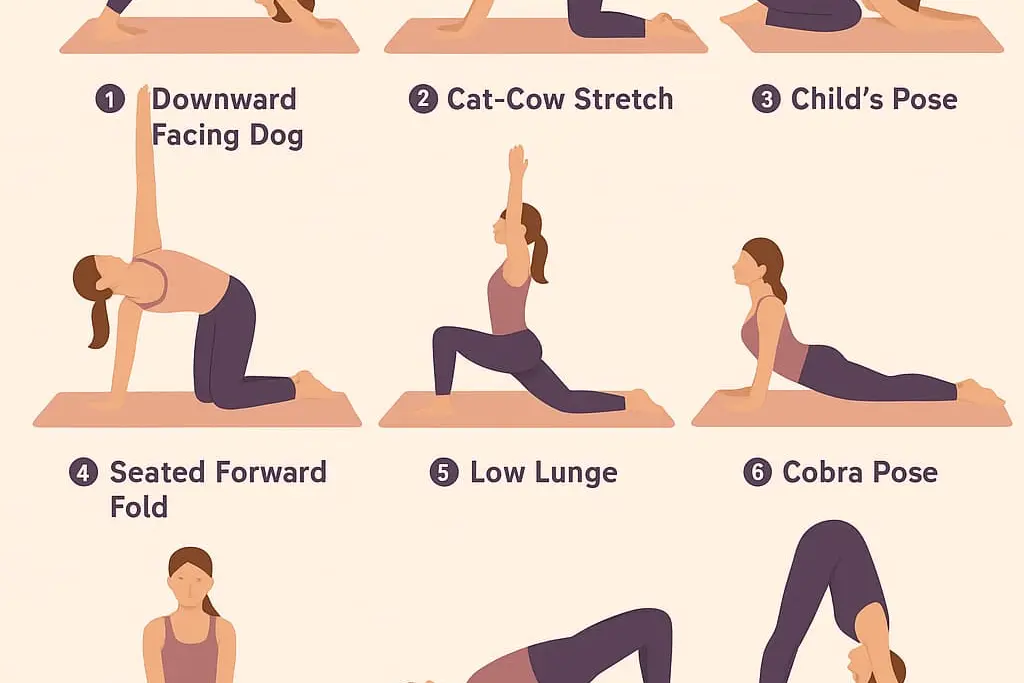
- Focus on poses that open the spine and pelvic region: Cat-Cow, Child’s Pose, Low Lunge, Malasana (Garland), Supported Bridge. Move slowly, coordinated with breath.
E. Simple chakra visualization (5–10 min)
- Imagine a warm, bright light at each chakra from root to crown. Breathe into each point for 3–5 breaths, visualizing gentle clearing and balance.
F. Closing gratitude practice (2–5 min)
- Place hands at heart. Offer a silent thank-you to your body and breath. This anchors the practice in kindness and integration.
7. A safe, step-by-step 30-day beginner plan
A practical progressive plan you can follow. Each week builds on the previous with modest time commitment.
Week 1 — Foundation (10–20 min daily)
- Breath awareness (5 min)
- Nadi Shodhana (5 min)
- Gentle asana (10 min)
- Short mantra (5 min) twice a day if possible
Week 2 — Stability + Mantra (20–30 min daily)
- Grounding + 8–12 min Nadi Shodhana
- 10–15 min gentle tantra asana sequence
- 8–10 min mantra meditation (morning or evening)
- Journal one sentence about any shifts
Week 3 — Energy awareness (25–35 min daily)
- Add 5 min chakra visualization after breathwork
- Longer mantra practice (12–15 min)
- 15–20 min dynamic asana (flowing slow movements)
- Start a weekly reflective practice (write or voice note) of changes
Week 4 — Integration (30–45 min daily)
- Full routine: breath (10), mantra (15), asana (15–20), visualization (5)
- Try a 20-minute silent sitting once this week to observe deeper shifts
- End with gratitude & intention setting for next month
Note: Rest days are allowed — listen to your body. Adjust times. The aim is consistent, gentle investment, not intensity.
8. Sample daily practice (20–40 minutes)
- 2 minutes — comfortable seat, set intention
- 8 minutes — alternate nostril breathing / calming pranayama
- 12 minutes — gentle asana sequence focusing on pelvic and spine opening (Cat-Cow → Low Lunge → Supported Bridge → Seated Forward Fold)
- 8 minutes — mantra meditation (silent “So Hum” or chosen mantra)
- 2–5 minutes — chakra visualization / gratitude
- Optional: journal 2–3 lines about any sensations.
9. Beginner-friendly tantric practices explained (with how-to)
Trataka (candle gazing)
- Sit 1–1.5 meter from a small lit candle at eye level. Gaze softly at flame, do not blink intentionally (blink naturally). When eyes water, close and visualize the flame. Benefits: concentration, third-eye activation.
Japa (mantra repetition with mala)
- Use a 108-bead mala or simply repeat a mantra for a set time (10–15 min). Keep a gentle focus on the sound and resonance.
Micro-ritual: Creating a practice altar
- Simple items: small cloth, flower, bowl of water, incense or essential oil, a stone or image that anchors you. Ritualize beginning of practice: light an incense, bow, set intention. The ritual conditions the nervous system to settle quickly.
Bandhas (basic)
- Beginners can learn subtle mula bandha (root lock) awareness: gently draw the pelvic floor inward on an exhale — practice gently and briefly. Do not strain.
10. Integrating tantra into daily life & relationships
- Mindful eating: Eat with awareness; savor texture and breath between bites.
- Presence in conversation: Practice single-point attention during one conversation a day.
- Movement breaks: Use mindful breath and 1–2 gentle pelvic rolls each hour if sitting long.
- Relationship practices: Tantra values conscious presence. Start with small practices: eye-gazing for 1–2 minutes with a partner, synchronized breathing, or rub hands and hold for 30–60 seconds to sense connection.
11. Safety, ethics, and teacher selection
- Start slowly. If intense sensations or emotional release happen, ground with breath, walk, or lie down.
- Seek a qualified teacher for advanced practices (intense breathwork, sexual practices, or rapid kundalini techniques). Look for someone who emphasizes ethics, consent, and gradual progression.
- Medical/psych considerations: If you have severe mental health issues, epilepsy, or certain cardiovascular problems, consult a professional before advanced pranayama or prolonged breath retention.
- Boundaries and consent: In partner or group practices, explicitly agree on boundaries beforehand.
12. Frequently Asked Questions (FAQ)
Q1: Is Tantra Yoga the same as Kundalini Yoga?
A: No. There’s overlap. Kundalini Yoga emphasizes awakening kundalini energy via breath, mantra, and movement; some tantric lineages include kundalini work, but Tantra is wider in scope and includes ritual, mantra, and experiential practices beyond kundalini alone.
Q2: How often should a beginner practice Tantra Yoga?
A: Start with 4–6 short sessions a week (15–30 min). Consistency matters more than intensity.
Q3: Can Tantra be practiced alone?
A: Yes — many tantric practices are solitary (mantra, breathwork, meditation). Partner practices exist but are optional.
Q4: Is sexual practice required in Tantra?
A: No. Sexual practices are a small subset of Tantra and are not required for spiritual progress. Beginners should focus on breath, mantra, meditation, and ethical living.
Q5: Will Tantra change my personality?
A: Tantra can shift perception, increase emotional sensitivity, and improve relationships. Growth is gradual and usually integrates into personality gently.
Q6: What should I eat when practicing Tantra?
A: No single rule. Many practitioners prefer a balanced, sattvic (clean, whole) diet to support meditation, but follow what feels nourishing and sustainable.
Q7: How do I know if my energy practices are “working”?
A: Signs include improved focus, emotional clarity, better sleep, subtle body sensations, and greater presence. If you feel overwhelmed, slow down and ground.
Q8: Do I need to chant in Sanskrit?
A: No. Mantras work due to vibration and intention. Sanskrit has tried-and-true syllables, but use what resonates with you.
13. Practical checklist for beginners
- Create a 3–5 item altar or sacred corner.
- Commit to 10–30 minutes daily for 30 days.
- Learn one pranayama (alternate nostril) and practice it.
- Choose one simple mantra and practice 5–15 minutes daily.
- Keep a practice journal: note duration, sensations, and one sentence of experience.
- After 30 days, review and adjust: increase time slowly or seek a teacher.
15. Conclusion & next steps
Tantra Yoga for Beginners offers a rich, embodied path that balances breath, sound, movement, ritual, and awareness. Start simply: stabilize the breath, train attention with mantra, open the body gently, and build a compassionate daily routine. Over time, your inner energy will feel clearer, relationships more present, and life more vibrant.
If you enjoyed this guide, create a simple ritual to seal the practice—light a candle, say a short dedication, and set a small intention for the next 24 hours.
Learn more about tantra’s history and practices here.

Download the infographic
Want new practices by email?
We email now and then when we publish a new routine, practice or guide. No spam, unsubscribe any time.
Join the YogaMag newsletterFrequently Asked Questions
Popular posts
Related posts




nice article