

Easy Starting Yoga Poses for Daily Routine: Beginner-Friendly Yoga Guide
Why Start Yoga as a Beginner?
Before jumping into poses, let’s understand why yoga is perfect for beginners:
- Simple to Begin – Yoga doesn’t require expensive gear or a gym membership.
- Adaptable – Poses can be modified for all body types, ages, and fitness levels.
- Holistic Benefits – It combines physical exercise, breathing, and mindfulness.
- Stress Relief – Just 10 minutes of yoga daily reduces anxiety and improves sleep.
- Supports Long-Term Health – Builds strength, flexibility, and balance while protecting joints.
For someone new, the key is consistency, not perfection. Even if you hold a pose for just 10–20 seconds, you’re making progress.
Tips Before Starting Yoga as a Beginner
To get the most out of your practice, keep these tips in mind:
- Start slow: Don’t push too hard. Yoga is about progress, not competition.
- Breathe deeply: Inhale and exhale slowly during each pose—it calms the body.
- Use support: Cushions, yoga blocks, or even a chair can help beginners.
- Practice regularly: 10 minutes a day is better than 1 hour once a week.
- Listen to your body: If something feels painful, ease out.
Now, let’s dive into the best starting yoga poses you can add to your daily yoga routine.
10 Easy Starting Yoga Poses for Daily Routine
These poses are beginner-friendly, safe, and effective. Try to hold each for 5–10 breaths (30–60 seconds).
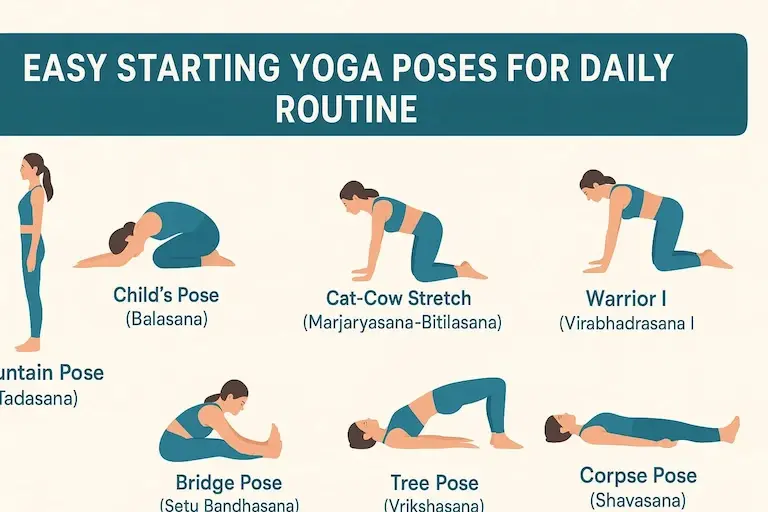
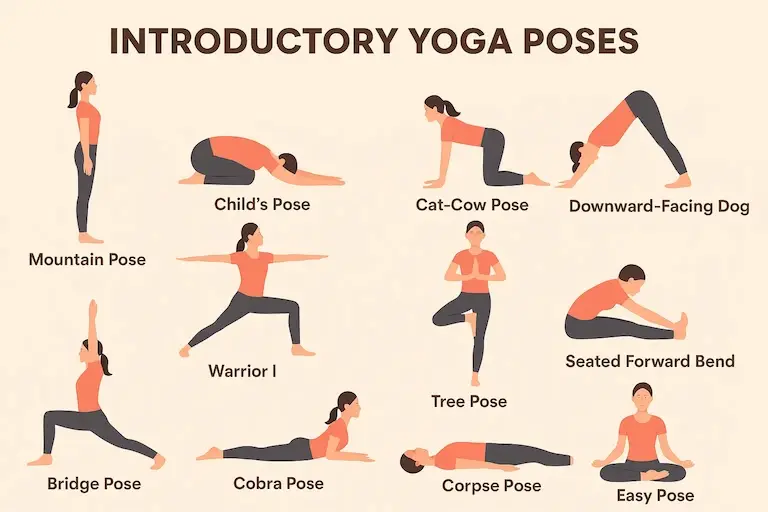
1. Mountain Pose (Tadasana)
- How to do it:
- Stand tall with feet together.
- Keep arms relaxed by your sides.
- Engage your thighs and lift your chest.
- Take deep breaths while grounding your feet.
- Benefits: Improves posture, balance, and awareness.
- Why it’s good for beginners: It teaches the foundation of standing poses and helps you feel grounded.
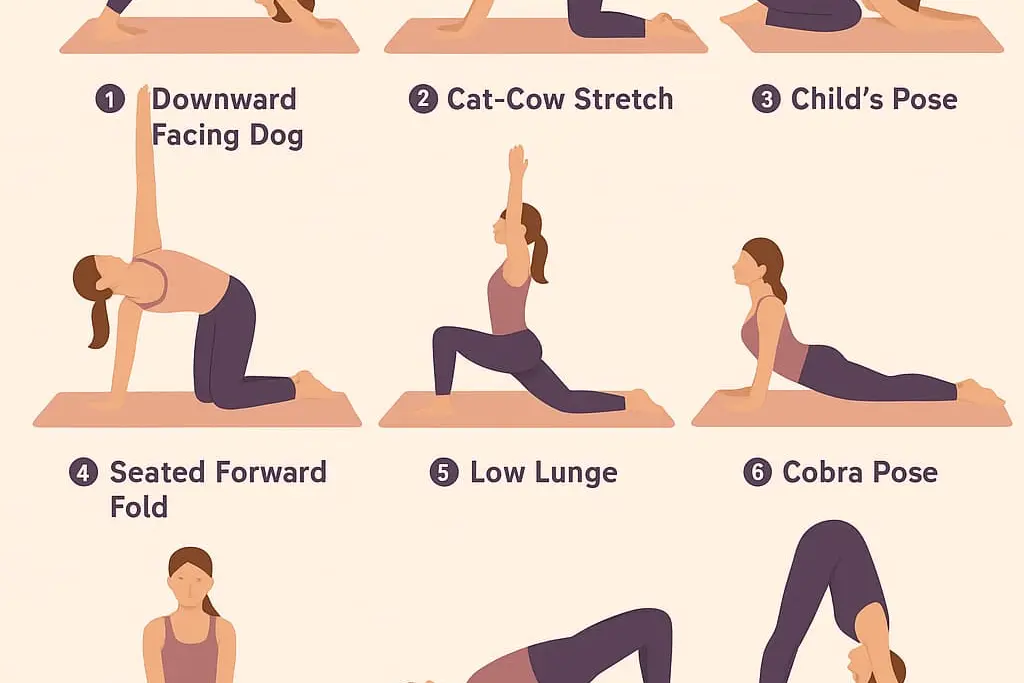
2. Child’s Pose (Balasana)
- How to do it:
- Kneel on the floor and sit on your heels.
- Bend forward, stretching arms in front.
- Rest your forehead on the mat.
- Benefits: Relieves stress, stretches back and hips.
- Why it’s good for beginners: It’s a resting pose you can return to anytime during practice.
3. Cat-Cow Stretch (Marjaryasana–Bitilasana)
- How to do it:
- Start on hands and knees.
- Inhale, arch your back (Cow Pose).
- Exhale, round your spine (Cat Pose).
- Benefits: Increases spine flexibility, improves digestion.
- Why it’s good for beginners: Gentle movement that warms up the body.
4. Downward-Facing Dog (Adho Mukha Svanasana)
- How to do it:
- Start on hands and knees.
- Lift hips up and back, straightening legs.
- Press heels toward the ground.
- Benefits: Strengthens arms, stretches hamstrings, energizes the body.
- Why it’s good for beginners: It improves overall strength and flexibility with time.
5. Cobra Pose (Bhujangasana)
- How to do it:
- Lie face down with palms under shoulders.
- Inhale, lift chest up gently.
- Keep elbows close to the body.
- Benefits: Opens chest, strengthens spine, reduces stress.
- Why it’s good for beginners: Easy backbend to improve posture and reduce stiffness.
6. Warrior I (Virabhadrasana I)
- How to do it:
- Step one foot forward into a lunge.
- Keep back foot angled slightly outward.
- Raise arms overhead, palms together.
- Benefits: Builds strength in legs, improves focus, and energizes the body.
- Why it’s good for beginners: Teaches stability and confidence.
7. Seated Forward Bend (Paschimottanasana)
- How to do it:
- Sit with legs extended.
- Inhale, lengthen spine.
- Exhale, fold forward reaching for feet.
- Benefits: Stretches hamstrings, calms the mind, aids digestion.
- Why it’s good for beginners: Simple seated pose that improves flexibility.
8. Bridge Pose (Setu Bandhasana)
- How to do it:
- Lie on your back with knees bent, feet hip-width apart.
- Press into feet, lift hips toward ceiling.
- Keep arms by your sides.
- Benefits: Strengthens glutes, improves spinal health, relieves fatigue.
- Why it’s good for beginners: Gentle backbend that also builds strength.
9. Tree Pose (Vrikshasana)
- How to do it:
- Stand tall and shift weight to one foot.
- Place the sole of the other foot on your inner thigh or calf (avoid knee).
- Bring palms together at the chest or overhead.
- Benefits: Improves balance, focus, and concentration.
- Why it’s good for beginners: Builds mental focus and leg stability.
10. Corpse Pose (Shavasana)
- How to do it:
- Lie flat on your back.
- Spread arms and legs comfortably.
- Close eyes, breathe deeply, and relax fully.
- Benefits: Reduces stress, improves sleep, promotes deep relaxation.
- Why it’s good for beginners: The simplest pose that teaches mindfulness and awareness.
Sample Daily Beginner Yoga Routine (10–15 Minutes)
Here’s a quick routine using the poses above:
- Mountain Pose – 1 minute
- Cat-Cow Stretch – 1 minute
- Downward-Facing Dog – 1 minute
- Warrior I – 1 minute per side
- Cobra Pose – 1 minute
- Seated Forward Bend – 1 minute
- Bridge Pose – 1 minute
- Tree Pose – 1 minute per side
- Child’s Pose – 1 minute
- Corpse Pose – 2 minutes
This totals around 12–15 minutes and is perfect as a morning energizer or evening relaxation routine.
Common Mistakes Beginners Make in Yoga
If you’re starting out, avoid these pitfalls:
- Holding your breath – Always breathe deeply and naturally.
- Pushing too hard – Yoga is not about forcing flexibility.
- Skipping warm-up – Gentle stretches prevent injury.
- Comparing yourself to others – Focus on your own progress.
- Inconsistency – Practice daily, even if it’s just 5 minutes.
Benefits of Practicing Starting Yoga Poses Daily
When practiced consistently, these beginner yoga poses offer powerful benefits:
- Physical Benefits: Improves flexibility, balance, and strength.
- Mental Benefits: Reduces anxiety, sharpens focus, and enhances mood.
- Emotional Benefits: Promotes self-awareness and inner peace.
- Health Benefits: Boosts immunity, improves digestion, and supports weight management.
FAQs on Starting Yoga Poses
1. How long should beginners practice yoga daily?
10–20 minutes is enough for beginners. Consistency matters more than duration.
2. Can I do yoga if I’m not flexible?
Absolutely! Yoga is meant to increase flexibility over time.
3. Is morning or evening better for yoga?
Morning energizes your day, evening helps you relax. Choose what fits your schedule.
4. Do I need a yoga mat?
A mat provides comfort and grip, but you can start on any soft surface.
5. Can yoga help with weight loss?
Yes, when combined with mindful eating, yoga improves metabolism and encourages healthier habits.
Final Thoughts: Start Small, Stay Consistent
Yoga is not about touching your toes or mastering complex poses. It’s about connecting with your body, breath, and mind. These easy starting yoga poses are perfect for beginners who want to build a daily routine that enhances strength, flexibility, and peace of mind.
Start with 10 minutes a day, listen to your body, and celebrate small improvements. Over time, your yoga practice will grow stronger, and so will you.
So, roll out your mat, take a deep breath, and begin your journey today with these beginner-friendly yoga poses.

Download the infographic
Want a printable sequence?
Get one short practice each Sunday — no spam, cancel anytime.
Join the YogaMag newsletterFrequently Asked Questions
Popular posts
- 🧘♂️ 10 Best Free Meditation Apps to Reduce Stress and Anxi...
- 20 notable yogis and spiritual practitioners who lived more...
- Yoga Poses for Flexibility and Strength: Build a Balanced, S...
- Tantra Yoga for Beginners - A Complete Guide
- Beginner Yoga Poses with Pictures and Benefits: A Complete G...
- The Complete Guide to Tantra: Origins, Beliefs, and Modern P...
Related posts




No comments yet. Be the first to comment!