

What is Yoga? The Complete Guide to Foundational Yo Ga for Beginners and Beyond

Yoga, often written as yo ga in popular searches, is one of the world’s oldest and most effective systems for physical health, mental clarity, and spiritual awakening. For centuries, people have asked the timeless question: what is yoga? Today, millions worldwide practice yoga daily, not just for fitness but for stress relief, emotional balance, and inner peace.
In this detailed guide, we will explore the foundations of yoga, why it matters, how to start, and the benefits it brings to life. Whether you are a beginner searching for “yoga for beginners” or someone looking to deepen your practice, this article will help you understand the essence of yoga.
What is Yoga? (Keyword: what is yoga, yo ga)
The word Yoga comes from the ancient Sanskrit root Yuj, which means “to unite” or “to join.” But what is yoga really about? At its core, yoga is the union of body, mind, and spirit. It is not just physical exercise—it is a complete lifestyle and philosophy that connects us with our inner self and the universe.
- For some, yoga is fitness: stretching, flexibility, and strength.
- For others, yoga is therapy: stress reduction, better sleep, and improved health.
- For seekers, yoga is spirituality: meditation, mindfulness, and self-realization.
This is why when people search for yo ga, they are not just looking for exercises—they are searching for balance, peace, and transformation.
The Ancient Roots of Yoga
Yoga is not new. It has been practiced for over 5,000 years and is deeply connected with Indian philosophy and spirituality. The earliest references to yoga are found in the Vedas (ancient Indian scriptures), and the practice was systematized by Patanjali in his text, Yoga Sutras.
Patanjali defined yoga as: “Yoga Chitta Vritti Nirodha” — meaning, yoga is the stilling of the fluctuations of the mind.
This shows that yoga was always meant to be more than physical postures—it is a path to self-awareness.
The Foundations of Yoga
To understand what is yoga, we must look at its foundational elements:
1. Asanas (Yoga Postures)
The physical poses we often associate with yoga. They improve flexibility, balance, and strength.
2. Pranayama (Breath Control)
Breathing techniques that help calm the mind, increase energy, and improve focus.
3. Meditation (Dhyana)
The heart of yoga practice—quieting the mind and connecting with inner peace.
4. Relaxation (Shavasana)
Releasing stress and tension, allowing the body to heal and restore.
5. Philosophy & Lifestyle (Yamas and Niyamas)
The ethical foundation of yoga—truthfulness, self-discipline, compassion, and balance in daily life.
The Eight Limbs of Yoga
Patanjali’s Ashtanga Yoga (Eight Limbs of Yoga) provides a complete guide for living a yogic life:
- Yamas – Moral disciplines (non-violence, truth, non-greed).
- Niyamas – Personal disciplines (cleanliness, self-study, contentment).
- Asanas – Physical postures.
- Pranayama – Breath control.
- Pratyahara – Withdrawing senses from distractions.
- Dharana – Concentration.
- Dhyana – Meditation.
- Samadhi – Union with the divine or pure consciousness.
This framework shows that yoga is a complete lifestyle that transforms every aspect of life—not just the body.
What is Foundational Yoga?
Foundational yoga is the starting point for beginners. It emphasizes the basics: proper breathing, simple postures, and mindfulness practices. Instead of jumping into complex poses, foundational yoga teaches you to:
- Align your body correctly
- Breathe deeply and consciously
- Develop awareness and focus
- Build consistency in practice
This makes yoga safe, effective, and accessible for everyone—children, adults, and seniors.
Benefits of Yoga (Keyword: yoga benefits, yo ga benefits)
One of the reasons people search what is yoga or yo ga benefits is to understand how yoga improves health. Science has now confirmed what ancient yogis knew for centuries: yoga transforms both body and mind.
Physical Benefits
- Increases flexibility and strength
- Improves posture and balance
- Boosts immunity
- Enhances lung capacity and cardiovascular health
- Helps in weight management
Mental Benefits
- Reduces stress and anxiety
- Improves concentration and memory
- Promotes better sleep
- Boosts confidence and emotional resilience
Spiritual Benefits
- Increases self-awareness
- Cultivates mindfulness and compassion
- Deepens inner peace
- Creates a sense of purpose and connection
Yoga for Beginners: How to Start (Keyword: yoga for beginners)
If you are new and wondering what is yoga for beginners, here’s a step-by-step guide:
- Start Small – Begin with 10–15 minutes daily.
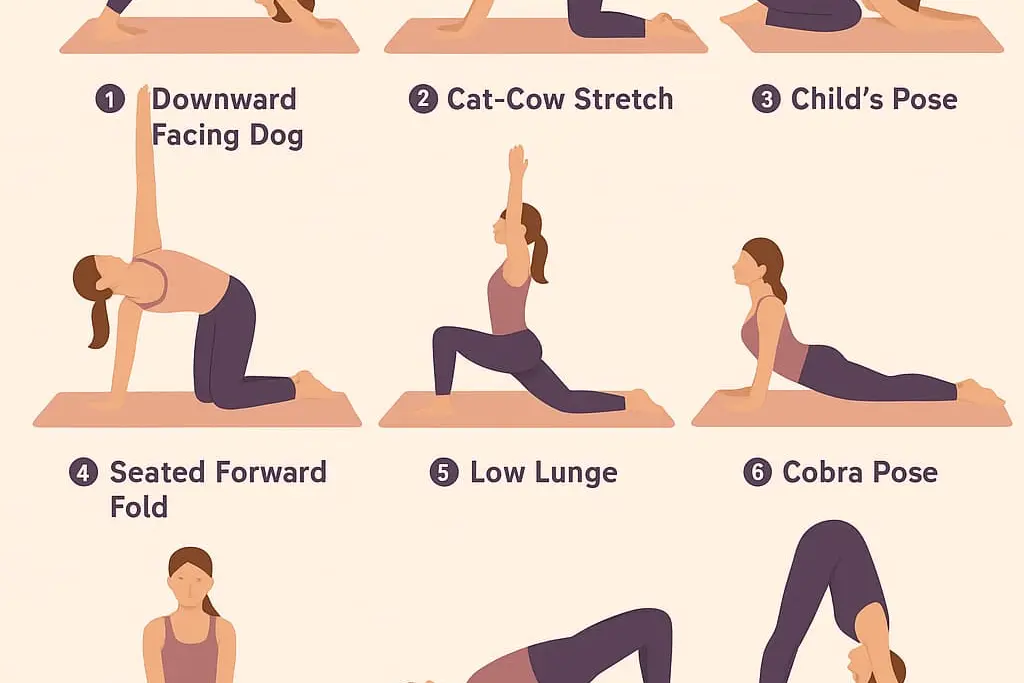
- Choose Simple Poses – Mountain Pose, Child’s Pose, Cat-Cow, and Downward Dog.
- Focus on Breath – Match movement with deep, slow breathing.
- End with Relaxation – Spend a few minutes in Shavasana.
- Be Consistent – Daily practice matters more than intensity.
Common Myths About Yoga
Many people hesitate to practice yoga because of misconceptions. Let’s clear them:
- Myth 1: Yoga is only stretching.
- Reality: Yoga is a holistic lifestyle of body, breath, and mind.
- Myth 2: You need to be flexible.
- Reality: Flexibility comes with practice. Beginners are welcome.
- Myth 3: Yoga is religious.
- Reality: Yoga is spiritual, not tied to any single religion.
- Myth 4: Yoga takes too much time.
- Reality: Even 10 minutes a day can bring benefits.
Different Styles of Yoga
There are many styles of yoga, each focusing on different aspects:
- Hatha Yoga – Foundation for beginners; slow and gentle.
- Vinyasa Yoga – Flow-based, linking breath with movement.
- Ashtanga Yoga – Intense, structured sequence for strength.
- Iyengar Yoga – Focuses on alignment and props.
- Kundalini Yoga – Awakens energy through breath, mantra, and movement.
- Restorative Yoga – Deep relaxation and stress relief.
Why Yoga is More Relevant Today
In today’s fast-paced world, stress, anxiety, poor posture, and digital fatigue affect everyone. Yoga is a natural solution—it not only strengthens the body but also calms the mind and reconnects us with stillness.
This is why when people search for what is yoga or yo ga, they are looking for a way to find balance in modern life.
Practical Tips for Daily Yoga Practice
- Practice at the same time daily.
- Use a yoga mat in a quiet space.
- Wear comfortable clothing.
- Begin with warm-up stretches.
- Avoid practicing on a full stomach.
- End with relaxation or meditation.
Conclusion: What is Yoga Really?
So, what is yoga? Yoga is more than poses—it is the art of living in harmony with yourself and the world. It is a path of transformation, from physical health to mental clarity to spiritual awakening.
By starting with foundational yoga, beginners can build strength, reduce stress, and cultivate mindfulness. With consistency, yoga becomes not just an exercise but a way of life.
Whether you search for yo ga, what is yoga, or yoga for beginners, remember: yoga begins the moment you take your first conscious breath.

Download the infographic

Download the infographic
Want new practices by email?
We email now and then when we publish a new routine, practice or guide. No spam, unsubscribe any time.
Join the YogaMag newsletterFrequently Asked Questions
Popular posts
Related posts




No comments yet. Be the first to comment!