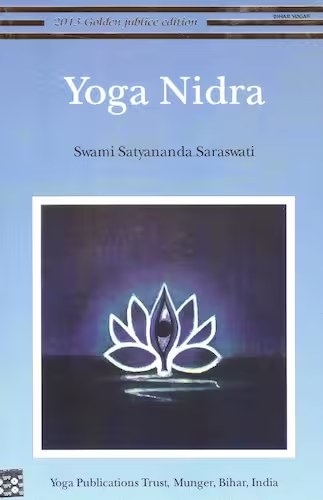
Yoga Nidra by Swami Satyananda Saraswati explores the ancient yogic practice of deep relaxation and inner awareness. Rooted in the tantric tradition of nyasa, Yoga Nidra is a systematic method of inducing complete mental, emotional, and physical relaxation. Unlike ordinary sleep, it is a state of "dynamic sleep" where the practitioner remains conscious while exploring the subconscious and unconscious mind.
The book covers the theoretical, practical, and scientific aspects of Yoga Nidra. It explains its applications in stress management, therapy, education, and self-transformation. The text discusses the neurological and psychological effects of the practice, showing its ability to balance the nervous system, enhance learning, and promote self-healing. It also delves into the relationship between Yoga Nidra and brain activity, including its ability to stimulate creative insights, regulate emotions, and influence subconscious conditioning through sankalpa (resolve).
With transcriptions of Yoga Nidra sessions, practical guidance, and research findings, the book serves as both a theoretical and practical guide. It presents Yoga Nidra as an accessible yet profound practice that can transform lives by awakening inner potential and leading practitioners toward self-realization and spiritual awakening.
Why You Should Read It
- Deep Relaxation & Stress Relief – Learn how to access profound relaxation that goes beyond conventional rest.
- Mind-Body Healing – Discover how Yoga Nidra can help alleviate psychosomatic illnesses, anxiety, and emotional imbalances.
- Self-Transformation – Understand how sankalpa (resolve) can be used to reprogram the mind and shape one’s destiny.
- Scientific & Spiritual Insight – Gain knowledge on the brain’s role in consciousness and relaxation.
- Enhance Creativity & Learning – Yoga Nidra can boost memory, improve focus, and promote self-awareness.
- Practical Guidance – Includes transcriptions of Yoga Nidra practices for easy application.
- Accessible to All – Whether you're a beginner or an advanced practitioner, Yoga Nidra can benefit everyone.
100 Important Points from Yoga Nidra
- Yoga Nidra means “yogic sleep” but is not actual sleep.
- It is a state of deep relaxation with inner awareness.
- Originates from the tantric practice of nyasa.
- Helps in achieving pratyahara (withdrawal of senses).
- Induces physical, mental, and emotional relaxation.
- Bridges the gap between waking and sleep states.
- Used for self-healing and stress management.
- Can help treat psychosomatic diseases.
- Activates the parasympathetic nervous system.
- Reduces anxiety and emotional distress.
- Enhances creativity and intuition.
- Supports memory retention and learning.
- Can be practiced by anyone, regardless of religion.
- Transforms personality and habits through sankalpa.
- Leads to greater self-awareness and inner harmony.
- Helps in dealing with past traumas and karmas.
- Awakens deeper layers of the mind.
- Provides insight into subconscious impressions (samskaras).
- Used in therapy for depression and PTSD.
- Improves sleep quality and combats insomnia.
- Strengthens the immune system.
- Helps regulate blood pressure and heart rate.
- Encourages a meditative state effortlessly.
- Can be used as an educational tool for children.
- Deepens spiritual awareness and self-discovery.
- Works with the brain’s sensory-motor cortex.
- Can be practiced lying down in shavasana.
- Involves systematic body scanning.
- Uses breath awareness for relaxation.
- Includes visualization techniques for inner clarity.
- Relieves muscular tension in the body.
- Helps control emotional outbursts.
- Develops the ability to witness thoughts without attachment.
- Can be guided by a teacher or through recordings.
- Stimulates higher brain functions.
- Improves focus and mental clarity.
- Enhances intuition and problem-solving skills.
- Can be practiced before sleep for better rest.
- Harmonizes the left and right hemispheres of the brain.
- Creates a bridge between the conscious and unconscious mind.
- Helps release deeply stored fears and anxieties.
- Strengthens willpower through sankalpa.
- Can be combined with meditation and yoga practices.
- Aids in addiction recovery and breaking bad habits.
- Improves body awareness and mindfulness.
- Strengthens emotional resilience.
- Connects the practitioner with deeper states of consciousness.
- Prepares the mind for meditation and samadhi.
- Triggers the release of serotonin and melatonin.
- Helps counteract the effects of long-term stress.
- Brings balance to the endocrine system.
- Fosters feelings of inner peace and contentment.
- Provides deep psychological cleansing.
- Induces a trance-like state of awareness.
- Guides the practitioner to witness the dream state consciously.
- Can be used for astral experiences and lucid dreaming.
- Helps develop detachment from external distractions.
- Awakens the third eye (ajna chakra).
- Can be tailored for specific therapeutic needs.
- Allows access to higher states of intuition.
- Regulates the autonomic nervous system.
- Releases endorphins, promoting well-being.
- Can be used for pain management.
- Improves digestion and metabolic functions.
- Develops a deeper connection to the subconscious.
- Clears mental clutter and overthinking.
- Helps overcome fears and phobias.
- Builds self-discipline and inner strength.
- Assists in past-life regression (for those interested).
- Supports mindfulness and present-moment awareness.
- Strengthens concentration and cognitive function.
- Enhances dream recall and dream awareness.
- Opens the practitioner to altered states of consciousness.
- Works well with other holistic healing methods.
- Helps harmonize the energy body and chakras.
- Encourages positive emotional states.
- Used as a tool for goal setting and manifestation.
- Facilitates self-inquiry and introspection.
- Can be done anywhere with minimal effort.
- Helps in overcoming fatigue and exhaustion.
- Promotes longevity and holistic well-being.
- Encourages a non-judgmental awareness of thoughts.
- Can be a gateway to deep states of meditation.
- Reduces hyperactivity and restlessness.
- Acts as a bridge between conscious thought and intuition.
- Helps cultivate gratitude and self-acceptance.
- Strengthens the practitioner’s ability to remain calm.
- Can be used to awaken Kundalini energy over time.
- Develops a habit of non-attachment.
- Fosters self-love and self-compassion.
- Offers a safe space for emotional processing.
- Deepens breath awareness and control.
- Helps in chakra visualization and activation.
- Improves relationships by reducing reactive tendencies.
- Provides a spiritual tool for self-exploration.
- Integrates past experiences for inner growth.
- Aligns the body and mind with natural rhythms.
- Opens the mind to higher wisdom and understanding.
- Strengthens the ability to experience bliss without external stimuli.
- . Ultimately leads to self-realization and enlightenment.
. . .