

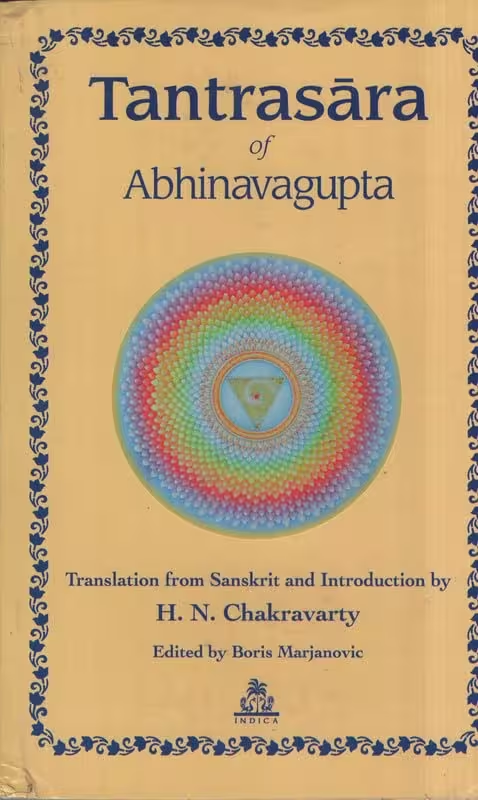
Tantrasara of Abhinavagupta
Tantrasāra by Abhinavagupta is a concise summary of Tantrāloka, presenting the core teachings of nondual Kashmir Śaivism. It explores consciousness (Śiva), divine energy (Śakti), and liberation (mokṣa) through self-recognition. The text describes three spiritual paths (upāyas)—direct realization, contemplation, and effort-based practice—along with mantra science, meditation, and initiation. It explains the universe’s structure...
Abhinavagupta’s Tantrasāra is a condensed version of his magnum opus Tantrāloka, summarizing the key principles, doctrines, and practices of nondual Śaiva philosophy, particularly from the Kashmir Śaivism tradition. It presents the path to liberation (mokṣa) through self-recognition of one’s true nature as Śiva. The text explores the nature of pure consciousness (prakāśa), the role of ignorance (mala), and various spiritual methods (upāyas) to attain self-realization.
Divided into 22 chapters, Tantrasāra discusses the progression of consciousness, ritual practices, mantra science, and meditative absorption (samāveśa). It explains the structure of the universe, the role of Śakti (divine energy), and the interplay of tattvas (principles of reality). The text describes different upāyas (paths)—śāmbhava (direct realization), śākta (intellectual inquiry), and āṇava (effort-based practice)—to accommodate different aspirants. It also covers initiation (dīkṣā), purification, the nature of sound (nāda), and the transformative power of divine grace (śaktipāta).
Abhinavagupta emphasizes that liberation is not about going elsewhere but recognizing one’s own divinity here and now. The book serves as a guide for practitioners seeking direct experience of the Supreme Reality beyond mere intellectual understanding.
Why You Should Read Tantrasāra
- Profound Spiritual Wisdom – It provides deep insights into nondual Śaiva philosophy and mystical experience.
- Condensed Knowledge – It distills complex tantric concepts from Tantrāloka into an accessible format.
- Practical Guidance – Offers meditation techniques, mantra practices, and ritual procedures for spiritual progress.
- Integration of Philosophy and Practice – Balances metaphysical knowledge with actionable spiritual methods.
- Authentic Source – Written by Abhinavagupta, one of the greatest Śaiva philosophers and tantric masters.
- Universal Application – Though rooted in Śaivism, its teachings on consciousness and self-realization apply to all spiritual seekers.
- Historical and Cultural Significance – It preserves ancient tantric wisdom that influenced later Indian and Tibetan traditions.
- Unlocks the Power of Mantras and Energy – Explores the vibratory nature of reality and sound’s role in spiritual awakening.
100 important points
1–10: The Nature of Reality and Consciousness
- Śiva is the absolute reality, the foundation of all existence.
- Consciousness (prakāśa) is self-luminous, eternal, and independent.
- Śiva and Śakti are inseparable—Śakti is the dynamic power of Śiva.
- The universe is Śiva’s self-expression (svātantrya), appearing as diversity.
- Liberation (mokṣa) is not movement to another place but self-recognition.
- Ignorance (mala) veils the truth, causing the illusion of separation.
- The soul (jīva) is inherently divine but limited by its own perception.
- The world is real but exists within consciousness as Śiva’s play (līlā).
- Everything perceived is a reflection of the Supreme within the self.
- Śiva’s absolute freedom (svatantrya śakti) manifests as the cycle of creation.
11–20: The Path to Liberation
- Liberation is the direct realization that one is Śiva.
- Self-recognition dissolves all impurities and limitations.
- There are three main paths (upāyas)—śāmbhava, śākta, and āṇava.
- Śāmbhavopāya is effortless and based on direct realization.
- Śāktopāya uses contemplation, mantras, and intellectual discrimination.
- Āṇavopāya relies on effort, discipline, and physical practices.
- A rare anupāya (no-method) exists, where realization happens spontaneously.
- The guru’s grace (śaktipāta) is essential for self-realization.
- Initiation (dīkṣā) purifies the seeker and connects them to Śiva’s energy.
- True initiation transcends rituals—it is an inner awakening.
21–30: Mantras and Sound (Nāda Yoga)
- Mantra is a vibratory form of Śiva’s consciousness.
- The supreme sound (parā vāk) is the source of all manifestation.
- The Sanskrit alphabet carries divine energy and cosmic structure.
- Oṁ (AUM) is the primal vibration embodying creation, preservation, and dissolution.
- Mantras activate the latent divine consciousness within.
- The nāda (unstruck sound) continuously resonates in every being.
- Sound evolves through four levels—parā, paśyantī, madhyamā, vaikharī.
- The bija (seed) mantras are carriers of specific divine frequencies.
- Meditation on nāda leads to direct experience of the Absolute.
- Breath and mantra recitation (uccāra) refine inner awareness.
31–40: The Role of Śakti (Divine Energy)
- Śakti is the active principle of the universe, unfolding as creation.
- The three primary Śaktis—Icchā (Will), Jñāna (Knowledge), and Kriyā (Action).
- The universe is an expansion of Śakti’s creative energy.
- Māyā introduces the illusion of duality, leading to limitation.
- Kundalini is a form of Śakti, resting at the base of the spine.
- Awakening Śakti leads to liberation and divine absorption (samāveśa).
- Chakras are energy centers where Śakti unfolds her power.
- The union of Śiva and Śakti within oneself leads to supreme bliss.
- Śakti’s highest form is Anuttara, the absolute beyond conceptualization.
- Tantra teaches how to harness Śakti’s power for transformation.
41–50: The Tattvas (Levels of Reality)
- Reality is structured into 36 tattvas (principles).
- The five purest tattvas (Śiva, Śakti, Sadāśiva, Īśvara, Śuddhavidyā) are absolute consciousness.
- Māyā veils this consciousness, giving rise to the illusion of separateness.
- The soul (jīva) emerges within the constraints of māyā.
- The five limiting factors (kañcukas) create individual ego and bondage.
- The physical world arises from the lowest five elements (pañca mahābhūtas).
- The mind (manas), intellect (buddhi), and ego (ahaṃkāra) shape perception.
- Prāṇa (life force) is the bridge between body and consciousness.
- Understanding the tattvas dissolves attachment to illusion.
- Dissolution of the tattvas in meditation reveals the infinite Self.
51–60: Guru and Initiation
- The guru is a living embodiment of Śiva’s wisdom.
- Guru’s grace (śaktipāta) awakens the disciple’s inner potential.
- Initiation (dīkṣā) transmits spiritual energy and guidance.
- A true guru leads the disciple beyond intellectual knowledge to direct experience.
- There are different levels of initiation based on the aspirant’s readiness.
- Mantra initiation empowers the seeker with sacred vibrations.
- The highest initiation is a direct transmission of Śiva-consciousness.
- Without a qualified guru, one may struggle to realize the truth.
- Surrender to the guru removes ego and accelerates awakening.
- A disciple’s sincerity determines the depth of their realization.
61–70: Meditation and Absorption (Samāveśa)
- Samāveśa is the state of complete immersion in divine consciousness.
- Meditation (dhyāna) removes distractions and reveals the Self.
- Breath awareness (prāṇayāma) refines energy flow.
- The heart center (hṛdaya) is the gateway to transcendence.
- Sound (nāda) and breath (prāṇa) guide consciousness inward.
- Visualizing Śiva’s radiant light dissolves worldly perception.
- The mind must be transcended, not controlled.
- Supreme bliss (ānanda) arises when duality dissolves.
- The yogin sees all creation as their own divine Self.
- The final stage is effortless awareness (sahaja samādhi).
71–80: Rituals and Sacred Practices
- Tantric rituals align human consciousness with divine forces.
- Worship (pūjā) is an externalized meditation on divinity.
- Fire rituals (homa) symbolize inner transformation.
- Offerings (āhuti) represent surrender to the divine.
- The consecration of mantras empowers them for spiritual work.
- Yantras and mandalas are geometric representations of cosmic forces.
- Sacred bathing (snāna) purifies the body and mind.
- Hand gestures (mudrās) channel energy flow.
- Reciting texts (pāṭha) invokes divine presence.
- The ultimate ritual is the dissolution of self in Śiva.
81–90: The Universe as a Reflection of the Self
- The universe is not separate from the observer.
- Time (kāla) is an aspect of divine play.
- Space (deśa) is Śiva’s infinite body.
- Everything experienced is a projection of consciousness.
- The world appears real due to conditioned perception.
- True perception dissolves the illusion of separateness.
- The five senses are extensions of divine awareness.
- The entire cosmos exists within one’s consciousness.
- Self-recognition erases all fear and suffering.
- Śiva alone exists—everything else is his reflection.
91–100: The Final Realization
- Duality is an illusion; all is one consciousness.
- The journey ends where it began—with oneself as Śiva.
- Bliss (ānanda) is the natural state of realization.
- Freedom (svātantrya) is knowing oneself as infinite.
- Death is an illusion—consciousness is eternal.
- Every being is already liberated but must recognize it.
- The guru, the disciple, and Śiva are one.
- Nothing external is needed for realization—it is already within.
- Reality is beyond words, thoughts, and concepts.
- The highest truth is direct experience of one’s divine nature.