


Tantric Visions of the Divine Feminine: The Ten Mahavidyas by David R. Kinsley
David Kinsley’s Tantric Visions of the Divine Feminine explores the ten Mahavidyas, powerful Hindu goddesses representing different aspects of divine femininity. The book examines their origins, symbolism, and role in Tantra, where they embody both fierce and benevolent forces. Kinsley discusses their connection to esoteric rituals, cosmic principles, and the liberation of consciousness. Through myths and iconography, the book...
David Kinsley's Tantric Visions of the Divine Feminine explores the ten Mahavidyas, a group of Hindu goddesses representing different aspects of divine femininity. The book examines their origins, interconnections, iconography, and significance in Tantric practice. The Mahavidyas—Kali, Tara, Tripura Sundari, Bhuvanesvari, Chinnamasta, Bhairavi, Dhumavati, Bagalamukhi, Matangi, and Kamala—each symbolize a unique power or spiritual force. Kinsley delves into their historical narratives, mythological roles, and their relevance in tantric rituals, which often involve unconventional and transgressive practices. The book also discusses the broader implications of divine femininity in Hinduism, including themes of transformation, destruction, and enlightenment.

Why You Should Read It
- Deep Dive into Tantra – The book offers a scholarly yet accessible introduction to tantric traditions, making it a valuable resource for those exploring esoteric Hinduism.
- Empowerment and Spiritual Growth – Understanding the Mahavidyas provides insight into overcoming fear, embracing transformation, and seeking spiritual wisdom.
- Unique Perspective on Feminine Divinity – Kinsley presents a nuanced view of divine femininity that challenges conventional depictions of goddesses in Hinduism.
- Interdisciplinary Relevance – The book is essential for students of religious studies, anthropology, and gender studies due to its exploration of mythology, symbolism, and cultural significance.
100 Important Points Tantric Visions of the Divine Feminine
- The Mahavidyas are a group of ten Hindu goddesses central to Tantric traditions.
- Kali is the first and most prominent Mahavidya, symbolizing time, destruction, and transcendence.
- Tara is a guide through troubles, similar to the Buddhist goddess of the same name.
- Tripura Sundari represents beauty and supreme wisdom.
- Bhuvanesvari symbolizes the world and cosmic creation.
- Chinnamasta depicts self-sacrifice and spiritual awakening.
- Bhairavi embodies fierce transformation and discipline.
- Dhumavati represents misfortune and the wisdom gained through suffering.
- Bagalamukhi is the goddess of control and speech.
- Matangi is associated with inner knowledge and music.
- Kamala is the goddess of wealth and spiritual prosperity.
- The Mahavidyas are believed to be different forms of the Great Goddess (Mahadevi).
- Their worship involves unconventional practices, including meditation on death and sexuality.
- The origin myths describe the Mahavidyas as emerging from the goddess Sati to teach Shiva a lesson.
- They are often associated with cremation grounds, symbolizing transcendence over life and death.
- Tantra emphasizes the unity of the microcosm (individual) and macrocosm (universe).
- The Mahavidyas embody both fierce and nurturing aspects of the divine feminine.
- Some texts describe them as anti-models that challenge societal norms.
- Tantric practices aim for liberation (moksha) through identification with the divine.
- Each Mahavidya has a distinct mantra and yantra for meditation.
- Their worship can grant supernatural powers (siddhis).
- The left-hand path (Vamachara) rituals sometimes involve taboo-breaking activities.
- Kali is often depicted standing on Shiva, symbolizing the triumph of time over form.
- Chinnamasta cuts off her own head, showing the transcendence of the ego.
- Tara and Kali share similar iconography but differ in their cosmic roles.
- Tripura Sundari is sometimes associated with Shodashi, the sixteen-year-old goddess of beauty.
- Bhuvanesvari is linked to the expansion of consciousness.
- Dhumavati, the widow goddess, represents renunciation and loss.
- Bhairavi is invoked for protection and inner strength.
- Bagalamukhi’s name means "crane-faced" and signifies hypnotic power.
- Matangi is often associated with the outcastes and unconventional wisdom.
- Kamala, similar to Lakshmi, is the goddess of abundance.
- The Mahavidyas challenge the idea of purity and impurity in Hinduism.
- Some tantric texts place them in specific geographical locations in India.
- They are worshiped individually or as a collective force.
- Many sadhanas (spiritual practices) involve visualization techniques.
- Some Mahavidyas are depicted with consorts, while others are independent.
- They are revered in Nepal and Bengal, where Shakta traditions are strong.
- The Kalika Purana and Mahabhagavata Purana describe their significance.
- The Mahavidyas reflect different psychological states and spiritual paths.
- Their worship can involve offering blood, especially for Kali and Chinnamasta.
- Bagalamukhi rituals are used for legal victories and protection from enemies.
- The Mahavidyas are linked to the concept of Kundalini energy.
- Their iconography includes severed heads, weapons, and tantric symbols.
- Tantra views the body as a vehicle for spiritual awakening.
- Each Mahavidya represents a phase in the practitioner's journey.
- They embody contradictions, showing both terrifying and benevolent forms.
- The Mahavidyas deconstruct traditional gender roles.
- Some legends describe them assisting gods in cosmic battles.
- Their presence is evident in festivals like Durga Puja and Kali Puja.
- Some tantric sects see them as linked to the ten directions (Dikpalas).
- Meditation on their forms leads to deeper self-awareness.
- The Devi Mahatmya praises aspects of the Mahavidyas.
- Temples dedicated to them exist in Assam, Bengal, and South India.
- They are invoked for both spiritual and material benefits.
- The Mahavidyas are connected to astrology and planetary influences.
- Chinnamasta is linked to the Vajrayana Buddhist goddess Vajrayogini.
- Their worship sometimes involves animal sacrifice.
- Some scholars link them to pre-Vedic goddesses.
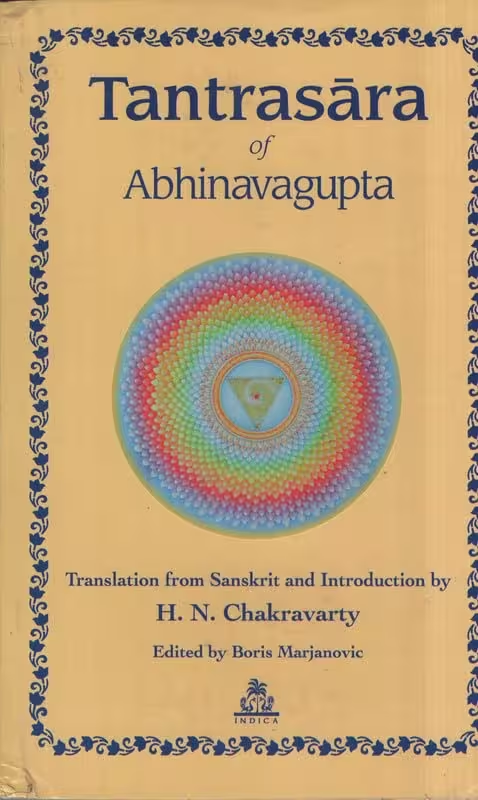
- The Tantrasara discusses their mantras and rituals.
- Tantra sees desire and fear as paths to enlightenment.
- Mahavidya temples often have unique rituals.
- The Kularnava Tantra describes them as supreme knowledge.
- They are depicted in many ancient and medieval Hindu texts.
- Each Mahavidya represents a specific psychological challenge.
- Tantra integrates them into yogic practices.
- They are associated with specific elements and chakras.
- Worship of the Mahavidyas is often esoteric and secretive.
- They challenge social hierarchies and norms.
- The Mahavidyas include both mainstream and marginal goddesses.
- Some sadhakas worship them for political power.
- The Mahavidyas can be approached through Bhakti, Jnana, or Tantra.
- Some scholars link them to prehistoric goddess worship.
- They appear in various forms across different Hindu traditions.
- Worshiping them requires proper initiation and guidance.
- They are used in protective and exorcism rituals.
- The Mahavidyas are linked to Shakti Peethas.
- Tantric texts describe their terrifying forms in great detail.
- The Mahavidyas demonstrate the interplay of opposites in Hindu thought.
- Their iconography varies across regions.
- They embody aspects of time, destruction, and rebirth.
- The Mahavidyas are connected to the sacred feminine in world religions.
- Their worship often includes fasting and meditation.
- They represent cosmic principles beyond good and evil.
- Tantra emphasizes their practical application in life.
- Some Mahavidya temples are pilgrimage sites.
- Worshiping them is believed to bring inner transformation.
- Tantra sees them as doorways to higher states of being.
- Their images are used in protective talismans.
- Some see them as representing different aspects of Shiva's consort.
- The Mahavidyas reveal hidden truths about existence.
- Their practice requires discipline and devotion.
- Tantra integrates them into daily life.
- They symbolize the ultimate reality beyond duality.
- Their myths contain profound esoteric wisdom.
- The Mahavidyas are essential to understanding Shaktism.
- They challenge the idea of divine order.
- They offer unique paths to liberation.
- The book provides valuable insights into their symbolism.
- . Understanding them leads to deeper spiritual growth.