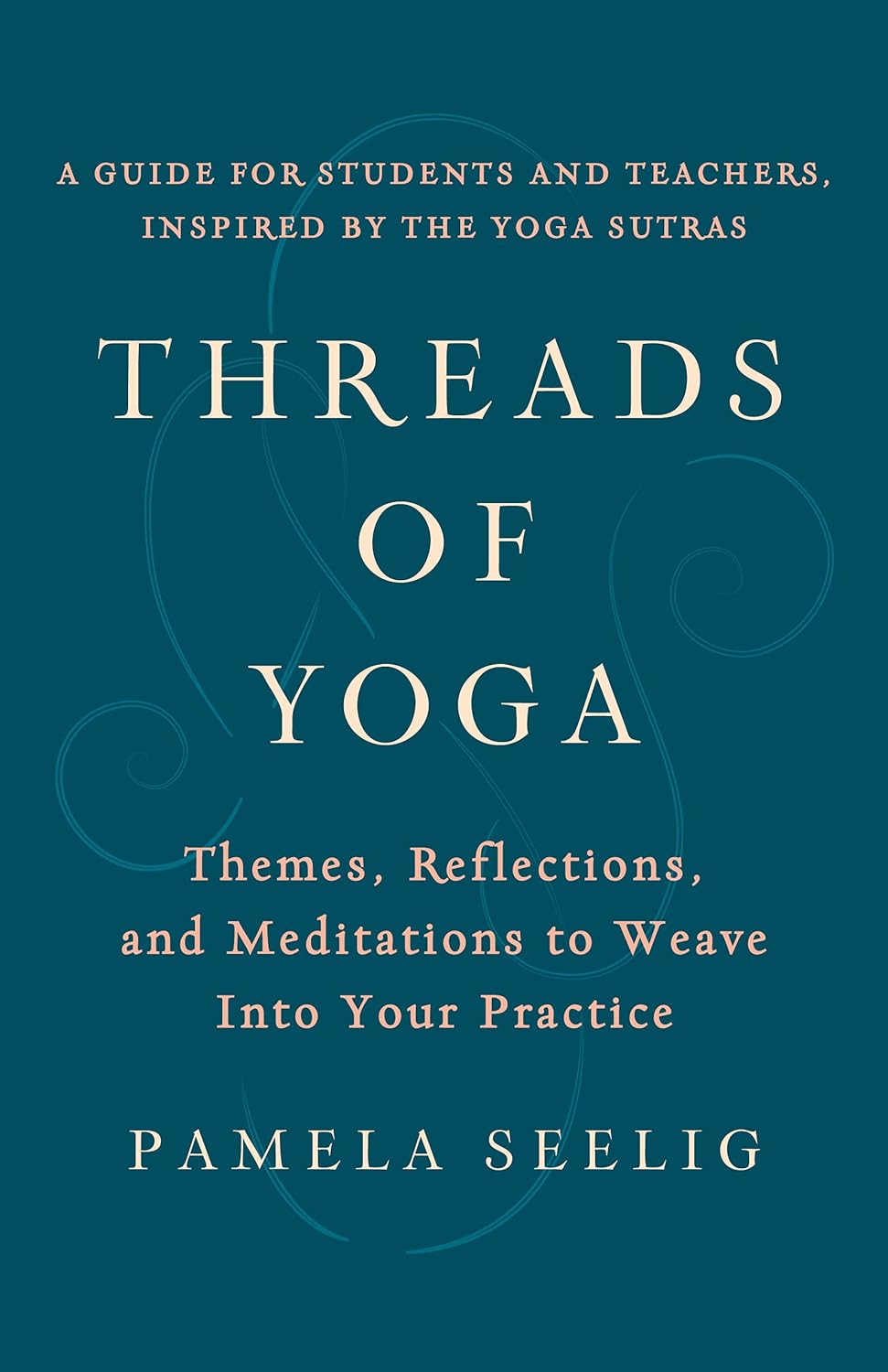
In Threads of Yoga: Themes, Reflections, and Meditations to Weave into Your Practice, author Pamela Seelig offers a comprehensive guide for students and teachers to explore the philosophical depths of yoga beyond the physical postures. Seelig contends that while modern yoga is often perceived as a purely physical discipline, its true essence is a 5,000-year-old wisdom tradition aimed at self-realization by quieting the mind. The book serves as an accessible resource to integrate these profound teachings into personal practice and classroom settings.
Seelig shares her personal journey into yoga, which began not with asanas, but with meditation as a last resort to heal from Bell's palsy during her high-stress career on Wall Street. This experience opened her to the subtle, energetic, and transformative aspects of the practice, inspiring her to share the wisdom that is often overlooked in typical yoga classes.
The book is structured into three distinct parts, designed to be explored progressively or individually.
Part One: Themes and Practices Inspired by the Yoga Sutras This section delves into foundational yogic concepts, beginning with the classical definition of yoga as
Yoga citta vrtti nirodha, or the quieting of the mind's fluctuations. It explores core themes such as the importance of present moment awareness, the power of breath (pranayama), the nature of life force energy (prana), and the practice of meditation. Each chapter provides explanations alongside practical applications like meditations, physical practice suggestions, and quotes for contemplation, guiding the reader toward a direct experience of these teachings. A central idea presented is that we are not our thoughts, but the "witness" or observer behind them, a realization that is key to overcoming suffering.
Part Two: The Yamas and Niyamas This part focuses on the first two limbs of Patanjali’s eight-limbed path, which form the ethical foundation of yoga. Seelig presents the five yamas (restraints) and five niyamas (observances) as guidelines for virtuous living that cultivate inner and outer peace. The yamas include nonviolence (ahimsa), truthfulness (satya), non-stealing (asteya), moderation (brahmacharya), and non-greed (aparigraha). The niyamas consist of purity (saucha), contentment (santosha), self-discipline (tapas), self-study (swadhyaya), and surrender to a higher power (Ishvara pranidhana). These tenets are framed not as strict commandments but as tools to align with our true nature.
Part Three: The Chakra System The final section introduces the chakra system, detailing the seven primary energy centers that reside along the spine, from the root (
Muladhara) to the crown (Sahasrara). Each chakra is associated with specific qualities, elements, and psychological functions. Seelig explains how imbalances in these energy centers can manifest physically and emotionally, and offers practices such as specific postures, meditations, and rituals to restore balance and promote a healthy flow of prana.
Throughout the book, Seelig emphasizes that yoga is an experiential journey of self-discovery, providing the tools to quiet the mind, connect with the heart, and live a more authentic, joyful, and enlightened life.
100 important points from the book Threads of Yoga:
Core Concepts and Introduction
- Yoga is a five-thousand-year-old wisdom tradition that guides the discovery of our true selves, or self-realization.
- The modern perception of yoga is often limited to a physical practice, but its heart goes much deeper.
- The book is intended for yoga students seeking deeper teachings, for teachers wanting to incorporate philosophy into their classes, and for those new to yoga interested in meditation and breathwork.
- Patanjali's Yoga Sutras, the foundational text of classical yoga, defines yoga in sutra 1.2 as "the quieting of the mind-stuff" (Yoga citta vrtti nirodha).
- Citta vrtti refers to the constant whirling inner thought stream or inner narrator.
- The author, Pamela Seelig, began her yoga journey with meditation as a therapy for Bell's palsy, which she developed while working on Wall Street.
- A primary aim of yoga is to quiet the mind to achieve a heightened, creative state of being.
- The belief that you are your thoughts is a misunderstanding known as
- avidya (spiritual ignorance) and is the root cause of suffering.
- When the mind quiets, the "seer abides in her true nature," which is the promise of yoga.
- The word yoga comes from the Sanskrit root yuj, meaning "union" or "to yoke" the mind, body, and spirit.
- The book is divided into three parts: Themes Inspired by the Yoga Sutras, The Yamas and Niyamas, and The Chakra System.
Part One: Foundational Yogic Themes
- Present Moment Awareness: Also known as mindfulness, this is the practice of bringing full attention to what is happening now to tame mental wanderings.
- When lost in thought about the past or future, we are considered "asleep" according to yogic tradition.
- Physical postures (asanas) are a way to enter the present moment by focusing attention on the body.
- Breath: The breath is the bridge between the mind and body, linking the physical and subtle dimensions.
- Pranayama refers to the many breathing practices designed to harness the breath's potential.
- By consciously controlling the breath, we can interrupt the body's instinctual stress responses, like the fight-or-flight mechanism.
- Prana: Prana is the Sanskrit word for the creative, intelligent life force energy that makes up the cosmos. In Chinese medicine, this energy is called chi.
- Humans are composed of five bodies, or koshas: the physical (food) body, the energy body, the mental body, the wisdom body, and the bliss body.
- Prana flows through energy channels called nadis. The three primary nadis are the sushumna (along the spine), and the ida and pingala which coil around it.
- Opening the Heart: Living from the heart requires balancing the logical, masculine aspects (ha) with the receptive, feminine aspects (tha).
- The heart center is where we feel and experience the boundless energy of love, which is our true nature.
- Surrender: Yoga teaches the importance of letting go of preconceived notions, expectations, and attachments to the results of our actions.
- Attachment is one of the five obstacles (kleshas) on the yogic path.
- Silence: The practice of intentional silence is known as mauna in Sanskrit.
- Rumi's three gates of wise speech ask before speaking: "Is it true?", "Is it necessary?", and "Is it kind?".
- Practicing silence conserves a huge amount of energy, which the body can then transmute for more subtle functions.
- The Witness: There is an unchanging part of us called the witness, consciousness, or the seer, which is concealed by the mind's thoughts.
- Witness consciousness allows us to observe our lives with neutrality and objectivity, disengaging from programmed responses.
- Meditation: The sixth limb of yoga, dharana, is concentration or keeping the mind one-pointed on an object like the breath.
- The seventh limb, dhyana, occurs when this concentration becomes effortless, and awareness stays fixed without struggle.
- The mind often tries to sabotage meditation because the goal of silencing thoughts threatens its existence.
Part Two: The Yamas and Niyamas
- The yamas (restraints) and niyamas (observances) are the first two limbs of Patanjali's eight-limbed path and form the ethical foundation of yoga.
- They are not commandments with punishments, but guidelines to bring inner and outer peace and joy.
- Ahimsa (Nonviolence): The first and highest-ranking yama, it means "not to cause harm" or simply "be kind".
- Practicing ahimsa begins by observing and softening the harsh, critical inner voice.
- The siddhi (power) of mastering ahimsa is that "all hostilities cease" in one's presence.
- Satya (Truthfulness): This practice calls for exploring the subtle elements of honesty beyond just avoiding blatant lies.
- We often bend the truth out of fear that we are not enough, but each untruth weighs us down energetically.
- Asteya (Non-stealing): This yama guides us to understand the energy of giving and receiving, and to take only what we need.
- Taking another's time by being late or taking credit for another's work are subtle forms of stealing.
- Brahmacharya (Moderation): Traditionally referring to celibacy, for householders it means measured restraint in all things, like eating, working, and screen time.
- It is the practice of conserving vital energy, or ojas, which builds strength and personal magnetism (tejas).
- Aparigraha (Non-greed): This is the practice of non-hoarding and non-attachment to material possessions and the achievements of others.
- Saucha (Purity/Cleanliness): The first niyama, saucha is about maintaining the purity of our entire being—physical, mental, and emotional.
- This includes keeping our spaces clean, eating healthy food, and managing the media we consume.
- Santosha (Contentment): Contentment is not just a feeling but a powerful practice that can be cultivated to achieve supreme joy.
- A gratitude journal is a potent strategy for finding contentment by shifting the brain's focus toward the positive.
- Tapas (Self-Discipline): Meaning "to burn," tapas is the fire of transformation that is generated when we move beyond our comfort zone.
- It is the practice of being okay with discomfort, which purifies us and reveals our inner strength.
- Swadhyaya (Self-Study): This is the study of sacred texts and of the self to understand our true potential, asking questions like "Who am I?".
- Ishvara Pranidhana (Surrender to a Higher Power): The culmination of the niyamas, this is the practice of surrendering the ego to something greater than the self.
- The object of devotion is personal and can be God, nature, the universe, light, or a cause like humanity.
Part Three: The Chakra System
- The chakras are spinning, vortex-like energy centers located along the spine, created by the intersection of the nadis.
- There are seven commonly accepted primary chakras.
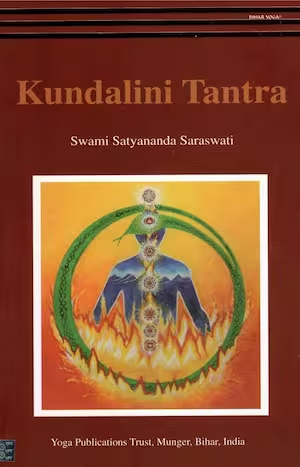
- Kundalini is a powerful, dormant life-force energy coiled at the base of the spine that, when awakened, rises through the chakras.
- Muladhara (Root Chakra): Located at the base of the spine, its element is Earth, and its quality is our connection to survival, stability, and grounding.
- Imbalances can manifest as feeling scattered, fearful, or issues like constipation and overeating.
- Grounding practices include walking in nature, maintaining a schedule, and balancing yoga poses.
- Svadisthana (Sacral Chakra): Located below the navel, its element is Water, and it governs emotions, creativity, sexuality, and the ability to "go with the flow".
- A balanced sacral chakra allows for spontaneity, healthy boundaries, and the enjoyment of life's pleasures.
- Imbalances can lead to lethargy, rigidity, sexual issues, or addictions.
- Hip-opening poses like Pigeon Pose and Bound Angle Pose help balance this chakra.
- Manipura (Solar Plexus Chakra): Located below the sternum, its element is Fire, and it is our "inner sun," governing personal power, will, and digestion.
- A balanced manipura chakra manifests as self-confidence, energy, and courage.
- Imbalances can result in insecurity and lethargy, or arrogance and excessive anger.
- Core-strengthening postures like Plank and Boat Pose stimulate this chakra.
- Anahata (Heart Chakra): Located at the center of the chest, its element is Air, and it is the center of love, compassion, and connection.
- Its Sanskrit name, anahata, means "unstruck sound," referring to the vibration of creation (OM).
- The heart's magnetic field is over 100 times stronger than the brain's.
- Imbalances can lead to loneliness, possessiveness, or feeling cold-hearted
- Backbends and heart-opening poses like Cobra and Bridge Pose help balance this center.
- Visuddha (Throat Chakra): Located at the pit of the throat, its element is Ether, and it governs communication, creativity, and self-expression. Its name means "purification".
- A balanced throat chakra allows for authentic, heartfelt expression.
- Imbalances can manifest as an inability to speak one's truth, excessive talking, or lying.
- Chanting, singing, and poses like Fish Pose and Shoulder Stand help balance this chakra.
- Ajna (Third Eye Chakra): Located in the center of the brain, its quality is intuition, imagination, and inner knowing.
- It is our "command center" and the doorway to abilities beyond the five senses, like clairvoyance.
- Imbalances can manifest as poor memory, nightmares, or a lack of imagination and skepticism.
- Meditation is the primary way to activate the ajna chakra.
- Sahasrara (Crown Chakra): Located at the top of the head, its name means "thousand-petaled lotus," and it is our connection to the divine or Source.
- It is the threshold between the physical and subtle worlds.
- A balanced crown chakra results in an openness to divine guidance and the experience of oneness.
- An imbalance can lead to spiritual superiority or a materialistic, spiritually closed-minded perspective.
- When this chakra is clear, one can experience mystical states, or samadhi.
- In a state of samadhi, the illusion of time and space dissolves, and everything is experienced as one whole.
Practices and Conclusion
- The book provides specific practices for each theme, including meditations, physical postures, rituals, and quotes to contemplate.
- Creating a dedicated meditation space can support a consistent practice.
- Mudras, or hand gestures, can be used during meditation to facilitate the flow of energy.
- Popular meditation mantras include So Hum ("I am That") and Sat Nam ("I am Truth").
- Ujjayi breathing, which creates an ocean-like sound, lengthens the breath and gives the mind a focal point during asana practice.
- Savasana (Corpse Pose), the final relaxation at the end of class, is a critical time for integrating the practice and quieting the mind.
- The ultimate goal of yoga is enlightenment or self-realization.
- Yogic tradition views time not as linear but as cyclical, moving through ages or yugas.
- According to Swami Sri Yukteswar, humanity is currently moving out of the darkest age (Kali Yuga) and into an age of rapid development in knowledge (Dwapara Yuga).
- This makes it a time when many are naturally being drawn to spiritual wisdom.
- The supreme state of yogic realization is kaivalya—absolute freedom, independence, and liberation.
- This state is achieved when the mind is quieted and the distinction between the mind and the True Self is realized.
- The transformative journey of yoga begins simply, by sitting down, closing our eyes, and feeling our breath.
. . .