

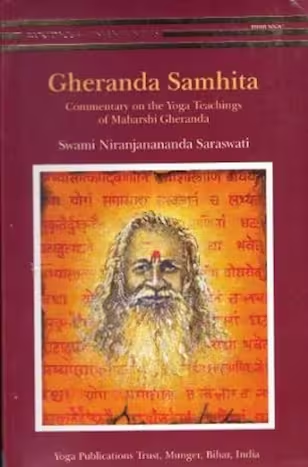
Gheranda Samhita by Swami Niranjanananda Saraswati Image
9/10 1,654 views Updated: 1 week ago

Gheranda Samhita by Swami Niranjanananda Saraswati

The Gheranda Samhita, a foundational Hatha Yoga text, presents a sevenfold path to spiritual and physical perfection: purification (Shatkarma), postures (Asana), seals (Mudra), sensory withdrawal (Pratyahara), breath control (Pranayama), meditation (Dhyana), and absorption (Samadhi). Sage Gheranda's teachings emphasize both body and mind transformation, including 32 asanas, 25 mudras, and eight types of pranayama. With detaile...

Imagine a guidebook that doesn't just tell you how to bend your body into postures but gives you a sacred recipe for transforming your entire existence. That’s The Gheranda Samhita. It’s ancient, profound, and unapologetically practical—a no-nonsense manual straight from the Himalayan sages, brought to life in Swami Niranjanananda Saraswati's brilliant translation.

This isn't your typical "sun salutations on a beach" yoga text. Nope. Sage Gheranda has bigger aspirations: to help you perfect your entire being through a seven-step journey that includes cleansing rituals, physical postures, powerful breathwork, and sublime meditative states that promise to unlock the divine within you.


Why You Should Read It

Still scrolling TikTok for stress hacks or mindfulness quotes? Stop. This is your golden ticket to timeless wisdom that actually works.


  1. A Guide for Body and Soul: It’s a roadmap to master both the physical and spiritual, balancing strength, clarity, and tranquility.
  2. Practical Magic: Learn ancient techniques that sound mystical but are remarkably doable (with commitment).
  3. Deep Spiritual Insights: By the last chapter, you won’t just be healthier—you’ll feel like you’ve glimpsed a secret universe inside you.
  4. For Seekers and Pragmatists Alike: Whether you’re a mystic or just want to upgrade your meditation game, this book delivers.


100 Important Points from The Gheranda Samhita


1. Introduction: A Unique Yoga System

  1. Gheranda Samhita is a conversation between Sage Gheranda and his disciple, Chanda.
  2. Unlike other Hatha Yoga texts, it describes a sevenfold path to perfection.
  3. The path includes purification (Shatkarma), postures (Asana), seals (Mudra), sensory withdrawal (Pratyahara), breath control (Pranayama), meditation (Dhyana), and absorption (Samadhi).
  4. The text emphasizes both physical and spiritual development, referred to as "Ghatastha Yoga."
  5. Gheranda distinguishes his teachings from the eight-limbed path of Patanjali's Yoga Sutras.

2. Purification (Shatkarma)

  1. Purification is essential to prepare the body for advanced yogic practices.
  2. Six purification techniques are detailed: Dhauti, Basti, Neti, Nauli, Trataka, and Kapalabhati.
  3. Dhauti: Four types to cleanse the stomach, lungs, and mouth.
  4. Basti: Yogic enema for cleansing the colon, practiced in water.
  5. Neti: Thread or water cleansing of the nasal passages for sinus clarity.
  6. Nauli: Abdominal rotation to strengthen digestion and balance energies.
  7. Trataka: Gaze concentration on a single point to improve focus and eyesight.
  8. Kapalabhati: Skull-shining breath to detoxify the lungs and stimulate the mind.
  9. These techniques are crucial for eliminating toxins and achieving bodily lightness.

3. Postures (Asanas)

  1. Gheranda describes 32 important asanas, emphasizing their physical and spiritual benefits.
  2. Siddhasana: The "Perfect Pose" for meditation and liberation.
  3. Padmasana (Lotus Pose): Ideal for concentration and stability.
  4. Mayurasana (Peacock Pose): Strengthens digestion and detoxifies the body.
  5. Paschimottanasana (Seated Forward Bend): Relieves stress and increases flexibility.
  6. Shavasana (Corpse Pose): Restores energy and promotes mental calmness.
  7. Asanas provide strength and steadiness to the practitioner.
  8. Regular practice of these poses leads to physical health and spiritual alignment.

4. Seals (Mudras)

  1. Mudras are hand or body gestures that channel energy in the body.
  2. 25 mudras are described in The Gheranda Samhita.
  3. Mahamudra: Removes diseases and bestows longevity.
  4. Khechari Mudra: Prevents thirst, hunger, and death while enabling samadhi.
  5. Viparitakarani: Inverts the body and reverses aging.
  6. Yoni Mudra: Awakens Kundalini energy and leads to samadhi.
  7. Mudras aid in awakening the inner energy and channeling divine power.
  8. Mastery of mudras brings steadiness and enhanced focus.

5. Sensory Withdrawal (Pratyahara)

  1. Pratyahara involves withdrawing the senses from external distractions.
  2. Essential for calming the mind and turning inward during meditation.
  3. Techniques include mentally detaching from sights, sounds, smells, tastes, and sensations.
  4. It is considered a bridge between physical practices and deeper meditation.
  5. Helps overcome the disturbances caused by sensory attachments.

6. Breath Control (Pranayama)

  1. Eight types of pranayama are described for mastering breath control.
  2. Sahita Pranayama: Combines breath retention with seed mantras.
  3. Suryabheda: Inhaling through the right nostril to energize the body.
  4. Ujjayi: Victorious breath to calm the mind and balance energy.
  5. Shitali: Cooling breath to reduce body heat and stress.
  6. Bhastrika: Bellows breathing for increased vitality.
  7. Bhramari: Produces a bee-like sound, inducing deep mental calm.
  8. Murccha: Induces trance states by slowing the breath.
  9. Kevali: Breathless state, leading to complete control over the mind.
  10. Pranayama purifies the nadis and awakens Kundalini.
  11. It is vital for achieving mental clarity and physical lightness.

7. Meditation (Dhyana)

  1. Three types of meditation are outlined: gross, luminous, and subtle.
  2. Gross Dhyana: Visualizing one's deity on a jeweled island.
  3. Luminous Dhyana: Meditating on a radiant inner light.
  4. Subtle Dhyana: Focusing on Kundalini energy and bindu (cosmic point).
  5. Meditation is key to self-realization and spiritual growth.
  6. Visualization practices are emphasized for steadying the mind.
  7. The luminous meditation technique helps transcend the physical world.

8. Absorption (Samadhi)

  1. Samadhi is the ultimate goal of yoga, where the individual unites with the supreme.
  2. Six types of samadhi are described.
  3. Dhyana Samadhi: Achieved through Shambhavi mudra.
  4. Nada Samadhi: Attained by focusing on the inner sound.
  5. Rasananda Samadhi: Bliss through rasa (inner taste).
  6. Laya Samadhi: Resorption into the ultimate reality.
  7. Bhakti Samadhi: Achieved through devotion.
  8. Murccha Samadhi: Induced by trance-like states.
  9. Devotion to the guru and consistent practice are essential for attaining samadhi.
  10. The realization of "I am Brahman" marks the peak of spiritual awakening.

9. Unique Philosophical and Practical Teachings

  1. The text emphasizes the unity of body, mind, and spirit.
  2. Purification is presented as the foundation for all yogic practices.
  3. Unlike classical texts, it places pratyahara before pranayama.
  4. Kundalini awakening is central to spiritual liberation.
  5. The role of the guru is emphasized in guiding the practitioner.
  6. The text blends Hatha Yoga with Vedantic and Bhakti influences.
  7. Visualizations are highlighted for both meditation and samadhi.

10. Miscellaneous Teachings and Insights

  1. Asanas are linked to achieving siddhis (spiritual powers).
  2. Mudras help overcome physical and mental limitations.
  3. Cleansing techniques prevent diseases and balance the body's humors.
  4. Regular breath control leads to extended lifespan.
  5. Visualization techniques enhance focus and concentration.
  6. Trataka is essential for developing mental clarity and willpower.
  7. Pranayama awakens the dormant Kundalini Shakti.
  8. Devotion is a legitimate path to samadhi, making the text inclusive.
  9. Bhakti practices induce blissful states.
  10. Mastery of senses is necessary for deeper spiritual insights.
  11. Gross meditation is the starting point for beginners.
  12. Subtle meditation is rare and considered the highest form of practice.
  13. Raja Yoga and Bhakti are considered valid approaches for liberation.

11. Historical and Cultural Notes

  1. The text has strong Vaishnava and Vedantic influences.
  2. Gheranda’s emphasis on purification distinguishes it from other yoga texts.
  3. Tantric elements are downplayed compared to earlier Hatha Yoga works.
  4. The Gheranda Samhita was likely composed in Bengal around 1700 CE.
  5. Manuscripts suggest a well-established tradition of its teachings.

12. Ethical and Lifestyle Recommendations

  1. Moderate diet is emphasized for success in yoga.
  2. Sattvic (pure) foods are recommended.
  3. Avoid pungent, stale, or excessive foods during yogic practice.
  4. The yogi should avoid distractions like gossip and worldly pleasures.
  5. Seasonal guidelines are given for starting yogic practices.
  6. Specific environments (peaceful and clean) are suggested for practice.

13. Key Benefits of the Practices

  1. Physical health and strength improve through asanas.
  2. Mental clarity and focus are achieved through meditation.
  3. Pranayama increases vitality and longevity.
  4. Mudras and cleansing techniques detoxify the body and awaken energy.
  5. Spiritual awakening and liberation are the ultimate rewards.
  6. Following the teachings leads to self-realization and union with Brahman.


. . .

Related Books Reviews