

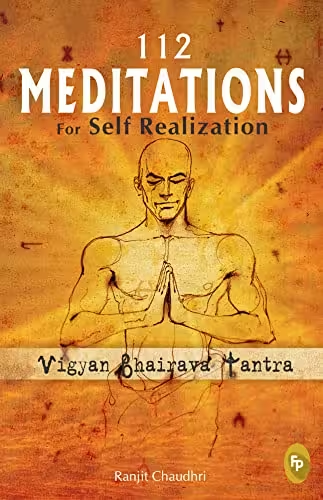
112 Meditations for Self Realization: Vigyan Bhairava Tantra by Ranjit Chaudhri
Vigyan Bhairava Tantra is a timeless spiritual text offering 112 meditation techniques for self-realization and enlightenment. Through a profound dialogue between Lord Shiva and Parvati, it explores the non-dual nature of existence, emphasizing that God and the individual are one. The teachings guide seekers to transcend the ego, still the mind, and experience inner joy. With practices centered on breath awareness, Kundalini e...
Summary of Vigyan Bhairava Tantra
The Vigyan Bhairava Tantra is an ancient text from the tradition of Kashmir Shaivism. It provides 112 meditation techniques for self-realization and enlightenment, imparted by Lord Shiva to his consort, Parvati. The teachings emphasize the non-dual nature of reality, where God is not separate from the individual or the universe. Through meditations that range from breath awareness to energy awakening, the text guides seekers toward stilling the mind and uncovering their true nature. It is a profound exploration of inner consciousness, joy, and the path to ultimate liberation.
Why You Should Read This Book
- Timeless Spiritual Insights: Although written over 2,000 years ago, the wisdom in this text remains relevant and applicable to modern life.
- Diverse Meditation Techniques: The 112 meditations cater to various personalities and temperaments, ensuring that readers can find a technique suitable for their journey.
- Practical Guidance for Inner Peace: The teachings emphasize controlling the mind to achieve peace and joy, which is a universally sought-after goal.
- Foundational Text in Tantra and Yoga: It reveals the roots of many modern spiritual and meditation practices.
- Non-Dual Philosophy: For those interested in non-dual traditions, it offers profound insights into the nature of self and divinity.
100 key points from the Vigyan Bhairava Tantra

Philosophical and Spiritual Foundations
- The text is a conversation between Lord Shiva and Parvati.
- It belongs to the tradition of Kashmir Shaivism, a philosophy of non-dualism.
- The primary teaching is that God and the individual are not separate but one.
- The universe is an expression of divine energy (Shakti).
- Liberation is achieved by transcending the ego and realizing one’s true nature.
- God’s nature is joy and consciousness.
- External pursuits cannot bring lasting happiness; it is found within.
- Stillness of the mind is essential for self-realization.
- God cannot be described in words or limited by time or space.
- Awareness and thought do not coexist; awareness leads to liberation.
Core Teachings of the Meditations (112 Techniques)
- Meditations begin with simple breath awareness and gradually deepen.
- Breath awareness is a key tool for controlling the mind.
- Focus on the gap between breaths to experience stillness.
- The breath is seen as divine energy (the Goddess).
- Energy ascends through the chakras during advanced practices.
- Kundalini awakening is a path to enlightenment.
- Visualization techniques are used to dissolve the ego.
- Awareness of bodily sensations can lead to a meditative state.
- Meditations often emphasize natural rhythms in life.
- Everyday experiences, such as hearing sounds, are used for meditation.
On God and the Universe
- The Supreme Reality pervades the entire universe.
- The world is described as an illusion, a divine play (lila).
- God is not a composite of separate forms but an indivisible whole.
- Duality is a misconception; everything is interconnected.
- The Goddess (Shakti) is inseparable from God (Shiva).
- The apparent division of forms is an illusion.
- God can be experienced directly through meditation.
- The creative aspect of God is present in all life forms.
- Enlightenment is the awareness of one's inherent divinity.
- God is both within and outside the individual.
Meditation Guidelines and Techniques
- Meditation can be practiced in various postures, usually seated.
- Silence and stillness are key to effective meditation.
- Awareness of breath helps anchor the mind.
- Focusing on specific body parts can awaken energy centers.
- Visualization of divine light aids concentration.
- Experiencing the turning of the breath transitions the mind to stillness.
- Slow and gentle breathing is advised.
- Energy flows upward when awareness is maintained on the breath.
- Raising awareness through the chakras leads to liberation.
- Meditation is a personal journey, and one method does not fit all.
Concepts of Energy and Kundalini
- Kundalini is dormant energy near the base of the spine.
- The seven chakras are energy centers located along the spine.
- Sushumna Nadi is the central channel for energy movement.
- Kundalini rising is described as the union of Shiva and Shakti.
- Energy is symbolized as a serpent coiled at the base of the spine.
- The Mooladhara chakra is the starting point for Kundalini awakening.
- Sahasrara chakra at the crown of the head symbolizes divine union.
- Energy movements in the body impact consciousness levels.
- Visualization of light rising through chakras enhances energy flow.
- Awareness of subtle sensations aids Kundalini awakening.
Techniques for Perception and Awareness
- Awareness of sensory experiences can lead to meditation.
- Listening to sounds helps focus the mind.
- Observing sensations within the body increases awareness.
- Visualizing divine forms aids in concentration.
- Everyday actions can be transformed into meditation practices.
- The perception of time can be dissolved in meditation.
- Observing natural sounds like rain fosters mindfulness.
- Chanting specific sounds creates resonance with divine energy.
- Awareness of physical touch connects one with the present.
- Observing thoughts without attachment helps dissolve mental chatter.
Non-Dual Awareness and Unity
- The distinction between self and other dissolves in higher meditation states.
- Seeing God in all beings fosters humility and compassion.
- The experience of unity transforms behavior toward others.
- God is described as pure awareness without form.
- Meditation leads to realizing the oneness of existence.
- The individual self is an illusion created by the mind.
- Love is a powerful tool for transcending the ego.
- Deep love dissolves the sense of separation.
- There is no superior or inferior in the state of unity.
- Non-dual awareness removes the fear of death.
Wisdom from Lord Shiva's Teachings
- Liberation requires controlling the mind.
- Awareness is the key to achieving self-realization.
- Truth is always simple; complexity arises from the mind.
- Experiencing joy within dissolves external attachments.
- The ego must be transcended to reach liberation.
- Meditation reveals one's true nature.
- Stilling the mind allows divine awareness to emerge.
- External rituals are for those who cannot understand ultimate reality.
- True spiritual progress comes from inner experience, not external practice.
- God’s nature is beyond form, sound, or symbols.
Practical Applications in Daily Life
- Meditation improves focus and productivity.
- Awareness practices reduce stress and anxiety.
- Controlling the breath helps manage anger and tension.
- Compassion and humility develop naturally through meditation.
- Material achievements lose their importance when joy is found within.
- Meditation enhances clarity of thought.
- Awareness of breath anchors one to the present.
- Inner peace translates to better relationships.
- Love and compassion replace competition and judgment.
- Practicing gratitude deepens spiritual awareness.
Life-Changing Spiritual Insights
- Joy is our inherent nature.
- God is found within, not in external pursuits.
- The mind creates the illusion of separation.
- Awareness dissolves the false ego.
- Non-duality is the ultimate truth of existence.
- Meditation unlocks the mysteries of life.
- Breath awareness connects one to divine energy.
- Liberation is the realization of one's true nature.
- Love transcends all boundaries and distinctions.
- The techniques are simple but profoundly powerful for transformation.