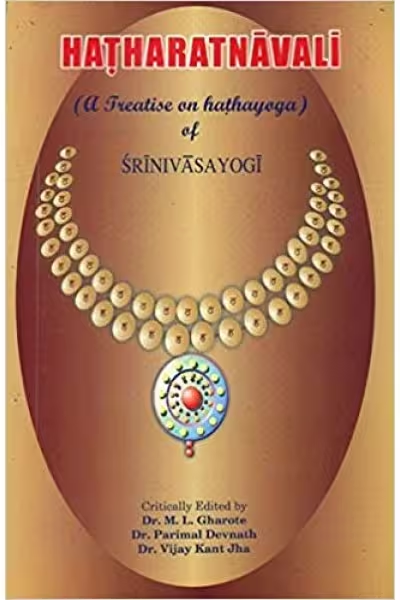
Hatha Ratnavali is a classical Sanskrit text on Hatha Yoga written by Srinivasa Yogindra between 1625–1695 CE. It is a significant work, inspired by the Hatha Pradipika, and provides a structured approach to Hatha Yoga. The text consists of four chapters covering various aspects of yogic practices. The first chapter discusses different forms of yoga—Mantra Yoga, Laya Yoga, Raja Yoga, and Hatha Yoga—emphasizing their interconnection. The second chapter elaborates on ten mudras and nine types of kumbhaka (breath control techniques), with detailed insights into Vajroli and Khechari Mudras. The third chapter is notable for listing 84 asanas, describing 36 in detail, and highlighting their effects on the body and mind. The final chapter explores deep meditative states, discussing samadhi (absorption), nadanusandhana (sound-based meditation), and the purification of nadis (energy channels). The text also introduces eight cleansing techniques (Ashta Karmas), which go beyond the conventional six kriyas found in other Hatha texts. Srinivasa’s work is particularly valuable for its insights into sanketa (yogic secrets), chakra purification, and a unique approach to yoga therapy, making it an essential text for serious yoga practitioners
Why You Should Read Hatha Ratnavali
- Comprehensive Yoga Guide – Unlike many traditional texts, it systematically describes 84 asanas and includes rare yogic techniques.
- Unique Cleansing Practices – It introduces Ashta Karmas, a more extensive purification system than the common Shat Karmas.
- Authentic Source on Mudras & Kumbhakas – It provides one of the most detailed explanations of breath control and energy channel activation.
- Raja Yoga Integration – The book bridges the gap between Hatha and Raja Yoga, highlighting their interdependence.
- Philosophical Depth – It references multiple Indian philosophies like Vedanta, Nyaya, and Samkhya, making it relevant for spiritual seekers.
Reading Hatha Ratnavali offers a rare opportunity to dive into ancient wisdom while gaining practical insights for physical, mental, and spiritual growth
100 important points from Hatha Ratnavali
General Overview
- Hatha Ratnavali was written by Srinivasa Yogindra between 1625–1695 CE.
- It is inspired by Hatha Pradipika but introduces new concepts and techniques.
- The text consists of four chapters, covering different aspects of Hatha Yoga.
- It integrates Hatha Yoga and Raja Yoga, emphasizing their interdependence.
- The book presents 84 asanas, though it describes only 36 in detail.
- It classifies yoga into four main types:Mantra Yoga – Using mantras for meditation.Laya Yoga – Achieving absorption of mind. Raja Yoga – The highest state of yoga, leading to samadhi. Hatha Yoga – A preparatory practice that purifies the body and mind.
- It introduces the concept of Ashta Karmas (Eight Cleansing Techniques).
- It describes ten mudras, with special focus on Vajroli and Khechari Mudras.
- Sanketa is a key concept in the book, referring to yogic secrets.
- It discusses the Pinda-Brahmanda (microcosm and macrocosm) connection.
Asanas (Postures)
- The book describes 84 asanas, but only 36 are explained in detail.
- It includes four types of Padmasana (Lotus Pose).
- It lists six variations of Mayurasana (Peacock Pose).
- Introduces Pindamayura – a variation of Peacock Pose.
- Mentions Ekapada Mayurasana – a one-legged Peacock Pose.
- Describes Bhairavasana, a powerful meditative posture.
- Lists Saurasana, which is missing in other Hatha texts.
- Introduces Phanindrasana, a cobra-like posture.
- Emphasizes Pascimottanasana (seated forward bend) for health benefits.
- Discusses the therapeutic benefits of each asana.
Kumbhakas (Breath Retention Techniques)
- The book describes nine kumbhakas, adding one new technique: Bhujangikarana.
- It explains Surya Bhedana for improving digestion and energy.
- Ujjayi pranayama is recommended for throat purification.
- Shitali pranayama helps in cooling the body and calming the mind.
- Bhastrika pranayama is described as a powerful energizing practice.
- It mentions Plavini Kumbhaka, which allows floating on water.
- Describes Kevala Kumbhaka, where breath suspension happens effortlessly.
- Discusses the therapeutic effects of pranayama on diseases.
- Breath control is necessary for stabilizing the mind and body.
- Kumbhakas help in awakening Kundalini energy.
Mudras (Seals for Energy Control)
- It describes ten mudras in detail.
- Maha Mudra is said to cure diseases and old age.
- Maha Bandha redirects prana into Sushumna Nadi.
- Maha Vedha is considered an advanced mudra.
- Uddiyana Bandha helps in activating Manipura Chakra.
- Mula Bandha stimulates the root chakra.
- Jalandhara Bandha prevents the loss of prana from the throat.
- Viparita Karani is described as a way to reverse aging.
- Vajroli Mudra is explained in great detail, including its preparatory practices.
- Khechari Mudra is said to enhance longevity and spiritual progress.
Ashta Karmas (Eight Cleansing Techniques)
- The book introduces Ashta Karmas, unlike Hatha Pradipika, which describes only six kriyas.
- Cakrikarma is emphasized as a crucial purification technique.
- Nauli Kriya is divided into Bhari Nauli and Antara Nauli.
- Basti is explained in two traditions: Kapālika tradition – using a wooden tube. Carpata tradition – using Cakrikarma instead.
- Neti Kriya helps in clearing nasal passages and improving eyesight.
- Dhauti Kriya removes digestive toxins.
- Gajakarani Kriya involves cleansing the stomach using coconut water.
- Trataka is essential for mental focus and clarity.
- Kapala Bhastrika (skull-cleansing breath) is an advanced version of Kapalabhati.
- The book emphasizes chakra purification through kriyas.
Philosophical Concepts
- The book integrates Nyaya, Vedanta, Samkhya, and Tantra philosophies.
- Nada Yoga is considered crucial for achieving samadhi.
- Mentions Brahmanda-Pinda connection (macrocosm and microcosm).
- Discusses the role of the five elements in the human body.
- Describes the nature of Kundalini energy and how it awakens.
- Explains Sanketa as a hidden yogic key.
- Identifies four stages of yoga progress – Arambha, Ghata, Pind, Nishpatti.
- Emphasizes Samadhi as the ultimate goal of yoga.
- Mentions 14 nadis and their spiritual significance.
- Discusses different interpretations of Raja Yoga.
Therapeutic Benefits
- Lists specific asanas and mudras for curing diseases.
- Mentions yogic remedies for digestive disorders.
- Recommends Pranayama for improving lung function.
- Discusses Asanas for mental clarity and stress relief.
- Emphasizes Viparita Karani for anti-aging effects.
- Lists foods that enhance yogic practice.
- Advises fasting and dietary discipline for purification.
- Discusses the impact of yoga on the nervous system.
- Explains how Trataka can improve eyesight.
- Lists prohibited behaviors for yoga practitioners.
Additional Teachings
- Discusses the importance of having a Guru.
- Emphasizes daily discipline in practice.
- Explains the relationship between breath and mind.
- Identifies obstacles to success in yoga.
- Describes signs of a successful yogi.
- Stresses the importance of detachment.
- Discusses the necessity of moderation in all practices.
- Highlights the importance of celibacy (Brahmacharya).
- Explains how to construct a proper meditation hut.
- Advises on avoiding negative influences.
Practical Recommendations
- Yoga should be practiced in solitude.
- Morning is the best time for practice.
- Mindfulness should be cultivated throughout the day.
- Physical purification is necessary before deeper meditation.
- Breath and thought must be synchronized.
- Nada Yoga leads to higher states of consciousness.
- Yoga must be learned progressively.
- Mastering Bandhas is essential for energy control.
- The book recommends long-term practice for results.
- Consistency is more important than intensity.
- The ultimate goal of Hatha Yoga is Raja Yoga.
- Yogic practices should be personalized to each individual.
- Asanas should be practiced slowly and mindfully.
- Mula Bandha prevents energy loss.
- Dhyana (meditation) should follow Asana practice.
- Yoga is a way of life, not just physical exercise.
- The body is a tool for enlightenment.
- Inner silence is the key to self-realization.
- Mind and prana are interconnected.
- Yoga leads to ultimate freedom (Moksha).
. . .