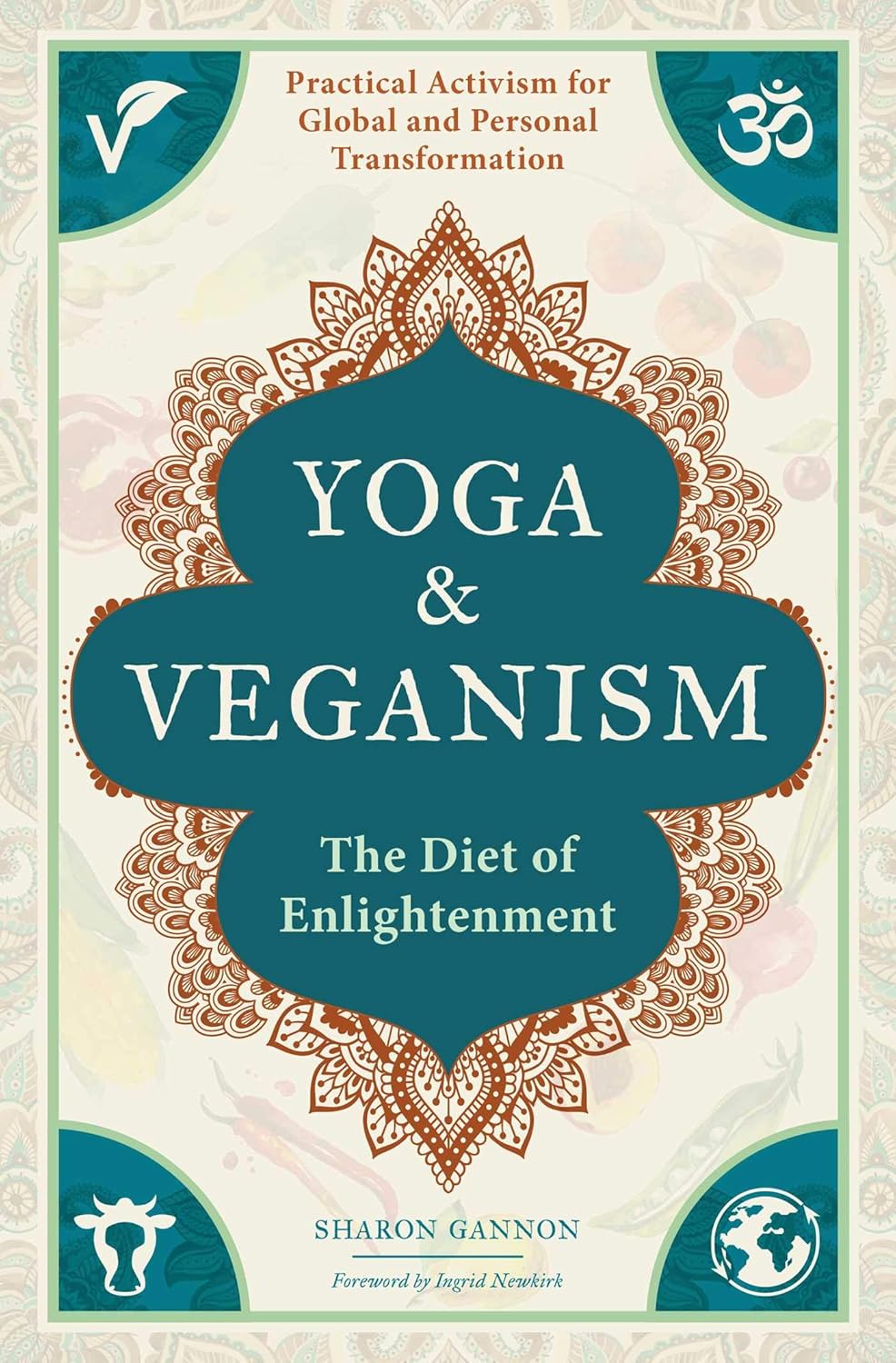
In Yoga and Veganism, Sharon Gannon presents a compelling argument that the practice of yoga and the principles of veganism are deeply interconnected. The book emphasizes that the spiritual path of yoga, particularly as described in Patanjali’s Yoga Sutras, is rooted in ahimsa—nonviolence—and this principle extends not only to humans but also to all sentient beings. Gannon argues that a true yogic lifestyle cannot be separated from compassion toward animals, and therefore, embracing veganism is a natural and essential extension of the yogic path.
Gannon draws from her own life experiences, spiritual journey, and yoga teachings to articulate how diet is not only a personal health choice but a moral and spiritual one. She recounts powerful moments from her childhood, early activism, and introduction to yoga that shaped her awareness of animal suffering and environmental destruction caused by animal agriculture. Her turning point came after watching The Animals Film, which exposed the horrific treatment of animals across industries. This inspired her to become a vegan and a teacher who would integrate animal rights into her yoga practice.
Using Patanjali’s eight-limbed path of Raja Yoga, Gannon maps the ethical and philosophical foundation for veganism. The first limb, yamas (moral restraints), begins with ahimsa and includes other principles like satya (truthfulness), asteya (non-stealing), brahmacharya (moderation), and aparigraha (non-possessiveness). She explains how each of these supports a vegan lifestyle. For example, consuming animal products violates truth, steals life, and promotes greed and attachment.
Gannon also explores the implications of karma—the spiritual law of cause and effect. She teaches that harming animals, directly or indirectly, results in karmic consequences that affect individual and planetary well-being. Choosing veganism purifies one’s karma, aligning thought, word, and action toward enlightenment.
The book also addresses common rationalizations for eating animals, challenging the idea that it’s acceptable if animals are treated "humanely" before slaughter. Gannon insists that any exploitation of animals is inherently violent and incompatible with spiritual growth. She makes the case that yoga is not about personal fitness or aesthetics but about union with the Divine, which cannot happen while perpetuating violence against other living beings.
In addition to spiritual and ethical arguments, Gannon briefly covers health and environmental benefits of veganism. She references scientific studies showing that plant-based diets reduce the risk of major diseases and decrease environmental degradation. Yet her primary focus remains on the spiritual imperative—calling for a shift in consciousness from separateness to unity.
Ultimately, Yoga and Veganism is a call to action for those on the spiritual path. Gannon urges readers to live with integrity, aligning their diet and lifestyle with the values of compassion, justice, and nonviolence. She offers veganism not as a trend or sacrifice, but as a joyful and liberating practice that deepens one’s yoga and brings healing to the world.
100 important points from Aerial Flow Yoga by Deboshree Roy:
Foundational Concepts
- Aerial Flow Yoga merges Hatha Yoga with aerial silk principles.
- The practice uses a U-shaped hammock suspended in air.
- It focuses on balance, strength, flexibility, and mindfulness.
- Aerial yoga is accessible to beginners with proper guidance.
- Sound technique removes fear; applied technique builds fearlessness.
- Breath coordination with movement is central to aerial flow.
- The floor is the best teacher before moving into the air.
- Warm-ups and conditioning are essential for injury prevention.
- Aerial Flow Yoga builds authentic, body-based confidence.
- Aerial practice is both physical and emotional healing.
Safety & Preparation
- Always get your rig checked by a structural engineer.
- Use a crash/safety mat for complex poses.
- Warm up thoroughly before beginning aerial work.
- Never train alone—always have someone nearby.
- Shoulder and core strength are critical in aerial yoga.
- Don’t skip extremity training—feet and fingers must stay active.
- Practice on the floor before trying aerial versions.
- Beginners should train under a qualified instructor.
- Use wrist locks and proper hammock positioning to prevent strain.
- Keep knees slightly bent if you have back or hamstring issues.
Breathing & Chakras
- Deep belly breathing enhances focus and control.
- Movement-breath harmony fosters meditative awareness.
- Each pose can activate different chakras.
- Common chakras targeted: Root, Sacral, Solar Plexus, Heart, Ajna.
- Proper breath helps reduce injury and tension.
Terminology & Poses
- Sirsasana: Headstand, used in aerial inversions.
- Dandasana: Staff pose, transitional or resting position.
- Upavistha Konasana: Wide-legged seated stretch.
- Straddle: Inverted position with both legs open and feet pointed.
- Virabhadrasana 3: Warrior 3, builds balance and lower-body strength.
- Trikonasana: Triangle pose for hips and spine.
- Prasarita Padottanasana: Wide-legged forward bend.
- Navasana: Boat pose, strengthens core.
- Uttanasana: Forward bend for spine and hips.
- Naukasana: Boat pose done mid-air with the hammock.
Conditioning Exercises
- Hammock Pull-ups: Build arm and shoulder strength.
- Upside-Down Crunches: Strengthen core muscles.
- Point-Flex & Kick-Ups: Improve leg articulation.
- Knee Tucks: Activate lower abs.
- Tabletop: Develop shoulder and core endurance.
- Pull-up Bent Elbow Hold: Builds biceps and back.
- Straddle Backs: Train inversion and core control.
Movement Series
- Movement Series develops hip mobility and coordination.
- Lunge Series targets hamstrings and balance.
- Warrior 3 Series strengthens glutes and backline.
- Sliding Natarajasana improves full-body extension.
- Lateral stretches help open the chest and obliques.
- Point-flex drills activate ankles and knees.
- Twists detoxify organs and improve spinal flexibility.
- Forward bends reduce stress and elongate muscles.
Advanced Asanas & Sequences
- Hanging Sirsasana provides spinal decompression.
- Sarvangasana improves circulation and supports the spine.
- Dandasana (seated in air) fosters balance and focus.
- Chair Pull-ups build full-body control.
- Upavistha Konasana Series transitions into Dhanurasana.
- Double Sirsasana leads to complex variations.
- Hasta Padangusthasana enhances leg flexibility mid-air.
- Bhujangasana (cobra) develops spinal mobility.
- Natarajasana cultivates balance and grace.
- Kapotasana to Shalabhasana strengthens lower back and glutes.
Mental & Emotional Growth
- Aerial yoga helps confront fear and hesitation.
- It builds confidence through small achievements.
- The practice teaches patience and perseverance.
- Overcoming a difficult pose becomes emotional healing.
- Practicing regularly transforms self-doubt into strength.
- It reconnects practitioners with their inner child.
- Encourages self-expression through movement.
- Helps release trauma stored in the body.
- Promotes mental resilience and adaptability.
- Nurtures body positivity regardless of past experiences.
Tips & Reminders
- Practice barefoot for better grip.
- Keep your fingers and toes alive and extended.
- Keep the pelvis neutral in most poses.
- Use props like blocks if needed.
- Always check elbow and knee alignment.
- Avoid arching the lower back unnecessarily.
- Keep your abdominal muscles engaged throughout.
- Let the hammock support your weight—don’t resist it.
- Trust your body and breath to guide you.
- Celebrate every small win.
Mindfulness & Growth
- Yoga is about being present with your breath.
- Surya Namaskar prepares the body and mind.
- Repetition cultivates muscle memory and flow.
- Mindful transitions matter more than flashy poses.
- Learning the basics builds long-term aerial confidence.
- Don’t compare your journey with others.
- Stay consistent for real transformation.
- Strength isn’t just physical—it’s mental too.
- Keep shoulders open and chest lifted.
- Return to Samasthiti to reset your mind.
Encouragement & Empowerment
- If the author could do it, so can you.
- Keep the little girl or boy inside you alive.
- Practice with joy, not pressure.
- Your dreams matter—honor them.
- Falling is part of the learning process.
- Aerial yoga is an invitation to fly—inside and out.
- There’s no such thing as “too old” or “too weak.”
- Let go of shame and judgment.
- Let your body lead your mind—not the other way around.
- The sky is not the limit—it’s your playground.
. . .