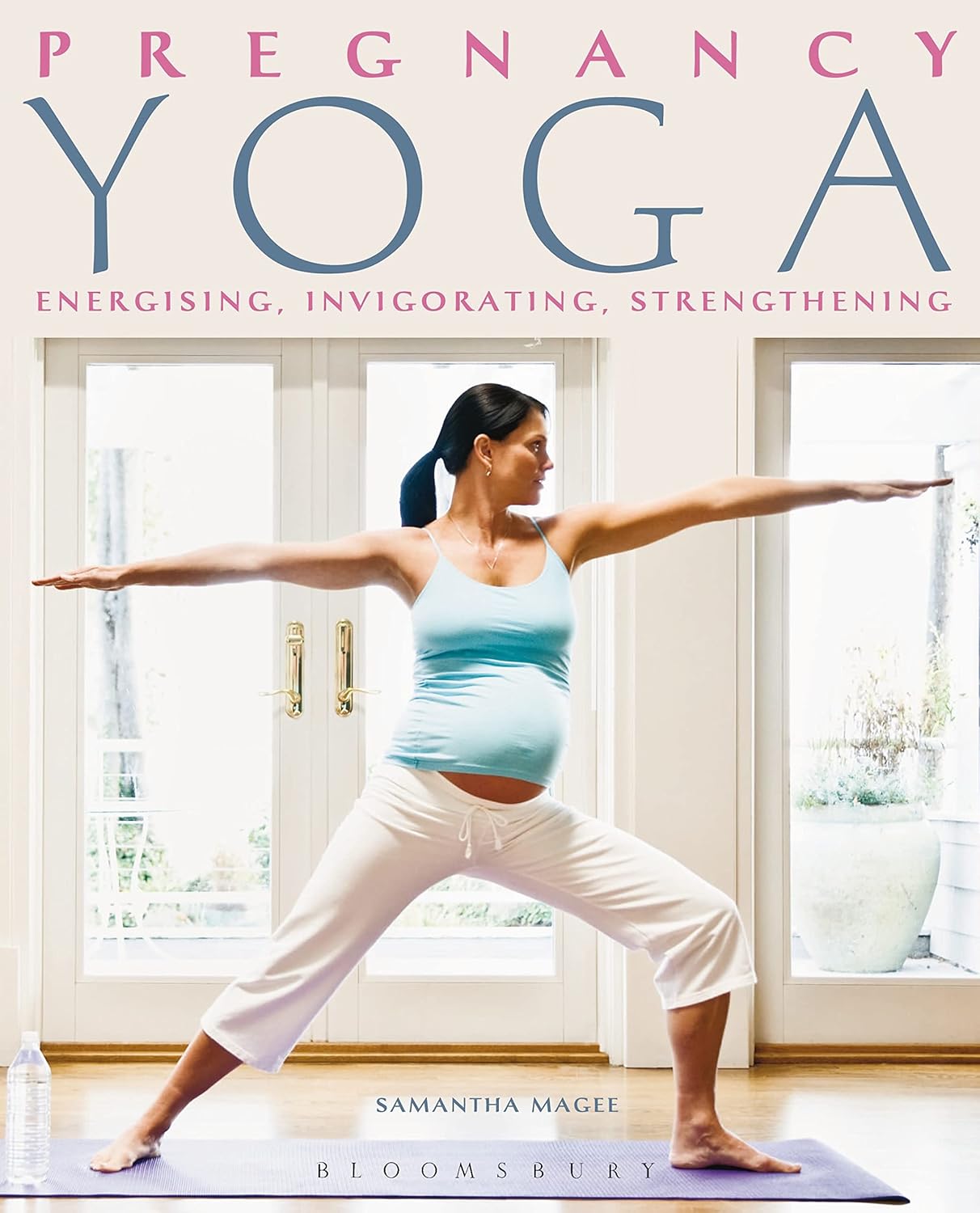
Samantha Magee’s Pregnancy Yoga is a comprehensive guide that empowers women to embrace the physical and emotional changes of pregnancy through safe, supportive, and holistic yoga practices. The book is structured to guide readers through each trimester and the postnatal period with tailored sequences, breathing techniques, and meditations designed to energize, strengthen, and deeply connect with both body and baby.
The foundation of the book begins with preparatory advice, stressing the importance of creating a peaceful practice space, aligning posture, and cultivating awareness of breath. Magee introduces yoga props and modifications to accommodate common symptoms and conditions such as Symphysis Pubis Dysfunction, Carpal Tunnel Syndrome, and fatigue. Her nurturing approach ensures yoga is accessible, safe, and restorative, regardless of prior experience.
Each trimester is explored in detail, highlighting physiological and emotional shifts. In the first trimester, Magee recommends gentle postures such as Butterfly and Cat pose to promote pelvic awareness and energy preservation during a time of hormonal volatility. The second trimester introduces more dynamic movements like Warrior I, Gentle Plank, and Bow to build stamina and reconnect with newfound strength. The third trimester emphasizes alignment, deep squats, hip rolls, and restorative stretches, prioritizing comfort and mental calm as labor nears.
Following childbirth, Magee offers postnatal poses that target spinal realignment, core restoration, and emotional support. Gentle flows and relaxation sequences aid recovery and bonding with the newborn. She also acknowledges the challenges new mothers face and encourages gradual rebuilding of strength without pressure or comparison.
Beyond physical movement, Magee integrates breathing techniques and meditation practices such as Full Yogic Breathing, Candle Breath, and Birthing Visualization to soothe anxiety, regulate energy, and foster emotional resilience. These practices deepen the connection with the baby and support mental clarity through every phase.
The book closes with thoughtful reflections and resources—nutrition guidance, recommended books, websites, and yoga equipment suppliers—emphasizing the importance of lifestyle harmony alongside physical wellness. Magee’s personal narrative enriches the guidance with authenticity and empathy. Having experienced the transformative power of yoga in her own pregnancy, she invites readers to trust their intuition and embrace their unique journey with grace and confidence.
Ultimately, Pregnancy Yoga is more than an instructional manual—it’s a supportive companion through one of life’s most profound transitions. Magee’s gentle wisdom and practical advice make it an invaluable resource for women seeking balance, empowerment, and connection during pregnancy and beyond.
100 important points form the book.
Key Concepts and Overview (1–10)
- Pregnancy yoga is a holistic system that supports physical, mental and emotional balance.
- It integrates asanas (postures), pranayama (breathing), meditation and visualization.
- Regular practice can minimize common symptoms such as morning sickness, constipation and backache.
- Yoga conditions skeletal, muscular, respiratory, cardiovascular, nervous, endocrine and reproductive systems.
- It helps ease labor, speeds postnatal recovery and builds lifelong strength.
- A consistent yoga practice fosters stability amidst rapid hormonal and bodily changes.
- Modifying poses deepens body awareness and intuition—essential for a positive birth experience.
- Suitable for beginners yet adaptable for experienced practitioners.
- Sequences are trimester-specific, ensuring safety and relevance.
- The book combines step-by-step guidance with personal anecdotes to empower expectant mothers.
Preparing for Practice (11–20)
- Schedule regular practice times and mark them in your diary for consistency.
- Choose a private, clutter-free, well-ventilated space at a comfortable temperature.
- Ensure room for a mat and props; avoid high heat and humidity.
- Wear loose, breathable clothing; supportive tops to accommodate bust changes.
- Practice barefoot for better mat grip; remove jewelry and watches.
- Stay well hydrated; practice best on an empty stomach or after a light snack.
- Ideal pre-practice snack options include banana, dried fruit or herbal tea.
- Silence phones and minimize distractions; use calming or uplifting music if desired.
- Familiarize yourself with safety guidelines and posture instructions before starting.
- Begin slowly, refer to the book often and cultivate intuition as confidence grows.
Alignment Principles (21–30)
- Proper alignment protects weight-bearing joints from undue stress.
- Stand with feet hip-width apart and parallel for a stable base.
- Distribute weight evenly over the front, back and sides of each foot.
- Avoid locking knees; keep a slight bend to safeguard the joints.
- Maintain natural spinal curves by lengthening through the crown of the head.
- Keep the chin level—neither tucked nor lifted.
- Sit with the base of the spine against the chair back; legs hip-width apart.
- Feet should rest flat on the floor or on blocks if the chair is too high.
- Tilt the pelvis slightly forward to lengthen the lower spine when sitting.
- Rest hands on thighs with shoulders back and down to promote deep breathing.
Safety Guidelines (31–40)
- Always consult a medical professional before starting prenatal yoga.
- Aim for regular practice—avoid sporadic, intensive sessions.
- Start with 15–20 minutes twice weekly and build up gradually.
- Practice barefoot; avoid extreme heat or humidity.
- Maintain steady breathing—enough to hold a conversation.
- Do not overstretch; relaxin increases ligament looseness.
- Eliminate jarring movements (e.g., jumping) to protect joints.
- Anchor yourself with props (chairs, walls, blocks) as needed.
- Listen to body signals; skip or modify any pose that causes discomfort.
- If energy is low, prioritize gentle stretches, breathwork and relaxation.
Fundamentals of Pregnancy Yoga (41–50)
- Recognize physical and emotional changes in each trimester.
- Adapt range of movement to match growing belly and shifting center of gravity.
- Learn safe transitions in and out of poses to avoid jarring the baby.
- Emphasize full yogic breathing and pelvic breathing for mind-body connection.
- Use props—bolsters, blocks, straps, chairs—to support changing needs.
- Modify poses for conditions like SPD, Carpal Tunnel, Sciatica and low placenta.
- Start every session with a warm-up (modified Sun Salutation) tailored to energy levels.
- Dedicate postnatal time to gentle sequences that rebuild core stability.
- Conclude sessions with relaxation and meditation to integrate benefits.
- Utilize provided resources for further reading, equipment and support.
Stages of Pregnancy (51–55)
- First trimester (weeks 1–12): embryo develops into a 7.6–10 cm fetus; high miscarriage risk.
- Second trimester (months 4–6): placenta fully functional, hormone levels stabilize, energy returns.
- Third trimester (months 7–9): baby grows rapidly to ~3.4 kg; space in the womb decreases.
- Labor divided into contractions, pushing and placenta delivery—prepare physically and mentally.
- Postnatal period (first six weeks): prioritize rest, healing and bonding with your newborn.
Nutrition (56–65)
- “Eating for two” is a myth—only 100–300 extra calories/day are needed.
- Prioritize whole foods: fruits, vegetables, lean proteins, whole grains and legumes.
- Limit fruit to three servings/day; choose low-acid options if prone to heartburn.
- Include omega-3 sources (salmon, mackerel); avoid high-mercury fish (tuna, swordfish).
- Consume moderate dairy (milk, cheese) for calcium; avoid unpasteurized varieties.
- Eat thoroughly cooked meats and eggs; reduce processed meats and smoked fish.
- Minimize caffeine; avoid alcohol entirely.
- Eat small, frequent meals to stabilize blood sugar and maintain energy.
- Hydrate with water or herbal teas; ginger tea alleviates nausea.
- Postnatal breastfeeding demands extra hydration and balanced nutrition.
Moving in and Out of Poses (66–70)
- Transition slowly to maintain balance and protect the baby.
- Inhale to prepare; exhale to move between poses with control.
- From tabletop to supine: walk hands forward, roll to one side, lower gently onto the back.
- From standing to all fours: bend knees deeply, lean forward, place hands and lower one knee at a time.
- For SPD, keep knees and feet closer to stabilize the pelvis during transitions.
Breathing Techniques (71–80)
- Full Yogic Breathing expands abdomen, ribs and chest for maximum oxygenation.
- Pelvic Breathing tilts the pelvis forward/back to strengthen core and pelvic floor awareness.
- Sun Breath (Surya Bhedana) invigorates by inhaling and exhaling through the right nostril.
- Moon Breath (Chandra Bhedana) cools body and mind via left-nostril breathing.
- Blowing Feather Breath soothes and cools; ideal during labor contractions.
- Candle Breath uses short exhales to delay premature pushing.
- Golden Thread Breath visualizes exhaling tension as a golden filament.
- Avoid prolonged breath retention; always exhale fully before the next inhale.
- Begin with basic breath awareness—observe natural rhythm before advancing.
- Combine pranayama with visualization and mudras for deeper mental focus.
Warm-Up: Sun Salutations (81–85)
- Mountain Pose establishes posture, alignment and focus.
- Raised-Arms Forward Bend mobilizes spine and warms hamstrings.
- Downward Dog (kneeling variation if needed) stretches the entire back line.
- Gentle Plank and Mini Chaturanga engage core and upper body safely.
- Child’s Pose offers a restful pause between rounds.
First Trimester Postures (86–90)
- Butterfly opens hips; use props under knees if groin tension arises.
- Hip Rolls (forward/back and circular) release lower-back stiffness.
- Cat Pose and its variations strengthen and flex spinal segments.
- Eagle Arms and Finger Interlacing relieve neck, shoulder and upper-back tension.
- Bridge Pose gently stimulates the thyroid and conditions the back.
Second Trimester Postures (91–95)
- Warrior II builds lower-body strength and external hip opening.
- Warrior I stretches hip flexors, calves and opens chest.
- Triangle elongates the sides of the torso and strengthens legs.
- Gentle Plank and Easy Push-Up continue core and arm conditioning.
- Pigeon Pose deepens hip opening; support hips with blocks if needed.
Third Trimester Postures (96–99)
- Deep Squat in Prayer fosters pelvic opening and stability for labor.
- Standing Hip Rolls mobilize the pelvis from a grounded stance.
- Single-Leg Seated Stretch releases hamstrings and groin; use straps for reach.
- Wall-Supported Wide-Leg Forward Fold offers inner-thigh release with safety.
Postnatal Flow and Recovery (100)
- Begin postnatal yoga after six weeks (or medical clearance) with Gentle Flow—Cat-Dog, kneeling lunges and Child’s Pose—to rebuild core, then finish in Corpse Pose for deep restoration and mother-baby bonding.
. . .