Why You Should Read It
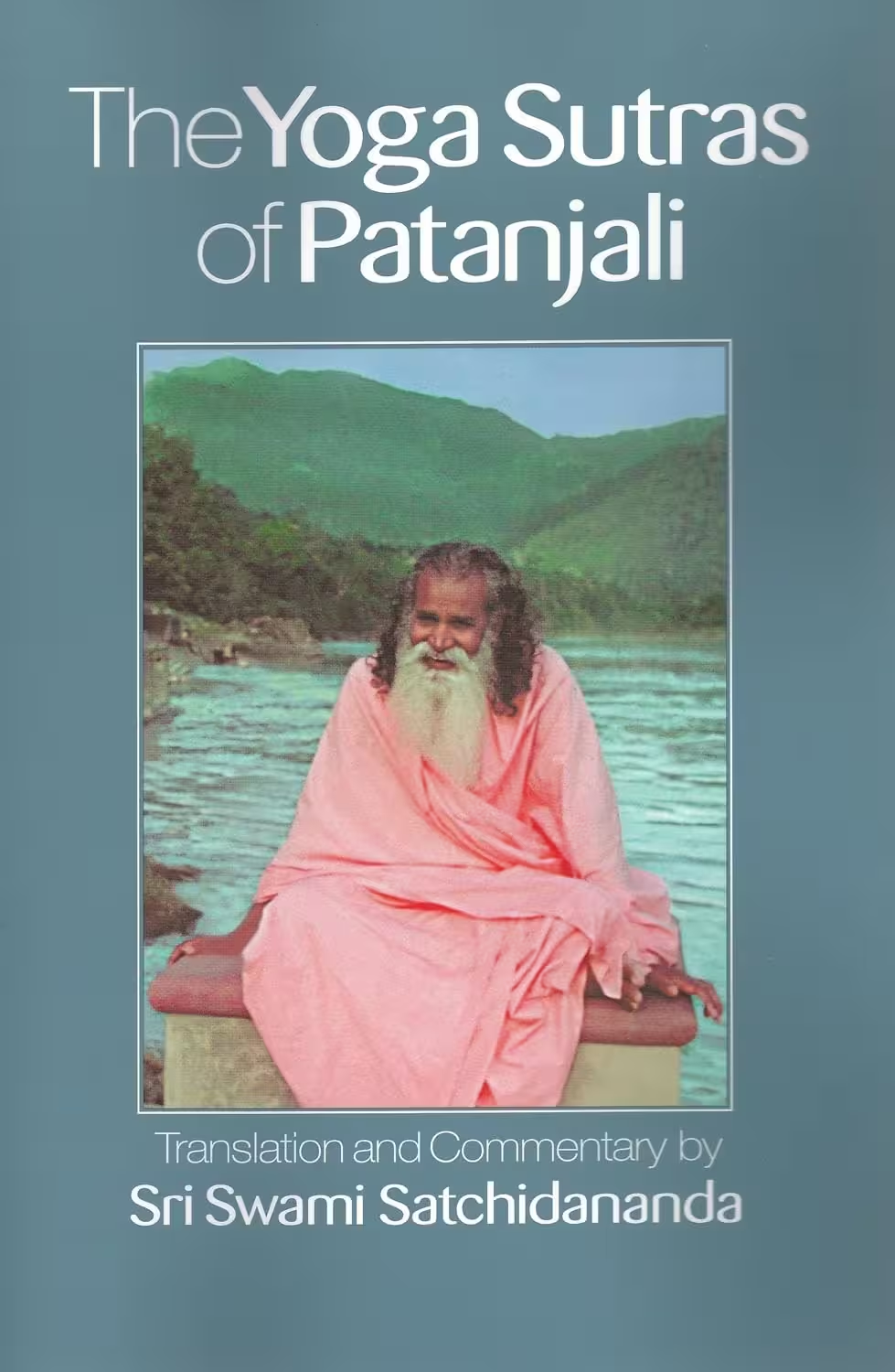
In the vast and often overwhelming sea of ancient spiritual texts, The Yoga Sutras of Patanjali, illuminated by the masterful commentary of Swami Satchidananda, shines as a beacon of clarity and wisdom. This book is not just a guide—it is a bridge between the ethereal and the practical, the profound and the accessible.
To read this work is to embark on a journey inward, a journey that teaches us not only how to live but how to be. It is an antidote to the chaos of modern life, a manual for mastering the mind, and a reminder that peace is not something we seek outside ourselves—it is our birthright, waiting to be reclaimed.
You should read this book because it offers:
- A Timeless Truth: The principles laid out by Patanjali transcend cultures, ages, and belief systems. They are as relevant today as they were millennia ago.
- Practical Transformation: Swami Satchidananda doesn’t just explain yoga; he teaches you how to live it.
- A Path to Mastery: It offers tools for overcoming distractions, fears, and doubts, helping you become the master of your own mind.
- Inner Peace and Liberation: These sutras are not just about philosophy but about freedom—the kind of freedom that makes you unshakable.
30 Major Insights from the Yoga Sutras
Book 1: Samadhi Pada – The Art of Stillness
- Yoga is the stilling of the mind’s fluctuations. This single line holds the key to freedom, the gateway to inner peace.
- The practice of yoga aims to reveal your true nature—a calm, eternal witness unaffected by life’s storms.
- Five mental disturbances plague us: truth, illusion, imagination, sleep, and memory. To master the mind, we must master these.
- Truth arises through direct experience, logical inference, and trust in wisdom passed down through generations.
- Serenity is achieved not through sudden leaps but through steadfast practice (Abhyasa) and non-attachment (Vairagya).
Book 2: Sadhana Pada – The Path to Freedom
- The eight limbs of yoga (Ashtanga Yoga) form a ladder to liberation, guiding us step-by-step from ethical living to cosmic unity.
- Ethical principles (Yamas) like non-violence and truthfulness purify our interactions with the world.
- Observances (Niyamas), such as contentment and self-discipline, turn our gaze inward.
- Physical postures (Asanas) are not for show but for cultivating steadiness and ease in both body and mind.
- Breath regulation (Pranayama) bridges the physical and the subtle, drawing us into harmony.
- Withdrawing the senses (Pratyahara) teaches us to redirect our focus from chaos to calm.
- Concentration (Dharana) plants the seeds of unwavering attention.
- Meditation (Dhyana) waters these seeds, nurturing the mind’s quiet bloom.
- In Samadhi, the final stage, the individual merges with the infinite, dissolving all boundaries.
Book 3: Vibhuti Pada – The Gifts of Mastery
- Through complete absorption (Samyama), extraordinary abilities may emerge—but these are mere signposts, not the destination.
- Powers like intuition and insight are not to be coveted; the real treasure lies in transcending the ego.
- The mind, when quieted, becomes a mirror reflecting the profound truth of existence.
Book 4: Kaivalya Pada – The Liberation Beyond
- The ultimate goal of yoga is Kaivalya—liberation from all bonds, a return to pure consciousness.
- Ignorance (Avidya) is the veil that blinds us to our divine nature, and yoga is the tool that tears it away.
- Attachment and aversion chain us, but detachment sets us free.
- Behind the dance of matter (Prakriti) and spirit (Purusha) lies an eternal stillness—a state of unity.
- Freedom is not found in isolation from the world but in embracing it with an untethered heart.
Swami Satchidananda’s Illuminating Insights
- Yoga is not a physical discipline—it is a revolution of the mind, a return to your authentic self.
- The mind is both your prison and your liberation; yoga gives you the keys.
- Selfless thoughts lead to peace; selfish ones bring turmoil. Your happiness depends on where you invest your energy.
- The world is not something “out there”—it is the projection of your mind. Change your thoughts, and you change your reality.
- Meditation is a gentle cleansing of the mind’s mirror, revealing the beauty of your true reflection.
- True joy lies not in acquiring but in surrendering, not in holding on but in letting go.
- Yoga is not bound by religion—it respects all paths, all seekers, all souls.
- Each step on the yogic path is a step toward becoming your best, most peaceful self—not tomorrow, but right here, right now.
A Call to Action
To read this book is to ignite a spark of transformation, a spark that can illuminate your entire being. The Yoga Sutras of Patanjali is more than a book—it is a living guide, a companion for anyone seeking to master their mind, deepen their understanding of life, and embrace the infinite within.
Let this be the moment you choose to step onto this ancient path, a path walked by sages, seekers, and now, you. The only thing standing between you and the peace you crave is your willingness to take the first step.
As Swami Satchidananda reminds us, “Practice is the most important factor in yoga. Read, reflect, but above all, begin.”
. . .