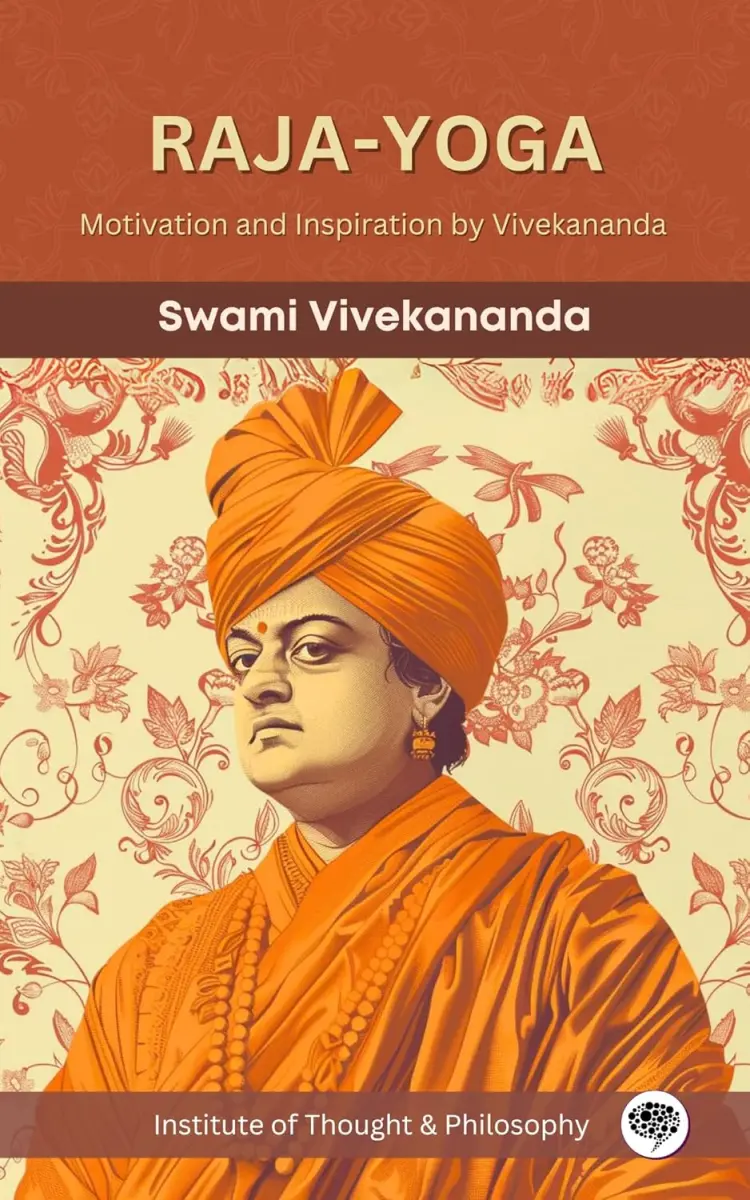
Raja Yoga is Swami Vivekananda’s profound exposition on the ancient Indian science of mental control and spiritual evolution. Based on Patanjali’s Yoga Sutras, this work bridges the gap between the mystical and the practical, offering both philosophical insights and practical instructions to awaken the dormant divinity within every human being.
The central premise of Raja Yoga is that each soul is potentially divine, and the goal of life is to manifest this divinity through self-mastery. Vivekananda emphasizes that religion is not mere belief or ritual, but direct experience. Just as science is rooted in observable facts, so too must spiritual truth be experienced first-hand. Raja Yoga provides the scientific methodology to realize these truths through inner exploration.
The book outlines eight steps of yoga, known as Ashtanga Yoga:
- Yama (moral restraints),
- Niyama (observances),
- Asana (physical postures),
- Pranayama (breath control),
- Pratyahara (withdrawal of the senses),
- Dharana (concentration),
- Dhyana (meditation), and
- Samadhi (superconscious absorption).
Vivekananda insists that the foundation of any yoga practice must be morality and discipline. Without truthfulness, non-violence, continence, and purity, spiritual efforts will not bear fruit. After these ethical foundations are laid, one learns to control the body and mind through posture and breath, leading eventually to the ability to concentrate and meditate deeply.
A key concept in the book is Prana, the life force that animates all existence. Mastery over Prana, through breath and thought control, enables the yogi to influence both mind and matter. Breath control (Pranayama), though often misunderstood as merely breathing exercises, is actually a means to access deeper states of awareness by regulating Prana.
Another crucial idea is that truth must be verified by personal experience. Vivekananda criticizes blind belief and superstition, arguing that genuine spirituality must be demonstrable and experiential. Miracles, faith-healing, and psychic powers may occur as by-products of yogic practice, but they are not the goal. The true goal is freedom (moksha)—liberation from ignorance, fear, and suffering.
Vivekananda also explains the philosophy behind yoga using ideas from Sankhya, an ancient Indian philosophical system. He differentiates between the eternal soul (Purusha) and the mind, body, and senses, which are temporary. Yoga, he says, enables one to separate the real from the unreal, the permanent from the transient.
He warns against mysticism and secrecy, advocating for transparency, reason, and scientific inquiry. Raja Yoga, in his view, is not a sectarian practice but a universal science—open to people of all faiths or no faith.
Ultimately, Raja Yoga offers a transformative path to self-realization. It teaches that by conquering the mind, we conquer the universe. This path is not easy and requires dedicated, systematic practice. But for those who follow it sincerely, it promises direct knowledge of the soul, freedom from suffering, and union with the divine.
100 important points from Raja Yoga by Swami Vivekananda:
⚡ Core Philosophy
- Each soul is potentially divine.
- The goal is to manifest this divinity by controlling nature—both internal and external.
- Religion is a science based on personal experience, not blind belief.
- Yoga is the method to attain spiritual freedom.
- True religion starts with direct perception, not faith alone.
- Spiritual truths must be verifiable through individual experience.
- All religions are built on the same foundation: inner experience.
- Raja Yoga is a scientific method for self-realization.
- There is no supernatural; only subtle and gross manifestations of nature.
- Mind is both the instrument and the object of study in Raja Yoga.
🧘 Eight Limbs of Raja Yoga (Ashtanga Yoga)
- Yama – moral disciplines (non-violence, truthfulness, non-stealing, celibacy, non-possessiveness).
- Niyama – observances (cleanliness, contentment, austerity, study, self-surrender).
- Asana – steady posture for meditation.
- Pranayama – control of prana (life-force) through breath.
- Pratyahara – withdrawal of the senses from external objects.
- Dharana – one-pointed concentration.
- Dhyana – meditation.
- Samadhi – superconscious absorption or spiritual ecstasy.
- Without Yama and Niyama, higher practices fail.
- Ethical living is foundational for spiritual progress.
🌀 Mind & Perception
- Mind is not the soul but an instrument.
- Control of mind leads to control of reality.
- Concentration intensifies mental power.
- Scattered mind leads to weakness and confusion.
- Through introspection, the mind can be analyzed and transcended.
- Thoughts have vibrational force and affect others.
- Attention is the key to all learning.
- External world is gross; internal is subtle and causal.
- Pranayama helps bring the mind inward.
- Body and mind affect each other.
🌬️ Prana & Breath
- Prana is the vital energy behind all motion.
- Breath is the gross manifestation of Prana.
- Pranayama helps control body, mind, and energy.
- Mastery of Prana leads to mastery of the universe.
- All forces in the universe are manifestations of Prana.
- Prana control grants clarity, strength, and insight.
- Healing and influence occur through Prana transmission.
- Thought, too, is a function of Prana.
- Prana becomes more subtle through breath control.
- Controlling Prana quiets the mind.
🔥 Practice & Preparation
- Practice is essential—mere theory is useless.
- A pure lifestyle supports mental clarity.
- Moderation in food, sleep, and activity is vital.
- Early morning and evening are best for practice.
- A clean, dedicated room enhances spiritual energy.
- Visualization and intention impact practice.
- One should begin practice only under guidance or careful understanding.
- Self-control is the first step in yoga.
- Discipline builds inner strength.
- Ill health, doubt, and laziness are obstacles.
✨ Higher Consciousness
- Real knowledge comes through superconscious experience.
- Samadhi is not trance but supreme awareness.
- The soul is immortal, birthless, deathless.
- True freedom is freedom from desire and fear.
- The goal of yoga is liberation (moksha).
- Bliss and peace are natural states of the Self.
- The real Self is beyond body and mind.
- Soul realization removes all sorrow.
- Meditation reveals the eternal truth.
- Once the Self is realized, external things lose power.
🧠 Science & Verification
- Raja Yoga is rational, not mystical.
- Blind faith weakens; direct realization empowers.
- There is no secrecy in true yoga.
- Raja Yoga is compatible with science.
- Philosophies must align with experience.
- God is not a belief, but an experience.
- Nature follows law—even in spiritual realms.
- The universe is governed by cause and effect.
- Supernatural experiences must be critically examined.
- True miracles are results of natural laws at higher levels.
📖 Philosophical Foundations
- Raja Yoga is based on Sankhya philosophy.
- Sankhya teaches dualism of Purusha (soul) and Prakriti (nature).
- Mind, body, and senses are material.
- The soul is pure consciousness.
- Liberation is realizing the Self is separate from mind-body.
- God in yoga is the eternal teacher (Ishvara).
- Ishvara is untouched by karma or limitations.
- Meditation on Ishvara accelerates spiritual growth.
- Karma binds the mind; yoga liberates.
- Ignorance is the root of suffering.
🌍 Universal Application
- Raja Yoga applies to all, regardless of religion.
- It’s a universal path to truth.
- Anyone with sincerity and discipline can succeed.
- One must rely on their own effort.
- Human birth is the greatest opportunity.
- No caste, class, or gender bars apply.
- Raja Yoga respects all true seekers.
- Every soul has the right to inquire and evolve.
- One must test everything through personal effort.
- Self-realization is the highest goal of life.
🔓 Wisdom for Modern Life
- Concentration improves success in all areas.
- A calm mind is a creative mind.
- Attention gives power to speech and action.
- Yoga reduces stress, fear, and confusion.
- Mindfulness sharpens intellect and memory.
- Self-control increases confidence and freedom.
- Real strength comes from inner peace.
- A yogi does not run from life, but masters it.
- The body is a sacred instrument, not to be neglected.
- The journey of yoga begins with one sincere step inward.
. . .