

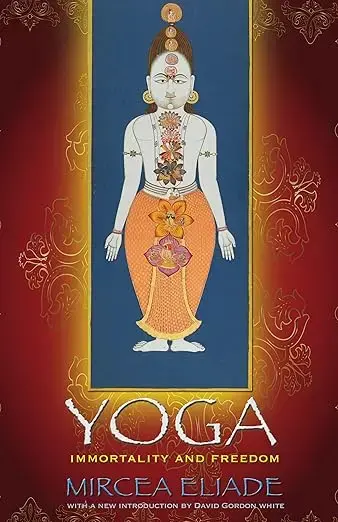
Yoga: Immortality and Freedom by Mircea Eliade
Yoga: Immortality and Freedom by Mircea Eliade is a profound exploration of yoga’s spiritual depth and historical evolution. This classic text explains how yoga goes beyond physical postures, leading practitioners toward liberation, self-realization, and ultimate freedom. Eliade examines yoga’s roots in Hindu philosophy, its connections to meditation, ascetic practices, and its role as a spiritual discipline across centuries.
Mircea Eliade’s Yoga: Immortality and Freedom is a timeless masterpiece that explores yoga not just as physical exercise but as a complete spiritual discipline rooted in Indian philosophy. The book examines yoga as a path to liberation (moksha) and immortality of the spirit, revealing how yogic practices allow individuals to transcend suffering, time, and worldly attachments.
Eliade begins by analyzing the core doctrines of yoga—karma (the law of cause and effect), maya (illusion), nirvana (liberation), and yoga itself (union and discipline). These concepts form the foundation of Indian spirituality, where truth is valued not for its intellectual pursuit but for its power to free the soul. Yoga is presented as both philosophy and practice, blending metaphysical knowledge with ascetic techniques to achieve self-realization.
The book explains how Patañjali’s Yoga Sutras systematized yogic practices, turning mystical traditions into a structured path. Eliade explores meditation, concentration, pranayama (breath control), and asanas (postures), emphasizing their role in freeing the practitioner from suffering and achieving samadhi (union with the self). He also details the role of the guru (teacher) in guiding the student through initiation and transformation, highlighting yoga’s deep initiatory structure.
Beyond classical yoga, Eliade explores its interaction with Brahmanism, Buddhism, and Tantrism, showing how different traditions adapted yogic techniques for their own spiritual goals. He explains how yoga influenced Buddhist meditation practices, tantric rituals, and even Indian alchemy. Topics like kundalini awakening, chakras, mantras, and mystical union are discussed as ways yogis sought immortality and spiritual freedom.
One of the book’s key insights is the connection between yoga and the problem of human suffering. In Indian philosophy, life is often described as painful because of attachment to the transient world. Yoga offers liberation by teaching detachment, mastery of the mind, and realization of the eternal Self (purusha/atman). This quest for freedom echoes through the Upanishads, Bhagavad Gita, and tantric traditions, where yoga becomes the bridge between human limitation and divine transcendence.
Eliade also compares Indian yoga with other spiritual systems worldwide, including shamanism, mysticism, and ascetic practices from different cultures. He argues that yoga stands out as one of the most rigorous and effective methods for transcending human limitations and attaining higher consciousness.
For modern readers, Yoga: Immortality and Freedom serves as both a scholarly guide and a spiritual inspiration. It shows how yoga’s relevance extends beyond religion into psychology, philosophy, and personal transformation. Eliade’s detailed research and accessible writing make the book valuable for academics, yoga practitioners, and anyone interested in the intersection of spirituality and human potential.
In essence, the book teaches that yoga is not merely about flexibility or health but about immortality of the soul and freedom from suffering. It invites readers to embrace yoga as a path to inner awakening, ultimate liberation, and a deeper connection with the timeless truth.
100 important point from Yoga: Immortality and Freedom by Mircea Eliade:

Key Insights from Yoga: Immortality and Freedom
- Yoga is both a philosophy and a spiritual practice.
- The goal of yoga is liberation (moksha) and immortality of the soul.
- Yoga is rooted in Vedic and Upanishadic traditions.
- Patañjali’s Yoga Sutras provide a systematic framework for practice.
- Yoga emphasizes discipline, meditation, and detachment.
- The human condition is marked by suffering (dukkha).
- Yoga offers liberation from suffering through mastery of the mind.
- Breath control (pranayama) is central to yogic transformation.
- Meditation leads to samadhi (union with higher consciousness).
- The guru plays a vital role in spiritual initiation.
- Yoga integrates philosophy with practical techniques.
- Karma (cause and effect) shapes human destiny.
- Liberation requires detachment from worldly desires.
- Yoga draws from Hindu, Buddhist, and Tantric traditions.
- Kundalini awakening symbolizes spiritual ascent.
- Chakras represent energy centers in the body.
- Mantras act as tools for concentration and transformation.
- Ascetic practices purify body and mind.
- Yoga offers transcendence of time and mortality.
- Self-realization reveals the eternal Self (Atman).
- Maya (illusion) binds humans to suffering.
- Yoga dissolves illusion through awareness.
- Concentration (dharana) is a stepping stone to meditation.
- Detachment (vairagya) is essential for freedom.
- Yoga connects body, mind, and spirit.
- Indian philosophy sees truth as liberating, not abstract.
- Discipline (tapas) strengthens willpower.
- Nirvana represents ultimate freedom.
- Yogic traditions influenced Buddhist meditation.
- Tantric yoga emphasizes union of opposites.
- Alchemy in India was influenced by yogic ideas.
- Samadhi is the highest state of yogic consciousness.
- The yogi seeks to conquer death through realization.
- Yoga provides mastery over body and senses.
- Silence and solitude enhance yogic practice.
- Yoga transcends cultural and religious boundaries.
- Yogis seek immortality through detachment.
- Asceticism is seen as a tool, not an end.
- Yogic rituals mirror cosmic order.
- The mind is both obstacle and key to liberation.
- Spiritual progress requires ethical living (yamas and niyamas).
- Yoga acknowledges different paths to freedom.
- Devotion (bhakti) can complement yogic discipline.
- Knowledge (jnana) is integrated with practice.
- The body is a vehicle for spiritual realization.
- Fasting and austerities prepare the mind.
- Yogic cosmology explains human suffering.
- Breath links the physical and spiritual realms.
- Concentration on sound (nada yoga) aids transcendence.
- Yoga reshapes consciousness at its deepest level.
- Mystical union is the essence of yoga.
- Yoga aims at mastery over the subconscious.
- Yogis strive for freedom from rebirth (samsara).
- Indian alchemy symbolizes spiritual transformation.
- The yogi is a seeker of absolute truth.
- Yoga bridges metaphysics and lived experience.
- The discipline evolves through stages of practice.
- Visualization techniques are used in advanced yoga.
- Detachment leads to clarity and peace.
- Samkhya philosophy complements yoga.
- Indian mysticism inspired yogic evolution.
- Rituals are symbolic of inner transformation.
- Yoga seeks transcendence of dualities.
- The yogi becomes free from fear of death.
- Time is transcended through meditation.
- Yoga recognizes multiple states of consciousness.
- The ultimate goal is union with the absolute.
- Yogic myths symbolize inner truths.
- Breath control harmonizes prana (vital energy).
- Yogis see the body as sacred.
- Spiritual initiation marks rebirth into higher knowledge.
- Yogic discipline demands persistence.
- Freedom requires surrender of ego.
- Mysticism and yoga share universal patterns.
- Indian philosophy emphasizes practice over theory.
- Yogis practice non-violence (ahimsa).
- Truthfulness (satya) is a spiritual necessity.
- Non-attachment fosters inner freedom.
- Yoga is a science of consciousness.
- The yogi seeks immortality of awareness.
- Liberation transcends religious identity.
- Spiritual freedom is possible in this life.
- Yogic symbols convey timeless wisdom.
- Yoga transforms human destiny.
- Self-discipline aligns inner and outer life.
- Concentration deepens through repetition.
- Mystical visions may arise in deep meditation.
- The yogi experiences oneness with the cosmos.
- Yogic practices balance inner energies.
- Freedom is achieved by renouncing ignorance.
- Yoga prepares for death as conscious transition.
- Yogis embody resilience and inner strength.
- Yoga reveals hidden dimensions of existence.
- The yogi embodies balance and harmony.
- Liberation is a universal human quest.
- Yogic wisdom transcends time and culture.
- Spiritual discipline is the key to immortality.
- Yoga dissolves boundaries of the self.
- The yogi becomes one with eternal truth.
- Yoga: Immortality and Freedom is a roadmap to transcendence.