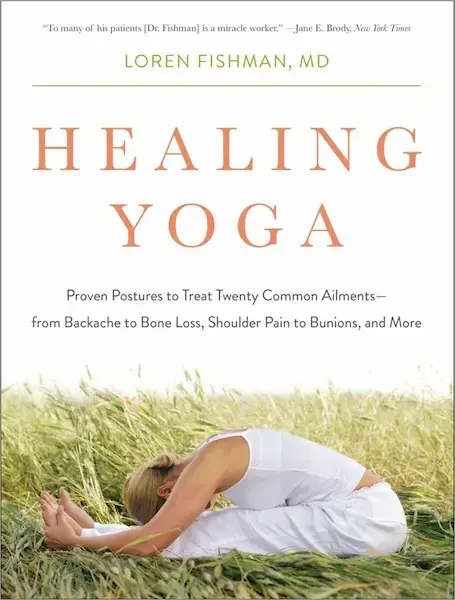
Healing Yoga by Dr. Loren Fishman explores the transformative power of yoga as a therapeutic tool for addressing common ailments and improving overall well-being. The book blends modern medical knowledge with the ancient wisdom of yoga, offering readers a practical guide to using specific postures for healing physical conditions such as back pain, bone loss, insomnia, depression, and more.
The book begins with an introduction emphasizing that yoga is accessible to everyone—regardless of age, fitness level, or experience. Fishman, a physician trained in Iyengar yoga under B.K.S. Iyengar in India, advocates for this style due to its emphasis on anatomical alignment, precision, and the use of props for safety and accessibility. He highlights yoga’s benefits for mood, flexibility, strength, coordination, and emotional resilience. According to him, regular and mindful practice is key, not just for fitness but for healing and even spiritual growth.
A significant portion of the book is devoted to back pain, the second most common ailment after the common cold. Fishman argues that the lack of proper diagnosis often leads to ineffective treatments. He identifies seven distinct causes of back pain—each requiring different yoga-based strategies. These include musculoskeletal issues like quadratus lumborum spasm, tight hamstrings, and facet syndrome, as well as neurological causes such as herniated discs and stenosis. For each condition, the book offers an explanation of symptoms, a medical overview, and a set of recommended yoga postures with instructions, variations, and contraindications.
Fishman also describes conditions such as rotator cuff injuries, insomnia, scoliosis, headaches, depression, and bone loss, showing how targeted yoga poses can ease pain, improve function, and promote healing. In addressing neurological issues, he emphasizes the importance of differentiating symptoms like numbness, tingling, and radiating pain from general muscle soreness. The diagnostic self-tests provided in the book allow readers to explore the origin of their discomfort and select the most appropriate yoga-based intervention.
One of the book’s strengths is its scientific rigor. Fishman references clinical studies and encourages the integration of Western scientific methodology with yogic traditions. He also addresses safety concerns, acknowledging that while yoga is generally safe, it can cause injury if performed improperly. He strongly recommends learning from well-trained teachers and modifying poses as needed—especially for beginners or those with medical conditions.
Throughout the book, Fishman shares patient stories that illustrate yoga’s healing potential. These narratives add a human dimension to the medical content, demonstrating how simple, consistent yoga practice can lead to significant physical, emotional, and even lifestyle transformations.
In essence, Healing Yoga is a bridge between medicine and yoga, offering both professionals and laypeople a resource for using yoga therapeutically. It is a guide not just for symptom relief but for cultivating awareness, patience, and resilience. Dr. Fishman concludes with a hopeful vision: if more people practiced yoga mindfully, the world would not only be healthier, but also more peaceful and compassionate.
100 important points from Healing Yoga by Dr. Loren Fishman:
Core Philosophy & Overview
- Yoga is for everyone—regardless of age, ability, or fitness.
- Yoga improves strength, flexibility, balance, and mood.
- It requires minimal equipment and can be done almost anywhere.
- Iyengar yoga is emphasized for its anatomical precision and therapeutic use.
- Consistency is key—daily practice leads to deeper benefits.
- Yoga can help manage and heal many medical conditions.
- Western science and yoga therapy can coexist and complement each other.
- Diagnosing the root cause of pain is essential before treatment.
- Yoga is both preventive and curative.
- Healing through yoga is gradual, requiring patience and dedication.
Safety & Practice Guidelines
- Avoid pain during practice—listen to your body.
- Use props (blocks, belts, blankets) to ensure correct alignment.
- Learn from a qualified teacher, especially if you’re new or injured.
- Be cautious with pre-existing conditions like osteoporosis or herniated discs.
- Yoga poses can cause harm if done improperly or without awareness.
- Stop immediately if a pose increases sharp or shooting pain.
- Pregnant women should consult doctors and practice specialized prenatal yoga.
- Practice should be adapted for age, weight, and physical limitations.
- Yoga is not competitive—focus on your own progress.
- Breathing and alignment are just as important as flexibility.
Back Pain Focus
- Back pain is one of the most common reasons people seek yoga therapy.
- There are 7 distinct causes of back pain—each with unique treatment.
- Musculoskeletal and neurological causes must be distinguished.
- A herniated disc benefits from extension (back-bending) poses.
- Spinal stenosis responds better to flexion (forward-bending) poses.
- SI joint derangement requires poses that realign the pelvis and sacrum.
- Tight hamstrings can tilt the pelvis and cause lower back pain.
- Quadratus lumborum spasm often stems from prolonged sitting or bending.
- Sciatica is a symptom—not a condition—caused by various pathologies.
- Accurate diagnosis is key to choosing effective poses.
Specific Poses and Their Effects
- Adho Mukha Virasana (Child’s Pose) relaxes the quadratus lumborum.
- Parighasana (Gate Pose) stretches the lateral spine and core.
- Supta Padangusthasana I & II are excellent for tight hamstrings and spinal alignment.
- Janusirsasana (Head to Knee Pose) calms the nervous system and stretches hamstrings.
- Matsyendrasana (Seated Twist) helps align facet joints.
- Dandasana (Staff Pose) builds postural awareness.
- Trikonasana (Triangle Pose) gently stretches spine and hamstrings.
- Gomukhasana (Cow Pose) can realign the sacroiliac joint.
- Marichyasana I separates facet joints to restore alignment.
- Props and variations make difficult poses accessible and safer.
Conditions and Remedies
- Yoga can relieve rotator cuff injuries.
- It helps with insomnia by calming the nervous system.
- Yoga supports bone health, especially in osteoporosis.
- It assists with headaches by relaxing neck and shoulder tension.
- Yoga can ease premenstrual syndrome and hormonal imbalance.
- It helps manage depression through mood-elevating effects.
- Yoga is useful for weight control and mindful eating.
- Restless leg syndrome may benefit from gentle stretches and inversions.
- Plantar fasciitis can be eased by foot-strengthening yoga.
- Yoga may reduce the discomfort caused by bunions.
Scientific and Therapeutic Insights
- Western clinical trials are now validating yoga’s medical benefits.
- Yoga is cost-effective and often more sustainable than drugs or surgery.
- Even minor misalignments can lead to chronic pain if untreated.
- Agonist-antagonist muscle reflexes are key to relaxing tight muscles.
- Gentle, gradual stretching is safer and more effective than forceful movements.
- Yoga trains awareness of subtle body signals—critical for healing.
- Emotional well-being is as important as physical healing.
- Stress and posture are major contributors to chronic pain.
- Self-diagnosis via yoga is possible with caution and body awareness.
- Most people with back pain benefit from core strengthening.
Inspirational Patient Stories
- An obese reverend used yoga to regain health and confidence.
- Patients with chronic pain found long-term relief without medication.
- Yoga helped an injured actress manage spine pain and regain function.
- Stories of transformation reinforce the power of persistence and modification.
- A marathon runner began his journey with a modified child’s pose.
Practical Recommendations
- Practice slowly and mindfully—rushing causes injury.
- Use belts to enhance stretch and avoid strain.
- Wall support helps maintain balance and alignment.
- Do not attempt poses beyond your current ability.
- Always warm up before deeper stretches.
Lifestyle Integration
- Yoga can be practiced on a plane, chair, or in the garden.
- Daily routines build mastery over time—like any discipline.
- Even 10–15 minutes daily can create significant change.
- Yoga supports emotional resilience in grief, anxiety, and trauma.
- It is compatible with religious, spiritual, or secular worldviews.
Philosophical and Holistic Views
- Yoga is neither sport, religion, nor art—it is a personal discipline.
- Practicing yoga can make society more peaceful and empathetic.
- Yoga fosters introspection and self-improvement.
- Healing is a combination of body, mind, and breath.
- Everyone’s body is different—yoga must be personalized.
Medical Warnings and Myths
- Yoga is not risk-free—it can cause injury without guidance.
- Not all poses are appropriate for all ailments.
- Pain should never be ignored or pushed through.
- Modify or skip poses during menstruation, illness, or fatigue.
- Yoga is not a replacement for medical care, but a complement.
Back Pain Prevention Tips
- Stretch hamstrings regularly to reduce lower back stress.
- Improve posture through mindful sitting and standing.
- Alternate sitting and movement during long workdays.
- Change shoes frequently to avoid spinal misalignment.
- Strengthen core muscles to support the spine.
Final Messages
- Start slow and observe your body.
- Track your symptoms and yoga’s impact.
- Don't compare your progress to others.
- Even limited poses offer benefits if done correctly.
- Healing is possible through gentle, consistent yoga.
- Yoga teaches patience and humility.
- Props are not signs of weakness—they are tools for success.
- Yoga’s goal is not perfection but self-awareness and wellness.
- Medical yoga is still evolving—more research is needed.
- Everyone can benefit from incorporating healing yoga into their lives.
. . .