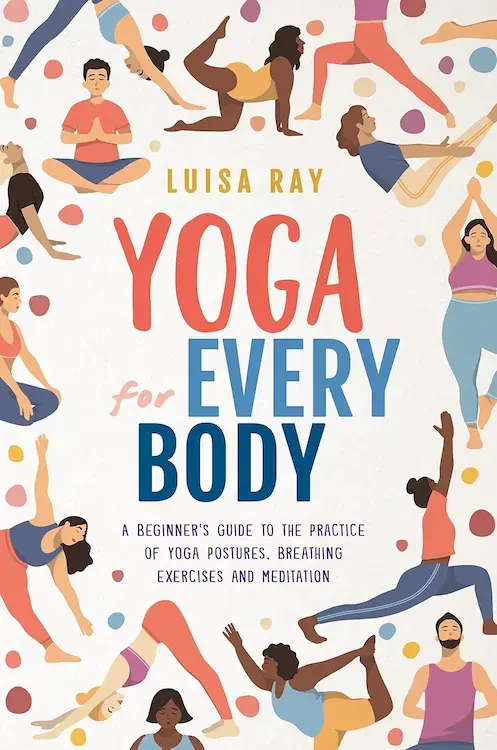
Yoga for Every Body by Luisa Ray is a beginner-friendly guide that makes yoga accessible to people of all shapes, sizes, ages, and lifestyles. Ray begins with a candid account of her own struggles with anxiety, depression, and uncertainty after university, and how yoga became the lifeline that transformed her life. She stresses that this book is not about her, but about helping readers find their own path into yoga, regardless of physical ability or background.
The early chapters dismantle common myths: yoga is not only for the flexible, not a religion, doesn’t require vegetarianism, and is not simply stretching or an easy activity. It can be adapted to any fitness level and is equally relevant for men and women. Ray emphasises that everybody is unique, with different anatomy, life experiences, and daily demands, so each practice will—and should—look different. The key is fitting yoga into your own life in a way that works for you, even if it’s just a few minutes a day.
The book also addresses how to use the guide effectively. While online videos are helpful, Ray points out that reading and practising from a book helps focus attention inward rather than on external appearances. She encourages attending in-person classes if possible, but also equips readers to develop a home practice. Instructions include modifications, safety notes, and tips on recognising when to avoid certain postures.
Ray covers the science-backed benefits of yoga: reducing stress and anxiety, relieving chronic pain, improving sleep, enhancing flexibility, strength, balance, cardiovascular health, digestion, and breathing capacity. She links these outcomes to both the physical postures (asanas) and the mental focus cultivated through breathwork (pranayama) and meditation.
The bulk of the book is dedicated to practical instruction. It begins with foundational postures such as Easy Pose, Cat-Cow, and Child’s Pose, before progressing to sequences designed for different goals: boosting energy (Sun Salutations), grounding, building strength, improving focus, increasing flexibility, and winding down. Each pose includes clear step-by-step guidance, anatomical tips, modifications for varying abilities, and explanations of its benefits.
Breathing exercises include diaphragmatic breathing, alternate nostril breathing, Ujjayi, and more, each chosen for its calming, energising, or balancing effects. Meditation techniques such as mindfulness and body scan practices are presented as essential companions to the physical side of yoga.
Later chapters explore how to structure a practice, from short daily routines to longer sequences, and introduce vinyasa—the flowing link between breath and movement. A concise history of yoga places the practice within its ancient South Asian roots while acknowledging its modern adaptations.
Throughout, Ray’s tone is inclusive and reassuring. She removes the intimidation factor by showing that yoga is not about perfect alignment or looking like social media images, but about listening to your body, cultivating awareness, and finding what feels right for you. The book’s structured approach, detailed illustrations, and emphasis on personal adaptation make it a valuable guide for absolute beginners and a supportive resource for anyone seeking a sustainable, enjoyable yoga practice.
Ultimately, Yoga for Every Body is both an instructional manual and an invitation to embark on a lifelong journey toward physical vitality, mental clarity, and emotional resilience. By blending tradition, science, and practical advice, Ray empowers readers to make yoga a natural and transformative part of everyday life.
100 important points from Yoga for Every Body by Luisa Ray.
Mindset & Philosophy
- Yoga is for every body, regardless of size, shape, age, or gender.
- You don’t need to be flexible to start yoga—flexibility develops with practice.
- Yoga is not a religion; it is a philosophy and practice that can complement any belief system.
- You don’t need to be vegetarian or vegan to practise yoga.
- Yoga is not just stretching—it also builds strength, stability, and focus.
- Yoga is neither “too easy” nor “too hard”; it can be adapted to your current abilities.
- Men benefit from yoga just as much as women.
- Your yoga practice should fit your unique anatomy and lifestyle.
- Every person’s bone structure, muscles, and movement patterns are unique.
- There’s no “perfect” posture shape—focus on how it feels, not how it looks.
Approach to Practice
- Even five minutes a day can be beneficial.
- Consistency matters more than duration or intensity.
- Practise at a time that fits your life—morning or evening is fine.
- Modify postures to suit your needs and abilities.
- Props like blocks, straps, and cushions make yoga more accessible.
- You can use household items (pillows, belts, books) as props.
- Avoid postures if they cause sharp pain.
- Seek medical advice before starting if you have health concerns.
- Pregnancy requires special consideration and possible modifications.
- Skip yoga when severely ill or injured.
Benefits of Yoga
- Reduces stress by lowering cortisol levels.
- Helps relieve anxiety and PTSD symptoms.
- Reduces inflammation, lowering risk of chronic diseases.
- Supports depression management by boosting serotonin.
- Improves heart health and lowers blood pressure.
- Relieves lower back pain as effectively as physical therapy.
- Helps with other chronic pain, such as arthritis or carpal tunnel.
- Improves sleep quality and increases melatonin production.
- Enhances flexibility and balance.
- Builds muscular strength and endurance.
Breathing & Meditation
- Breath control (pranayama) improves lung capacity.
- Proper breathing supports cardiovascular and respiratory health.
- Breathing deeply reduces stress and aids digestion.
- Meditation fosters mental clarity and emotional balance.
- Mindfulness meditation helps you stay present.
- Body scan meditation increases body awareness.
- Alternate nostril breathing balances the nervous system.
- Ujjayi breath improves focus in dynamic sequences.
- Square breathing can calm anxiety.
- Bee breathing relaxes and soothes the mind.
Practical Learning Tips
- Books can be more mindful learning tools than videos.
- Avoid distractions while practising.
- Yoga is an inward journey—avoid constant visual comparison to others.
- Classes can help refine technique, but home practice is essential.
- Yoga is a process of self-discovery.
- Write down adjustments that work for your body.
- Take postures step by step; don’t rush progress.
- Listen to your body’s signals during each session.
- Use warm-up postures to prepare joints and muscles.
- Cool down to help the body transition after practice.
Foundational Postures
- Easy Pose encourages calmness and self-check-ins.
- Cat-Cow mobilizes and warms the spine.
- Unstable All Fours strengthens core stability.
- Thread the Needle stretches shoulders and spine.
- Diamond Pose is great for meditation and pranayama.
- Reverse Prayer opens the chest and shoulders.
- Cow Face Arms improve shoulder mobility.
- Eagle Arms stretch upper back muscles.
- Low Squat improves hip and ankle mobility.
- Child’s Pose relaxes and restores energy.
Sequences for Goals
- Sun Salutations boost energy and warm the body.
- Surya Namaskar can be done slowly or energetically.
- Sun Salutation A is great for beginners.
- Sun Salutation B adds strength and endurance.
- Mountain Pose builds awareness of posture.
- Upwards Arms Pose opens the chest and shoulders.
- Forward Fold stretches hamstrings and spine.
- Half Forward Fold strengthens the back.
- Low Lunge stretches hips and thighs.
- Plank Pose builds upper body and core strength.
Safety & Adaptations
- Use blocks to make floor poses more accessible.
- Bend knees in forward folds if hamstrings are tight.
- Use straps in shoulder stretches if hands don’t meet.
- Support knees with cushions in kneeling poses.
- Keep heels elevated in squats if they don’t reach the floor.
- Practise supported versions if you have joint pain.
- Skip poses that worsen injuries.
- Adjust stance width for balance in standing poses.
- Use a wall for balance in challenging postures.
- Rest in Child’s Pose when fatigued.
Lifestyle Integration
- Yoga complements other exercise and sports.
- It can be a lifelong practice that changes with you.
- Short sessions throughout the day are effective.
- Yoga helps counteract the effects of sedentary living.
- Mindful breathing can be practised anywhere.
- Even simple postures can deliver benefits if done mindfully.
- Yoga helps improve focus and decision-making.
- It supports emotional resilience.
- It encourages self-compassion and patience.
- The aim is progress, not perfection.
Big Picture Takeaways
- Yoga is a personal journey—avoid comparisons.
- The most important posture is the one you can do today.
- You already have what you need to begin.
- Yoga links mind, body, and breath.
- Every practice is different—adapt daily.
- Start with the basics, then build gradually.
- Combine postures, breath, and meditation for full benefits.
- The best yoga for you is the one you enjoy and can sustain.
- Approach yoga with curiosity, not judgment.
- Yoga is a path to better living—physically, mentally, and emotionally.

Download the quick summary here
. . .