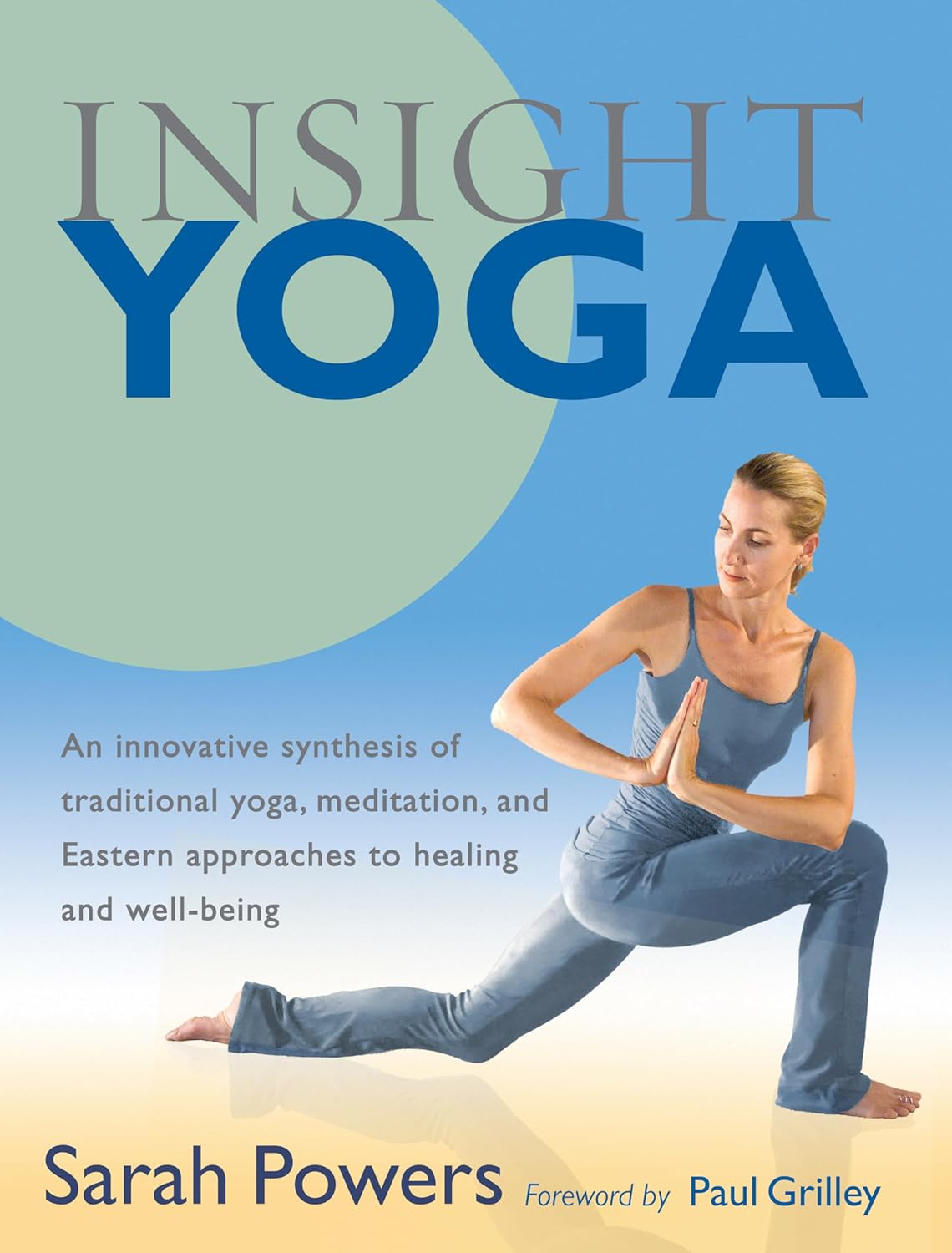
Insight Yoga by Sarah Powers is a transformative guide that blends yoga, Buddhism, and Chinese medicine into a holistic path for physical, emotional, and spiritual well-being. The book introduces an integrative approach to yoga that unites the physical postures (asana) with energy awareness, mindfulness, and self-inquiry.
Powers begins by defining yoga not just as a physical exercise, but as a way of fully inhabiting one's body and life with awareness. The goal is to develop presence—a state of being open, aware, and compassionate. She explains that yoga helps us embrace the paradoxes of life without falling into psychological struggle, allowing us to observe and participate in life with clarity.
Central to the book is the fusion of Yin and Yang yoga. Yin yoga involves long-held, passive postures that target the body’s connective tissues, while Yang yoga is more active and muscular. Both are essential: Yin cultivates receptivity and inward reflection, while Yang builds strength, endurance, and vitality. Powers emphasizes that balancing these energies mirrors our need to balance effort and ease in daily life.
The book draws heavily from Chinese meridian theory, explaining how energy (chi) flows through the body along meridian lines that correspond to internal organs. When this flow is blocked or imbalanced, physical or emotional issues arise. Yin yoga postures, by gently stressing the body's connective tissues, stimulate these meridians and help circulate chi. Powers outlines how specific poses can benefit particular organs like the kidneys, liver, lungs, and heart, integrating traditional Taoist wisdom with modern practice.
Another key pillar is mindfulness meditation. Powers incorporates Buddhist teachings to help practitioners develop mental clarity and emotional resilience. She discusses the importance of learning to sit with discomfort—both physical and psychological—without reacting. The combination of still postures and focused awareness becomes a training ground for non-reactivity and self-acceptance. Meditation, she insists, is not about escaping discomfort but meeting it with compassion and curiosity.
Powers also shares her personal journey with yoga, recounting her initial resistance, injuries, and discoveries that led her to explore multiple traditions. Her story adds authenticity and relatability to the teachings. She explains how integrating acupuncture, Taoist philosophy, and Buddhist psychology deepened her practice, especially after suffering a serious spinal injury early in her yoga journey.
The book explores yogic cosmology, such as the five koshas (layers of being), chakras, and the subtle body. Powers encourages readers to personalize their practice by listening inward, adapting postures and sequences to suit their current emotional or energetic state.
Ultimately, Insight Yoga is a manual for self-discovery and transformation. It teaches how to bring awareness into every pose and breath, not just to stretch the body but to awaken the heart and mind. With practices that support both stillness and movement, the book helps practitioners navigate modern life with grace, vitality, and compassion. Powers urges us to use yoga not only for physical health but as a lifelong path to inner freedom and wholeness.
100 important points from Insight Yoga by Sarah Powers, distilled from the book’s core teachings on yoga, Chinese medicine, mindfulness, and personal transformation:
Yoga Philosophy & Foundations
- Yoga means "to yoke"—union of body, mind, and spirit.
- Presence is the foundation for compassion and wisdom.
- Yoga helps us tolerate life's paradoxes without resistance.
- A committed practice reduces inner struggle and dualism.
- The goal of yoga is embodied awareness, not physical perfection.
- A yoga path blends movement with self-inquiry.
- A true yogi questions separation between self and experience.
- Yoga is not a goal but a living process of transformation.
- Path (marga) refers to a journey home to inner truth.
- There are three phases of practice: learn, reflect, embody.
Yin & Yang Yoga
- Yin yoga involves passive, long-held poses.
- Yang yoga involves active, muscular movements.
- Both styles are essential for balance.
- Yin targets joints, bones, and fascia.
- Yang strengthens muscles and stimulates circulation.
- Yin practices cultivate stillness and receptivity.
- Yang practices build energy, warmth, and agility.
- Overuse of Yang energy can lead to burnout.
- Excess Yin can cause lethargy and apathy.
- Balancing Yin and Yang supports emotional and physical health.
Chinese Medicine & Meridian Theory
- Chi (or prana) is the life force that animates all life.
- Meridians are energetic pathways connected to organs.
- Yin yoga stimulates meridians through passive stress.
- Healthy chi is both strong and fluid.
- Deficient chi = weakness; stagnant chi = blockages.
- Yin organs: heart, lungs, liver, spleen, kidneys.
- Yang organs: bladder, gallbladder, stomach, intestines.
- Each organ relates to emotional and physical functions.
- Five elements: fire, water, wood, earth, metal.
- Yoga can target meridians for emotional healing.
Mindfulness & Meditation
- Meditation is essential to deepen yoga practice.
- Meditation teaches us to observe thoughts without reacting.
- Yoga postures prepare the body for stillness in meditation.
- Yin poses help develop tolerance for discomfort.
- Daily sitting cultivates awareness and emotional clarity.
- Mindfulness reveals unconscious patterns.
- Awareness is strengthened by non-reactive observation.
- Meditation helps us meet pain with compassion.
- Insight arises from present-moment awareness.
- Yoga and mindfulness together transform the practitioner.
Psychological & Emotional Healing
- Physical discomfort often masks emotional tension.
- Yin poses can release long-held emotional blockages.
- Emotional healing requires stillness and openness.
- Self-worth grows through unconditional self-acceptance.
- Improvement must be balanced with self-compassion.
- Yang = father love (growth), Yin = mother love (nurture).
- Imbalance in either causes inner fragmentation.
- Yin practices help us pause and feel.
- Yang practices help us act with courage.
- Both are necessary for inner wholeness.
Developing a Home Practice
- A home practice deepens self-awareness.
- Practice should adapt to mood and energy levels.
- Yin in the evening supports restoration.
- Yang in the morning energizes the day.
- Practice what your body needs, not your ego.
- Trust your body’s inner signals.
- Long-term consistency is more important than intensity.
- Use discomfort as a learning tool.
- Practice with intention, not ambition.
- Combine movement, breath, and stillness daily.
Energetics of Asana
- Postures influence internal organs and energy.
- Each pose has a physical and energetic purpose.
- Different versions of the same pose target different tissues.
- Breath and awareness amplify the benefits of poses.
- Mindful stillness enhances chi flow.
- Postures should not be forced—gentle stress is key.
- Poses like forward folds help the Liver meridian.
- Backbends can stimulate Kidney chi.
- Sequences should reflect the current season and constitution.
- Yin practice rebuilds joint health over time.
Insight & Transformation
- Yoga is a mirror to see our attachments and habits.
- Awareness must be gentle, not judgmental.
- True insight arises from direct experience, not theory.
- The spiritual path includes setbacks and doubts.
- Teachers are essential, but personal practice is central.
- Healing happens slowly with patience and curiosity.
- The body stores past trauma in tissues.
- Releasing physical tension can release emotional pain.
- The mind influences the energy body.
- Prana follows attention—where attention goes, energy flows.
Spiritual Wisdom & Integration
- Yoga integrates spiritual, physical, and mental dimensions.
- Yogic cosmology includes the five koshas (layers of being).
- Subtle energy bodies (pranamaya, manomaya) must be nourished.
- The innermost self is anandamaya—bliss and unity.
- Taoism, Buddhism, and Yoga all point to the same truth.
- Nonduality is a key spiritual realization in yoga.
- Practices from different lineages can harmonize.
- Ancient wisdom traditions can be applied to modern life.
- Self-inquiry is the path to freedom.
- True freedom is being present with what is.
Lifestyle & Living Yoga
- Yoga is not confined to the mat.
- Mindful eating supports energetic balance.
- Rest and recovery are essential for vitality.
- Kindness and curiosity are foundational attitudes.
- Yoga offers tools for parenting, relationships, and work.
- Loving-kindness and compassion deepen practice.
- Nature restores and supports chi health.
- Silence is a doorway to insight.
- Yoga is a lifelong journey of self-discovery.
- The deepest yoga is being fully alive in the present moment.
. . .