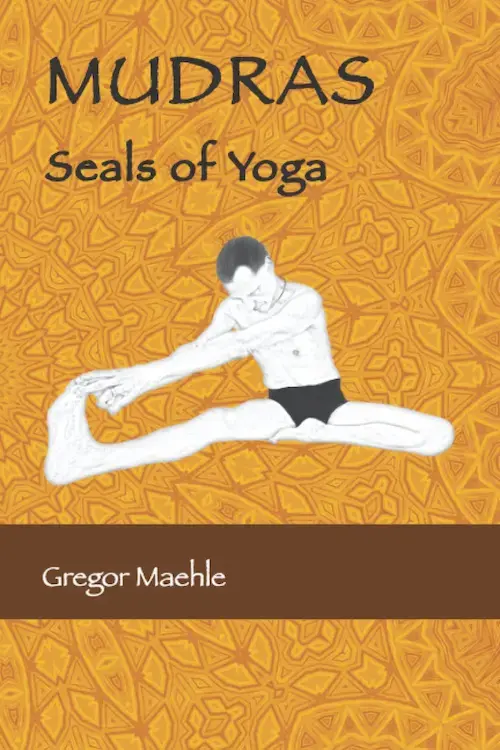
Mudras – Seals of Yoga by Gregor Maehle is a comprehensive exploration of mudras—yogic techniques that act as “energetic seals” to direct and preserve prana (life force). While often mistaken for decorative hand gestures, mudras encompass whole-body postures, bandhas (locks), and breath control to achieve profound energetic and spiritual effects. Drawing from decades of personal practice, training under masters like B.N.S. Iyengar, and deep research into classical shastras such as the Hatha Yoga Pradipika, Gheranda Samhita, and Goraksha Shataka, Maehle organizes and clarifies a traditionally scattered body of knowledge.
The book classifies 31 mudras into five primary categories, each linked to specific yogic limbs:
- Asana Mudras – These are postural modifications aimed at building physical strength, health, and longevity, while preparing the body for pranayama. Examples include Tadaga Mudra and Viparita Karani Mudra.
- Pranayama Mudras – Techniques like Mula Bandha, Uddiyana Bandha, and Jalandhara Bandha that enhance breath retention and regulate pranic flow.
- Pratyahara Mudras – Methods such as Shambhavi Mudra and Akasha Mudra that withdraw the senses from external distractions, fostering inner focus.
- Dharana Mudras – Powerful techniques for awakening Kundalini, such as Maha Mudra, Vajroli Mudra, and Shakti Chalana Mudra, which support deep concentration.
- Samadhi Mudras – Practices like Khechari Mudra and Bhramari Mudra that can trigger the highest meditative absorption in a prepared mind.
Maehle details the philosophical roots of mudras, noting that the Siddha Siddhanta Paddhati defines them as that which “bestows delight,” referring not to sensory pleasure but to union with the cosmic self. Classical texts link mudras to benefits such as fortitude, overcoming fear of death, and facilitating Kundalini awakening. The author emphasizes that mudras are not uniform—some are preparatory, others are advanced, and their placement within practice depends on their purpose. For example, certain asana mudras can precede pranayama, while Dharana mudras are best learned after significant breath-control experience.
Throughout, Maehle blends historical context with precise technical instruction. He explains not only how to perform each mudra but also why, referencing pranic physiology, muscle engagement, and mental effects. Safety considerations are given special attention, particularly for techniques involving breath retention (kumbhaka), inversions, or strong pressure changes in the body.
Notably, the book addresses the debate over sequencing mudras relative to pranayama. Different authorities, from T. Krishnamacharya to medieval shastras, give conflicting advice, but Maehle resolves this by linking each mudra to its primary yogic limb, allowing practitioners to integrate them logically.
The work also highlights mudras’ role in accelerating spiritual readiness for chakra-Kundalini meditation, a demanding method explored in Maehle’s earlier books. By combining scriptural authenticity, anatomical awareness, and practical application, Mudras – Seals of Yoga serves both as a technical manual and as a bridge between traditional wisdom and modern practice.
Ultimately, Maehle presents mudras as transformative tools—not merely esoteric techniques but living practices that can fortify the body, focus the mind, and open the path to higher states of consciousness when approached with patience, discipline, and respect for their depth.
100 important points distilled from Mudras – Seals of Yoga by Gregor Maehle:
1–10: Foundations & Philosophy
- Mudra means “seal,” referring to sealing or redirecting prana (life force) within the body.
- Unlike the eight limbs of yoga, mudra is not listed in Patanjali’s Yoga Sutra.
- Hand gestures (hasta mudras) are only a small part of the yogic mudra tradition.
- Classical texts like the Hatha Yoga Pradipika, Gheranda Samhita, and Goraksha Shataka devote full chapters to mudras.
- Siddha Siddhanta Paddhati defines mudra as “that which bestows delight” — spiritual union rather than sensory pleasure.
- Mudras unite the individual self with the cosmic self.
- Symbolically, they delight the “gods” (higher nature) and terrify “demons” (lower nature) within.
- Sir John Woodroffe described mudras as strengthening the body, protecting it, and awakening Kundalini.
- Mudras redirect prana back into the body, enabling pratyahara (sense withdrawal).
- They are classified as part of Hatha Yoga techniques for advanced practitioners.
11–20: Historical Sources
- Goraksha Shataka lists five mudras: Maha, Nabho, Uddiyana Bandha, Jalandhara Bandha, and Mula Bandha.
- Hatha Yoga Pradipika lists ten mudras, adding Khechari, Viparita Karani, Vajroli, Shakti Chalana, and Maha Vedha.
- Gheranda Samhita expands the list to 20 mudras.
- Lists evolved over time, expanding without abandoning earlier ones.
- Some texts, like Shiva Samhita, copy earlier lists but omit certain mudras without explanation.
- Jayatarama’s Jogapradipika lists 24 mudras, often with changed names.
- The book’s list is based on Gheranda Samhita, plus 11 additional common mudras.
- Mudras are categorized according to primary yogic limb rather than just location or shape.
- Some mudras are misclassified in older texts (e.g., Bhramari listed as pranayama).
- Certain mudras share names but differ completely in technique (e.g., Vajroni vs. Vajroli).
21–30: Purposes of Mudras
- Overcome fear of death by realizing the immortal self.
- Enable prana to enter Sushumna (central energy channel).
- Essential for raising Kundalini.
- Increase sthirata (fortitude) in body and mind.
- Integrate the central and autonomic nervous systems.
- Support those less inclined toward visual or auditory meditation by emphasizing kinesthetic practice.
- Shorten time needed for pranayama and chakra meditation success.
- Can be preparatory, supportive, or triggering techniques.
- Serve as bridges between asana and deeper practices.
- Are highly adaptable but must be sequenced appropriately.
31–40: Timing & Sequencing
- T. Krishnamacharya taught mudras before pranayama.
- Some shastras agree; others place pranayama first.
- Hatha Yoga Pradipika sequences asana → kumbhaka → mudra → nada meditation.
- Goraksha Shataka lists mudras before pranayama.
- No universal agreement exists; function dictates sequence.
- Mudras with strong pranayama components should follow breathing mastery.
- Asana mudras are best placed after asana, before pranayama.
- Dharana and Samadhi mudras require prior pranayama proficiency.
- Some mudras are practiced daily; others are cycled over weeks.
- Beginners should master one mudra at a time before combining.
41–50: Categories
- Asana Mudras – modify asanas to add pranic effects.
- Pranayama Mudras – support breath retention and energy redirection.
- Pratyahara Mudras – withdraw sensory prana from external objects.
- Dharana Mudras – raise Kundalini for concentration.
- Samadhi Mudras – trigger high meditative absorption.
- Primary function determines category placement.
- Categories mirror Patanjali’s yogic limbs.
- Asana mudras focus on health, longevity, and fortitude.
- Dharana mudras are key for Kundalini work.
- Samadhi mudras require prior spiritual ripening.
51–60: Practice Guidelines
- Not all mudras are necessary for every practitioner.
- Choice depends on personal goals.
- Focus on one mudra for 14–28 days before adding new ones.
- Bandhas are integrated into kumbhaka naturally.
- Some mudras are performed once; others in multiple rounds.
- Avoid overloading practice with too many new mudras.
- Learn from a qualified teacher when possible.
- Respect contraindications, especially for breath retention.
- Gradually increase retention durations.
- Do not practice under influence of psychedelics.
61–70: Safety & Contraindications
- Avoid kumbhaka with high blood pressure or heart disease.
- Contraindicated during pregnancy, menstruation, or immediately postpartum.
- Avoid with ulcers or hyperacidity.
- Inversions can strain cervical spine if done poorly.
- Use muscular strength to avoid cervical compression in headstand/shoulder stand.
- Viparita Karani beyond 10–15 minutes can cause ocular or vascular strain.
- Respect the body’s warming-up requirements before advanced mudras.
- Release retentions before discomfort or gasping.
- Modify as needed for injuries or chronic conditions.
- Discontinue if pain or dizziness occurs.
71–80: Notable Mudras Covered
- Tadaga Mudra – hollow abdomen using external-Uddiyana.
- Viparita Karani Mudra – energetic sealing in inversions.
- Vajroni Mudra – advanced strength-oriented inversion.
- Yoga Mudra – forward-bend mudra for internalization.
- Nabho Mudra – tongue posture influencing subtle channels.
- Matsyendra Mudra – spinal-twist mudra with pranic effects.
- Bhujangi Mudra – cobra-like seal for vitality.
- Manduka Mudra – frog seal for digestion and longevity.
- Maha Mudra – powerful Kundalini-raising practice.
- Khechari Mudra – advanced tongue posture for deep meditation.
81–90: Energetics & Physiology
- Mudras direct prana to desired locations.
- Bandhas prevent prana loss.
- Pranic retention improves concentration.
- External-Uddiyana reverses tamasic effects of exhalation.
- Inversions change cerebrospinal fluid dynamics.
- Jalandhara Bandha protects brain during retention.
- Mudras stimulate chakras directly.
- Kundalini work requires careful progression.
- Long-term mudra practice refines subtle body sensitivity.
- Sense withdrawal is partly pranic redirection.
91–100: Key Insights
- Mudras are tools, not ends in themselves.
- Their effectiveness depends on integration with asana, pranayama, and meditation.
- The same mudra can serve different purposes depending on context.
- Some mudras overlap in effect with kriyas or bandhas.
- Shastra analysis preserves authentic technique details.
- Oral tradition once carried much of this knowledge; now often fragmented.
- Modern yoga often omits mudras or simplifies them excessively.
- Mastery demands patience and consistency.
- Mudras can transform physical practice into a full spiritual discipline.
- Ultimately, mudras aim to awaken and stabilize higher consciousness.
. . .