

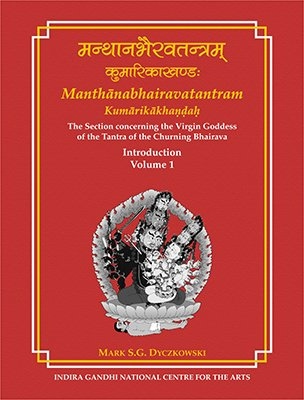
Manthanabhairavatantram, Kumarikakhandah By Mark S.G. Dyczkowski Image
7/10 757 views Updated: 1 week ago

Manthanabhairavatantram, Kumarikakhandah By Mark S.G. Dyczkowski

"The divine union of Bhairava and Shakti transcends the ordinary, merging consciousness with energy in an eternal dance of creation and dissolution. Within the sacred mandala, the seeker awakens the Kundalini, traversing the hidden pathways of light. Mantras resonate through the subtle body, dissolving illusion and revealing the Supreme Reality. The lineage of Siddhas transmits this secret knowledge, guiding the disciple beyon...

The Manthana Bhairava Tantra is a profound text within the Kaula and Trika traditions of Tantra, focusing on the transformative power of rituals, mantras, and spiritual realization. It describes Bhairava’s initiation and transformation, linking divine energy (Shakti) with supreme consciousness (Shiva). The text explores sacred geometry, rituals, and the philosophical underpinnings of the tantric path, including the concept of Kundalini awakening.

A key theme is the union of opposites—Shiva and Shakti, knowledge and ignorance, bondage and liberation. The text provides a detailed exposition of the esoteric practices, including the use of mantra, mudras, meditation techniques, and the importance of guru-disciple transmission. It elaborates on the five sacred offerings (pañcamakāra) and their symbolic significance.

Additionally, the text delves into yogic practices aimed at transcending ordinary perception, leading to enlightenment and ultimate liberation. It also discusses the concept of divine bliss (ānanda) and how spiritual practice aligns with cosmic energy. The teachings within this text are considered highly esoteric and meant for serious practitioners seeking direct experience of the divine.


Why You Should Read It

  • Profound Spiritual Wisdom: The text provides deep insights into the philosophy and practice of Tantra.
  • Practical Guidance: It offers detailed rituals, mantras, and meditative techniques for spiritual advancement.
  • Union of Energy and Consciousness: Helps understand the interplay of Shiva (consciousness) and Shakti (energy).
  • Esoteric Knowledge: Reveals hidden aspects of yogic and tantric traditions that are rarely found elsewhere.
  • Kundalini Awakening: Guides practitioners in activating their inner energy for transformation.
  • Historical Significance: An essential text for those interested in the roots of Tantric traditions.
  • Secret Teachings: Provides knowledge reserved for dedicated practitioners under a guru’s guidance.
  • Powerful Mantras and Rituals: Helps unlock spiritual potential and divine connection.
  • Path to Liberation: Outlines methods for transcending limitations and attaining enlightenment.


100 Important Points from Manthana Bhairava Tantra

  1. Bhairava is transformed into Sadyojāta through an esoteric initiation.
  2. The navel is the seat of Kundalini, symbolizing divine energy.
  3. Tantra reverses conventional religious beliefs to unlock deeper truths.
  4. The pañcamakāra (Five Ms) represent different forms of sacred offerings.
  5. Wine (madya) symbolizes divine intoxication and bliss.
  6. Meat (māṁsa) represents sacrifice and transcendence.
  7. Fish (matsya) symbolizes fluidity of consciousness.
  8. Grains (mudrā) indicate nourishment of spiritual energy.
  9. Sexual union (maithuna) represents cosmic creation and divine union.
  10. The divine feminine (Shakti) is worshipped as the source of power.
  11. Mantras hold the power to transform consciousness.
  12. The sacred geometry of the Sri Yantra represents the universe.
  13. Bhairava’s meditation on the Goddess leads to enlightenment.
  14. The tritattva (Three Principles) form the foundation of esoteric yoga.
  15. The yogi must go beyond conventional morality to attain liberation.
  16. Guru-disciple transmission is essential for receiving tantric knowledge.
  17. The body is a temple, and rituals activate latent energy.
  18. The pañcatattva (Five Principles) are key to tantric practice.
  19. The triangle represents the interaction of Shiva, Shakti, and the disciple.
  20. Chanting sacred seed syllables activates divine vibrations.
  21. The Bindu (cosmic point) represents the source of creation.
  22. Bhairava is the ultimate Guru and guide in Tantra.
  23. Divine energy flows through the body’s chakras.
  24. Meditation on the breath (pranayama) leads to inner transformation.
  25. The Mālinīstava hymn is a powerful invocation for divine grace.
  26. The Goddess emerges from the Linga, symbolizing divine birth.
  27. Bhairava and Shakti’s union is central to Tantra.
  28. The Guru is a living embodiment of divine consciousness.
  29. The Aghora mantra dissolves impurities of the mind.
  30. The body contains secret pathways of energy known as Nadis.
  31. Sexual energy is a powerful tool for spiritual transformation.
  32. The ultimate goal is Kaivalya (liberation).
  33. The Yogi can attain siddhis (supernatural powers) through practice.
  34. Bhairavi Mudra leads to deep absorption in meditation.
  35. The Moon symbolizes the cooling energy of Shakti.
  36. The Sun represents the fiery energy of Shiva.
  37. Kundalini awakening leads to transcendental awareness.
  38. The Trident (Trishula) symbolizes will, knowledge, and action.
  39. The Shaktipata (descent of grace) is essential for enlightenment.
  40. The Ajna Chakra (third eye) is the gateway to higher perception.
  41. Tantric rituals must be performed with inner purity.
  42. Certain mantras destroy past karma.
  43. The Yogi should meditate at dawn, noon, and sunset.
  44. The Lingam represents cosmic consciousness.
  45. Fire rituals (Homa) purify the soul.
  46. The Vajra (thunderbolt) symbolizes spiritual invincibility.
  47. The Gandharva sounds awaken higher states of awareness.
  48. The Mudras (hand gestures) channel divine energy.
  49. The Mantra Vidya bestows hidden knowledge.
  50. The Yantras are sacred diagrams used for meditation.
  51. The Matrikas (divine letters) hold the power of sound.
  52. The Dakini energy aids in spiritual transformation.
  53. The Yogi must maintain silence (Mauna) for deep meditation.
  54. Bhairava’s gaze grants direct realization.
  55. The Kula Path focuses on inner divine realization.
  56. The Kaula Marga follows esoteric tantric teachings.
  57. The Pashu, Vira, and Divya states describe spiritual evolution.
  58. The Yogi must be fearless in practice.
  59. The divine sound (Nada) is the essence of all mantras.
  60. The Shiva Sutras describe ultimate truth.
  61. The Siddhayogini transmits wisdom through direct experience.
  62. Devotion to the Goddess grants liberation.
  63. The Khechari Mudra allows one to transcend the senses.
  64. The Guru’s blessing accelerates spiritual growth.
  65. The Bindunatha energy unlocks hidden potential.
  66. The Yogini rituals activate divine forces.
  67. The Panchashakti (Five Divine Powers) govern existence.
  68. The Sahasrara Chakra is the seat of pure consciousness.
  69. Mantra repetition leads to spiritual refinement.
  70. The Trika philosophy integrates will, knowledge, and action.
  71. Kāmakalā is the secret essence of divine union.
  72. The Goddess is both compassionate and fierce.
  73. The Yogi must transcend both pleasure and pain.
  74. The Mahavidyas are ten forms of the supreme Goddess.
  75. Ritual bathing (Abhisheka) purifies energy fields.
  76. The Hridaya Chakra is the seat of divine love.
  77. The Maha Siddhis grant yogic mastery.
  78. Samadhi is the ultimate state of realization.
  79. Rituals must be performed in sacred spaces.
  80. The Bhairavi Chakra reveals inner secrets.
  81. The Yogi should be free from attachments.
  82. The Diksha (initiation) connects one to divine energy.
  83. The Vidyapitha transmits esoteric teachings.
  84. The Kaulajnana Nirnaya reveals tantric secrets.
  85. The Kubjika Tantra is linked to the Bhairava tradition.
  86. Aghora practices dissolve fear and ignorance.
  87. The Sri Vidya path worships the Divine Mother.
  88. Bhavana (contemplation) leads to direct experience.
  89. Upaya (spiritual methods) vary for each seeker.
  90. The Ananda Tandava (Dance of Bliss) symbolizes cosmic play.
  91. Bhairava’s laughter dissolves illusion.
  92. The Rudra Yamal Tantra expands on esoteric rituals.
  93. Tantra is a path of direct experience, not mere belief.
  94. The Prana Shakti fuels all life.
  95. Mastery over Mantras grants spiritual power.
  96. The Yogi should meditate on the Void (Shunyata).
  97. The Guru Tattva is essential for progress.
  98. Nada Yoga leads to ultimate sound consciousness.
  99. Shakti Sadhana unveils hidden truths.
  100. The Manthana Bhairava Tantra is a roadmap to enlightenment.

. . .

Related Books Reviews