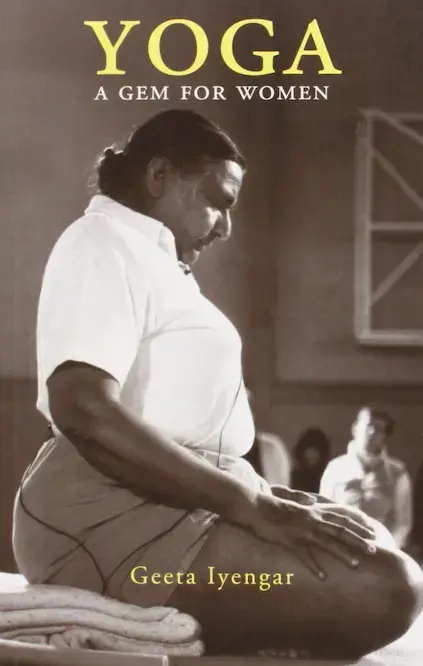
Yoga for women offers far more than physical flexibility—it presents a complete pathway toward balance, empowerment, and inner peace. In Yoga: A Gem for Women, Geeta Iyengar beautifully illustrates how the ancient science of Iyengar yoga can become a powerful source of strength for women at every stage of life. Drawing inspiration from classical texts and her own deep practice, she reminds readers that women have unique physiological and emotional needs—and that yoga becomes most effective when aligned with these realities.
The book begins by emphasizing the spiritual value of yoga for women, encouraging them to see each asana as an opportunity to develop self-awareness and poise. Iyengar strongly believes that yoga is not merely a physical discipline, but a holistic art that improves mental stability, emotional harmony, and deep self-respect. This message inspires women to embrace yoga as a long-term commitment rather than a temporary fitness routine.
One of the key strengths of Yoga for women lies in its practical approach. Rather than presenting abstract ideas, Iyengar provides clear, step-by-step guidance on foundational postures, breathing techniques, and alignment principles. She highlights how women can safely adapt asanas according to their changing needs—such as menstruation, pregnancy, postpartum recovery, and menopause. This personalized approach makes the book incredibly empowering. Women discover that yoga is not one-size-fits-all, but a flexible practice that grows with them and supports their evolving journey.
Throughout the book, Iyengar also addresses the emotional challenges women often face in modern life. Stress, anxiety, hormonal fluctuations, and social pressure can weaken the body and spirit, but yoga for women teaches them how to turn inward and reclaim their energy. By practicing deeply and consistently, they can cultivate a quiet strength that allows them to face life’s difficulties with dignity and calm. The author beautifully connects each asana to a higher purpose—encouraging women to awaken their inner courage and kindness through mindful practice.
Another inspiring aspect of the book is the emphasis on discipline and dedication. Iyengar reassures women that even small, regular efforts in yoga for women can lead to lasting transformation. With encouraging language and clear demonstration photos, she gently reminds the reader that every posture holds the potential for healing and growth if practiced with sincerity and patience.
In summary, Yoga for women is a profound, uplifting, and deeply practical guide that honors the unique journey of every woman. It proves that yoga is not only a path to physical health but also a powerful means to cultivate inner strength and clarity. By applying the principles outlined in this book, women can transform their everyday routines into sacred practices that nourish their body, mind, and soul. For any woman seeking inspiration, balance, and a deeper connection with herself, Yoga for women offers a timeless roadmap toward lasting wellbeing.
100 Practical Takeaways from Yoga: A Gem for Women by Geeta S Iyengar
- Begin yoga practice with a calm and focused mind
- Maintain regular daily practice for best results
- Focus on alignment in every asana
- Start with foundational postures before moving to advanced ones
- Use props to support proper alignment
- Practice yoga on an empty stomach
- Breathe deeply and evenly throughout each posture
- Avoid rushing through asanas
- Listen to the body and respect its limits
- Practice basic standing poses to build strength
- Focus on grounding the feet in all standing poses
- Engage core muscles during balancing postures
- Open the chest to improve posture and confidence
- Use wall support for difficult standing poses
- Include forward bends to quiet the mind
- Keep legs active during forward bends
- Use bolsters for comfort in seated postures
- Practice gentle twists to improve spinal mobility
- Avoid deep twists during menstruation
- Focus on lengthening the spine before twisting
- Use blankets or blocks under the hips if sitting is uncomfortable
- Introduce backbends gradually for spinal strength
- Support backbends with props if needed
- Use straps to keep arms aligned in backbends
- Rest in between intense postures
- Remain mindful of breath in every movement
- Practice inversions only after mastering foundational poses
- Use wall support for headstand and shoulderstand
- Avoid inversions during menstruation
- Practice restorative poses during menstruation
- Begin pranayama only after building a stable asana practice
- Sit in a quiet place for pranayama
- Practice slow, controlled inhalations and exhalations
- Use pranayama to calm the nervous system
- Start with a short duration and slowly increase
- Avoid strain while practicing breathing techniques
- Incorporate savasana after every yoga session
- Allow the body to fully relax in savasana
- Use eye pillows or blankets in savasana for deeper rest
- Maintain a consistent practice schedule
- Practice yoga early in the morning whenever possible
- Create a clean, well-ventilated space for practice
- Keep the spine long while sitting in meditation
- Avoid excessive effort in any posture
- Use modifications to suit individual needs
- Build strength gradually to prevent injury
- Practice with patience and persistence
- Maintain complete focus on the present moment
- Avoid comparison with others during practice
- Observe the effects of each posture on the body
- Stay mindful of emotional responses while practicing
- Use yoga to manage stress and anxiety
- Practice gentle asanas during pregnancy
- Use props for additional support during pregnancy
- Avoid strong twists and deep backbends when pregnant
- Focus on gentle hip opening during pregnancy
- Include restorative poses during postpartum recovery
- Resume regular practice gradually after childbirth
- Use yoga to balance hormonal fluctuations
- Practice standing poses to boost energy levels
- Perform forward bends to relieve fatigue
- Use gentle inversions to improve blood circulation
- Engage breathing exercises to reduce tension
- Apply yoga postures to improve digestion
- Use supported backbends to open the heart
- Practice daily for hormonal balance during menopause
- Use restorative poses to relieve hot flushes
- Include gentle twists to maintain spinal flexibility
- Practice yoga to develop mental stability
- Focus on breath awareness during emotional stress
- Use balancing poses to improve concentration
- Apply yoga to cultivate inner confidence
- Align physical practice with inner intention
- Remind oneself that yoga is a lifelong journey
- Respect the rhythm of the menstrual cycle
- Use relaxation techniques to manage menstrual pain
- Integrate gentle forward bends for emotional calmness
- Practice yoga to improve overall posture
- Focus on slow transitions between poses
- Use props to deepen stretches without strain
- Keep shoulders relaxed in all asanas
- Focus on extending through the crown of the head
- Allow time for warm-up before intense stretching
- Integrate meditation for mental clarity
- Use quiet breathing to unwind before sleep
- Build self-discipline through regular practice
- Keep body and mind steady in balancing poses
- Observe internal sensations without judgment
- Use yoga postures to relieve chronic back pain
- Create a calm environment before starting practice
- Repeat key postures to build strength and confidence
- Maintain equal weight distribution in standing poses
- Avoid holding the breath during difficult poses
- Make yoga practice a personal sanctuary
- Use supported inversions for gentle rejuvenation
- Focus on elongating the spine in all poses
- Use gentle stretches to reduce stiffness
- Finish practice with gratitude and self-reflection
- Approach every session with a beginner’s mindset
- Remember that yoga for women is a path of self-love and transformation
. . .