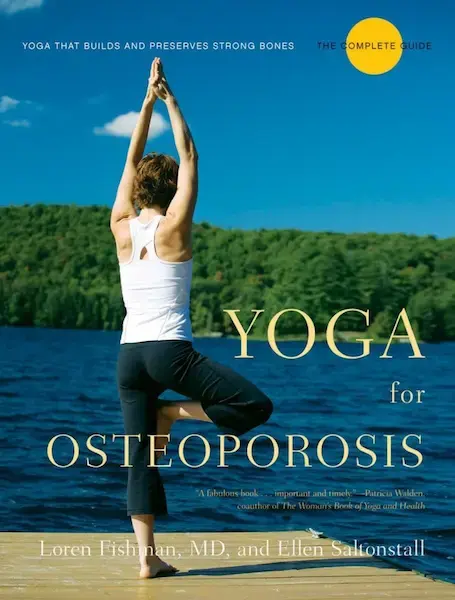
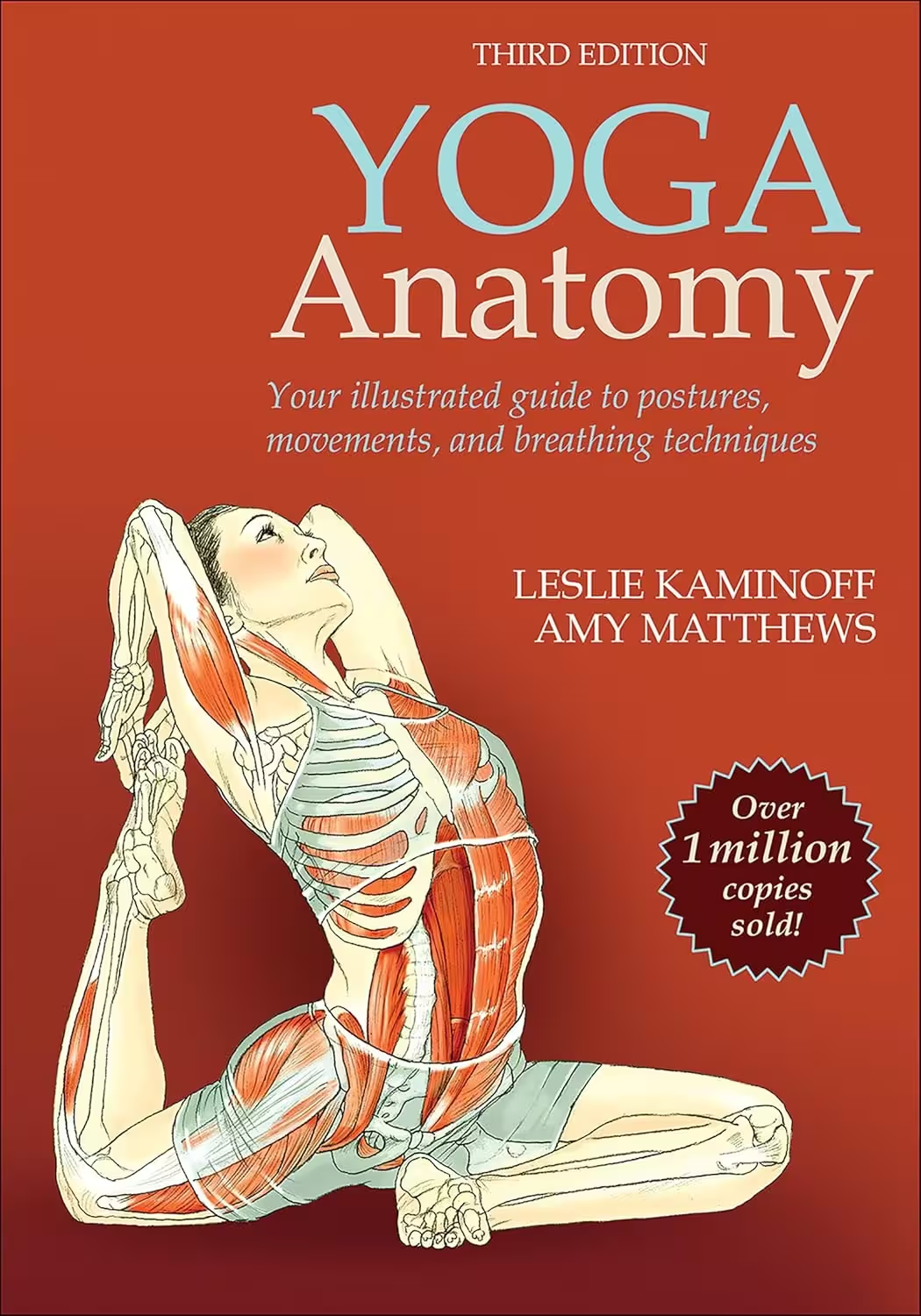
Yoga for Osteoporosis presents a compelling, evidence-based approach to treating and preventing osteoporosis through the practice of yoga. Osteoporosis is a widespread condition characterized by decreased bone mass and deteriorated bone structure, significantly increasing the risk of fractures, particularly in the spine, hip, wrist, and ribs. The book emphasizes that while medications are commonly prescribed, many patients avoid them due to cost, access, or serious side effects. Yoga, by contrast, offers a natural, non-pharmacological, and highly adaptable alternative that strengthens both bones and muscles without causing joint damage.
Central to the book is the application of Wolff’s law, which states that bones grow stronger in response to the mechanical stresses placed upon them. Yoga postures generate substantial, controlled stress on bones through static holds and muscular engagement, promoting bone growth in a safe, low-impact way. Unlike jogging or weightlifting, yoga avoids the jarring effects that can harm arthritic joints, while still delivering the force needed to stimulate bone remodeling.
The authors back up their approach with clinical data, including pilot studies and a larger research project that showed increased bone mineral density (BMD) in practitioners who consistently performed specific yoga poses. Notably, they highlight the story of Erik Marrero, a man who reversed his osteoporosis through yoga after medications failed, offering anecdotal as well as statistical evidence of its effectiveness.
Beyond bone strength, yoga improves posture, balance, flexibility, and muscular strength, all of which reduce fall risk—a primary cause of fractures in the elderly. Poor posture and spinal compression, often seen in kyphosis ("dowager's hump"), lead to vertebral fractures that set off a chain reaction of further injury. Yoga addresses this by aligning the spine and encouraging full range of motion.
The book also outlines how bone strength is influenced by age, genetics, hormones, nutrition, and activity levels. Peak bone mass is achieved in the late teens and twenties, so the authors advocate early intervention, but also stress that improvements are possible at any age. Hormonal changes, especially declining estrogen and testosterone, contribute to bone loss, yet yoga can help mitigate these effects by promoting hormonal balance and improving overall endocrine function.
Importantly, the authors address the epigenetic revolution—new research showing that aging may be reversible at a cellular level. While not yet applicable to osteoporosis treatment, this opens the door to future possibilities that yoga may enhance.
Throughout the book, Fishman and Ardman offer practical guidance for safely practicing yoga with weakened bones. They caution against unsafe movements and provide detailed pose sequences tailored to individuals with osteopenia or osteoporosis.
In conclusion, Yoga for Osteoporosis offers a holistic, scientifically-supported alternative to traditional treatments. It empowers individuals—especially older adults—to take control of their bone health without relying solely on medication. Combining ancient wisdom with modern research, yoga is presented not just as exercise, but as a sustainable, healing practice for lifelong wellness and independence.
100 important points from Yoga for Osteoporosis by Loren Fishman and Carol Ardman:
About Osteoporosis
- Osteoporosis means “porous bone” and leads to fragility and fractures.
- It affects over 200 million people worldwide.
- One in two women and one in four men over 50 will suffer an osteoporosis-related fracture.
- Hip fractures can be life-threatening and reduce life quality drastically.
- Spinal fractures often occur from simple forward slumping (kyphosis).
- Osteopenia is the early stage of bone loss.
- Vertebral fractures often predict future fractures.
- Osteoporosis is underdiagnosed and undertreated, especially in men.
- Many patients avoid medications due to cost or side effects.
- Fear of exercise is misplaced; lack of movement worsens bone loss.
Bone Science & Structure
- Bones consist of protein (osteoid) and minerals (mainly calcium & phosphate).
- Bone structure includes cortical (hard) and trabecular (spongy) regions.
- Bone strength = bone density + bone quality.
- Trabecular structure (inner architecture) greatly impacts fracture resistance.
- Euler’s buckling theory explains how bones resist mechanical stress.
- DEXA scans measure bone mineral density (BMD).
- A T-score ≤ -2.5 indicates osteoporosis; -1 to -2.5 is osteopenia.
- DEXA scans aren’t perfect but are still the gold standard.
- Newer imaging (like trabecular bone scoring) offers better bone quality insights.
- Finite Element Analysis (FEA) may revolutionize bone strength measurement.
Hormones and Bone Health
- Estrogen helps preserve trabecular bone.
- Testosterone is key to building hip and spine BMD in males.
- Growth hormone and IGF are critical in adolescence and exercise-induced bone growth.
- Parathyroid hormone both builds and breaks bone depending on concentration.
- Calcitonin decreases blood calcium by slowing bone breakdown.
- Thyroid hormones influence overall bone metabolism.
- Hormonal balance determines how bones respond to stress.
- Hormones like irisin and BAIBA (released during exercise) promote bone health.
- Osteocalcin from osteoblasts regulates insulin and energy metabolism.
- Muscle-bone “cross-talk” is vital: both tissues communicate chemically.
Yoga vs. Other Exercises
- Yoga is a non-impact, bone-strengthening practice.
- It provides high forces on bones without harming joints.
- Impact exercise like running may damage joints.
- Yoga improves balance, flexibility, and strength—key for fall prevention.
- Static holds in yoga stimulate osteogenesis (bone formation).
- Yoga encourages fluid movement in joints, aiding cartilage health.
- Balance from yoga prevents falls—the #1 fracture cause.
- Yoga extends joint mobility and stretches joint capsules.
- Yoga is adaptable for older adults with fragile bones.
- It combines mental, physical, and structural health benefits.
Scientific Research on Yoga
- A pilot study showed increased BMD in yoga practitioners.
- A larger study confirmed the bone-strengthening effect of yoga.
- Mr. Erik Marrero reversed his osteoporosis with yoga after meds failed.
- Yoga affects bone density within months of consistent practice.
- Studies show yoga reduces back and joint pain.
- Yoga enhances proprioception, improving coordination and fall resistance.
- It can reverse kyphosis and poor posture caused by osteoporosis.
- Muscle strength from yoga puts healthy stress on bones.
- Yoga increases PGC1-alpha, stimulating energy production in bone cells.
- Yoga affects gene expression through epigenetic influence.
Yoga Practice Considerations
- Not all yoga poses are safe for people with osteoporosis.
- Forward bends and spinal flexion can cause fractures in severe cases.
- Spinal extension, twisting, and side-bending are safer alternatives.
- Modifications are necessary for those with fractures or limited mobility.
- Gentle breathing and mindfulness enhance bone recovery indirectly.
- Props (blocks, straps) support safer alignment.
- Poses should be held for at least 12 seconds to stimulate bone.
- Daily practice yields the best results.
- Poses must be selected based on individual capacity.
- Warm-up and cool-down are essential to avoid injury.
Lifestyle & Bone Health
- Bone-building starts in youth—peak BMD by age 30.
- After 30, bone loss begins and accelerates after 50.
- Early prevention is more effective than late treatment.
- High-protein and calcium-rich diets support bone strength.
- Sunlight exposure (Vitamin D) is critical for calcium absorption.
- Smoking and alcohol accelerate bone loss.
- Obesity and inactivity increase fracture risk.
- Exercise and nutrition together build stronger bones.
- Avoiding falls is more important than bone strength alone.
- Muscle strength helps resist gravity and prevent collapse.
Fracture Risk Factors
- Previous fractures are strong predictors of future fractures.
- Poor posture and kyphosis increase vertebral fracture risk.
- Falls cause 95% of hip fractures.
- Balance loss, poor vision, and muscle weakness raise fall risk.
- Thin cortical bone increases fracture risk even with normal BMD.
- Bone density alone doesn’t tell the full story.
- Medications like steroids harm bones.
- Rheumatoid arthritis weakens bone structure.
- Mental decline and confusion increase fracture susceptibility.
- Environmental risks (stairs, rugs, lighting) must be minimized.
Preventive Strategies
- Build strength, balance, and mental alertness.
- Yoga improves all three simultaneously.
- Use furniture, handrails, and assistive devices wisely.
- Incorporate yoga poses that target hips, spine, and wrists.
- Focus on spinal alignment and core strength.
- Practice mindfulness to enhance proprioception.
- Develop consistent habits early in life.
- Avoid prolonged inactivity or bed rest.
- Medical screenings (like DEXA) help track progress.
- Practice yoga under supervision if osteoporotic.
Philosophy & Ethics
- Yoga respects individual variation and avoids one-size-fits-all treatment.
- It empowers self-care over dependency on medications.
- Yoga supports healing without harm—aligned with “do no harm” ethics.
- Yogic morality promotes peace, balance, and self-awareness.
- Healing requires trust—in yoga and in the self.
- Scientific and spiritual approaches need not conflict.
- Aging is natural, but deterioration is not inevitable.
- Yoga’s stillness and introspection heal body and mind.
- A strong spine reflects a strong life posture.
- Yoga is not just exercise—it’s a long-term wellness system.
. . .