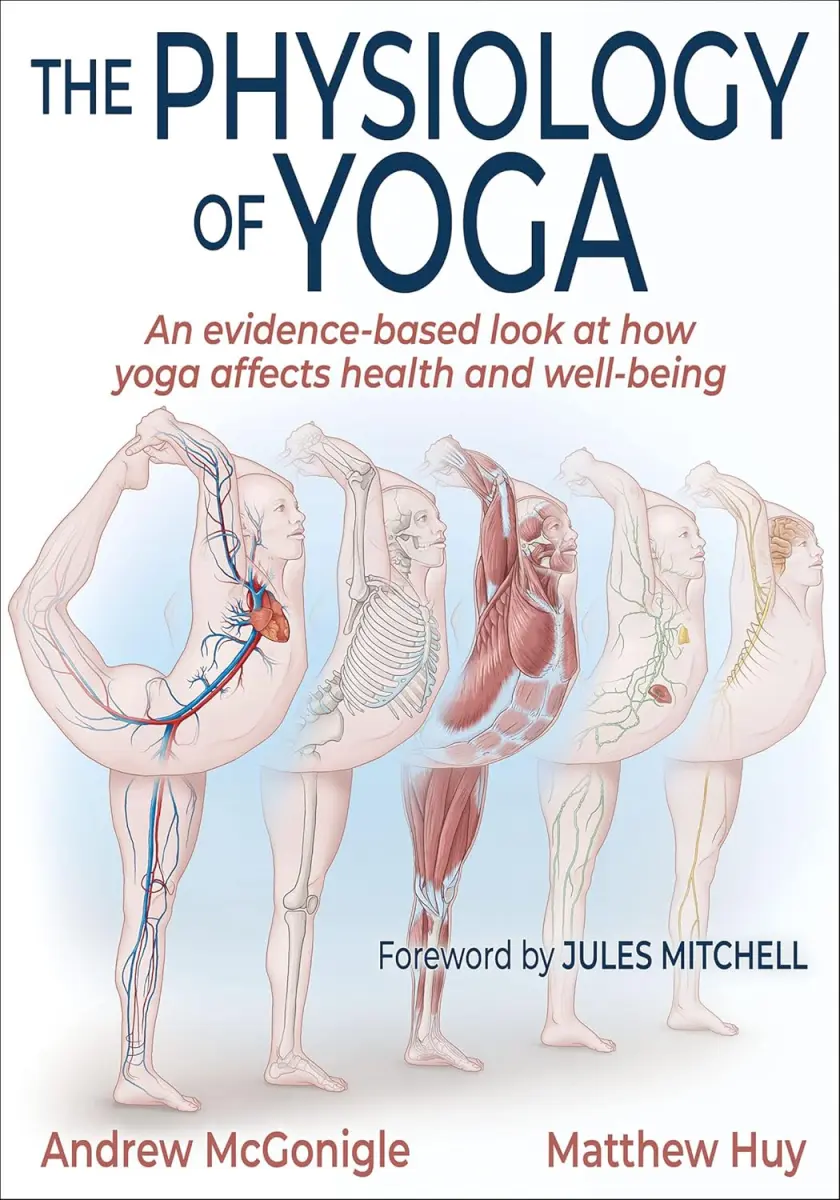
The Physiology of Yoga explores the science behind yoga by analyzing how it affects the body’s major systems—musculoskeletal, nervous, respiratory, cardiovascular, endocrine, lymphatic, digestive, immune, and reproductive. The book combines scientific research with yoga tradition, aiming to empower teachers and practitioners with evidence-based knowledge while encouraging critical thinking.
The authors begin by emphasizing the importance of separating myth from fact in the yoga world. Many common claims, such as twists detoxifying organs or certain poses stimulating glands, often lack scientific support. Through rigorous exploration, they urge readers to evaluate such ideas through the lens of physiology and evidence, not just tradition or repetition.
In the musculoskeletal system chapter, yoga’s role in improving bone strength, joint health, and muscle function is detailed. The text breaks down how bones adapt through stress (Wolff’s Law) and how different types of muscle contractions—concentric, eccentric, and isometric—play a part in yoga practice. It also dives into topics like fascia and flexibility, explaining the real mechanisms behind stretching and how fascia functions as a whole-body connective system.
The nervous system chapter covers the brain, spinal cord, and peripheral nerves. Yoga’s influence on reducing stress and regulating the autonomic nervous system (especially the parasympathetic branch) is highlighted. Breathing practices, mindfulness, and meditation help in modulating the nervous system, improving both mental clarity and emotional resilience.
In the respiratory system section, the authors explain breathing mechanics, the diaphragm’s role, and how yogic breathing (pranayama) affects oxygen exchange and respiratory health. Practices like Ujjayi and slow nasal breathing are shown to have calming effects and measurable physiological benefits, such as improved heart rate variability and reduced stress hormone levels.
The cardiovascular system chapter explores how yoga influences heart rate, circulation, and blood pressure. Slow movement and breath-linked practices enhance cardiovascular efficiency and support recovery from stress or anxiety. Studies also show yoga may reduce hypertension and improve overall heart health over time.
Moving into the endocrine system, the book discusses hormones like cortisol, insulin, and thyroid hormones, showing how yoga can help balance hormonal activity, especially in stress management and metabolic regulation.
The digestive and immune systems chapters examine how yoga supports digestion and immune health through stress reduction, movement, and improved vagal tone. Poses that encourage abdominal movement may assist digestive function, though claims like “twists detoxify the liver” are debunked as unscientific.
Finally, the book closes with practical application. It offers sequences for different needs—from dynamic practices to restorative and chair yoga—helping practitioners find appropriate routines based on physical condition and goals.
Throughout the book, the authors emphasize critical thinking and provide a framework for assessing yoga-related claims based on scientific validity. They advocate for a blend of traditional wisdom and modern science, helping yoga evolve into a more informed, safe, and effective practice.
Overall, The Physiology of Yoga is a thoughtful, evidence-based guide that enriches yoga understanding without rejecting its roots. It supports informed practice grounded in both reverence and reason.
100 important points from The Physiology of Yoga by Andrew McGonigle and Matthew Huy:
Understanding Yoga and Physiology
- Yoga means “to yoke” or unite body, mind, and consciousness.
- Physiology is the science of body function and life processes.
- Yoga impacts all major physiological systems.
- Critical thinking is essential in assessing yoga’s effects.
- Myths like “twists detox the liver” are challenged with science.
Musculoskeletal System
- Bones adapt to stress (Wolff’s Law).
- Weight-bearing poses improve bone density.
- Joints allow motion; yoga improves range of motion.
- Muscles contract concentrically, eccentrically, and isometrically.
- Fascia is a continuous connective tissue web.
- Stretching increases tolerance to sensation, not just tissue length.
- Flexibility differs from mobility.
- DOMS can result from new or intense yoga sessions.
- Yoga can help manage musculoskeletal conditions like osteoporosis and low back pain.
Nervous System
- Yoga activates the parasympathetic nervous system.
- Stress reduction occurs via vagus nerve stimulation.
- Mindfulness and breathwork regulate the autonomic nervous system.
- Chronic pain can be reframed using the biopsychosocial model.
- Placebo effect plays a role in perceived yoga benefits.
- Yoga may reduce symptoms of PTSD, anxiety, and depression.
Respiratory System
- Diaphragmatic breathing supports relaxation and core stability.
- Pranayama techniques include Ujjayi, Bhramari, Dirga, and Kapalabhati.
- Slow breathing lowers stress and improves heart rate variability.
- Nose breathing enhances oxygen uptake and filters air.
- Breath holding (e.g., Valsalva) may be useful in certain poses.
- Dysfunctional breathing can cause anxiety and fatigue.
Cardiovascular System
- Yoga can reduce blood pressure and improve circulation.
- Heart rate and cardiac output adapt to yoga practice.
- Twisting does not “squeeze out” toxins from the heart or organs.
- Regular yoga may lower resting heart rate.
- Yoga improves endothelial function and arterial flexibility.
- Chair pose is similar biomechanically to Olympic lifting.
Lymphatic and Immune Systems
- Movement and breath promote lymph flow.
- Yoga reduces chronic inflammation markers.
- Immune health is improved through stress regulation.
- Deep breathing aids lymphatic return.
- Restorative yoga supports immune recovery.
- Twists do not directly boost immunity.
Endocrine System
- Yoga regulates cortisol, the stress hormone.
- It improves insulin sensitivity.
- Endorphins released during yoga help manage pain.
- Dopamine and serotonin levels may increase post-practice.
- Hormonal balance improves in menopause and PMS.
- Stress hormones can affect the thyroid; yoga mitigates this.
- Practices like meditation help manage adrenal fatigue.
Digestive System
- Yoga supports gut-brain axis health.
- Breathwork improves vagal tone, aiding digestion.
- Twists don't detox the liver, but aid movement awareness.
- Yoga may relieve IBS symptoms.
- Stress affects digestion; yoga reduces this impact.
- Gut microbiota improves with mindful eating and yoga.
- Digestion begins in the mouth; yoga encourages mindful eating.
- Kapalabhati may increase abdominal tone.
Reproductive System
- Yoga supports hormonal health in men and women.
- Reduces PMS, menstrual cramps, and menopause symptoms.
- Prenatal yoga improves pregnancy outcomes.
- Yoga improves sperm quality and fertility markers.
- Supports emotional well-being during IVF and infertility treatments.
Practice and Application
- Practice should be adapted to individual physiology.
- Fear-based language should be avoided in teaching.
- Yoga is not risk-free; awareness and modification are key.
- Dynamic practices build strength and cardiovascular fitness.
- Hatha yoga focuses on holding poses longer.
- Chair yoga is a valid, accessible option.
- Restorative yoga promotes deep healing and relaxation.
- Savasana is essential for integration and nervous system reset.
Critical Thinking and Scientific Integrity
- Not all traditional yoga claims are evidence-based.
- Confirmation bias can distort teaching.
- Personal experience is valuable but not sufficient for health claims.
- Seek both supporting and opposing evidence when learning.
- Scientific evidence must guide yoga therapy practices.
- Teachers must stay within their scope of practice.
- Anecdotal claims should be labeled as such.
- “Feel better” doesn't always mean it’s physiologically effective.
Scientific Concepts and Integration
- Wolff’s Law: bone adapts to stress.
- Biotensegrity: body is a tensegrity structure, not isolated levers.
- Davis’s Law: soft tissues remodel under tension.
- IAP (intra-abdominal pressure) supports spinal stability.
- Hormones affect every system; yoga influences hormone levels.
- Heart rate variability is a marker of nervous system balance.
- Breathing impacts every physiological system.
- Interoception improves with mindful movement.
Common Conditions Yoga Can Support
- Osteoporosis
- Arthritis
- Low back pain
- IBS and digestive distress
- Hypertension
- Anxiety and depression
- Menstrual pain
- Fertility-related stress
- Chronic fatigue
- COPD
Philosophical and Practical Considerations
- Yoga is not just movement—it’s ethical and spiritual practice.
- Eight limbs of yoga include ethics, posture, breath, and meditation.
- Modern yoga overemphasizes physical aspects.
- Each body is different—alignment cues must be adaptable.
- Yoga should foster self-awareness, not rigid rules.
- Being uncertain allows space for deeper wisdom.
- Sustainable practice is more important than perfection.
- The real goal is to use yoga to better understand yourself.
. . .