

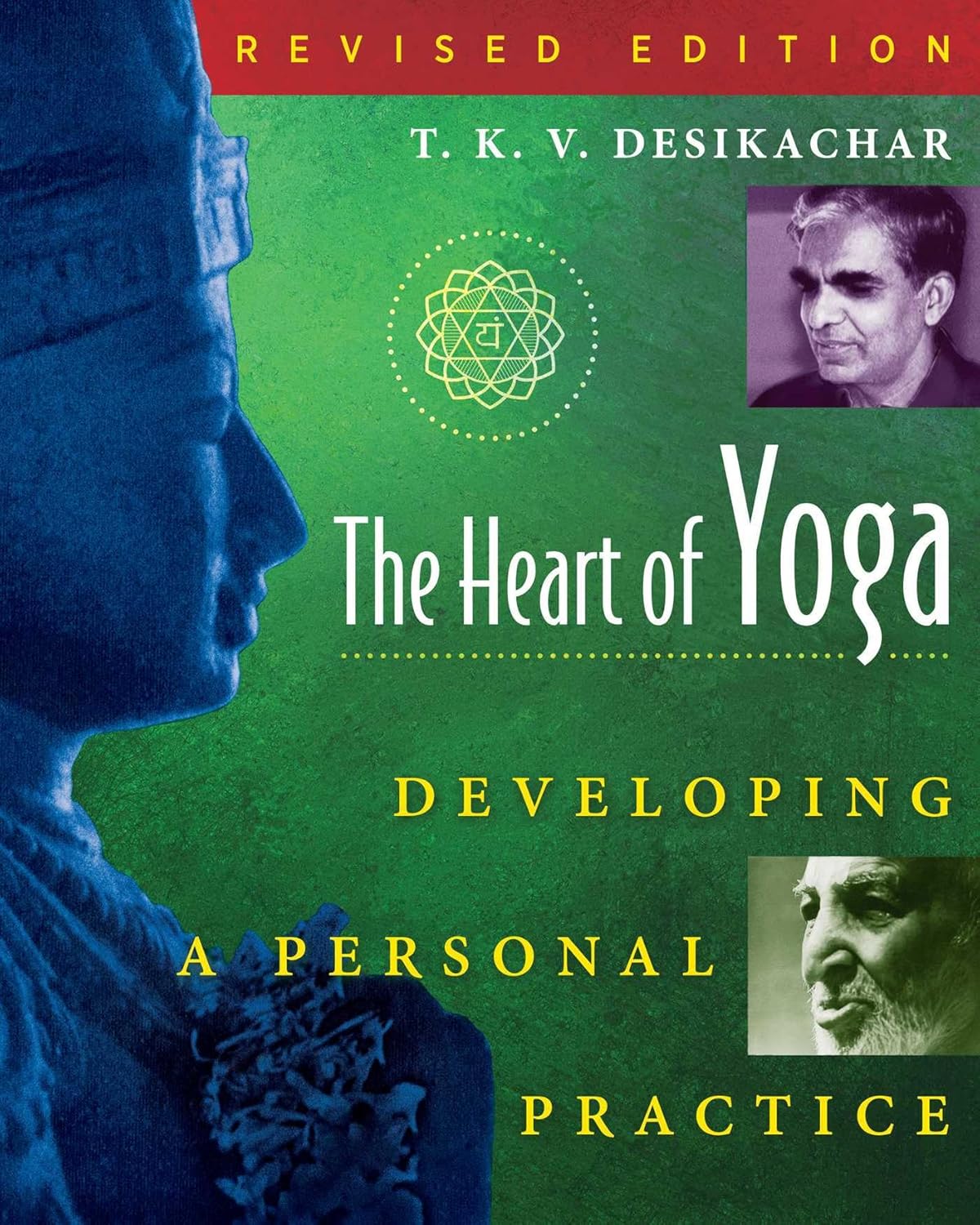
HEART OF YOGA, T. K. V. DESIKACHAR Image
5/10 1,050 views Updated: 1 week ago

HEART OF YOGA, T. K. V. DESIKACHAR

The book "The Heart of Yoga" by T.K.V. Desikachar is a profound exploration of yoga's philosophy and practice, interwoven with personal stories and insights from one of modern yoga's most revered teachers. Rooted in the teachings of Desikachar's father, Sri T. Krishnamacharya—regarded as the father of modern yoga—the book offers a blend of ancient wisdom and modern application.

Summary

The book is divided into four parts:

  1. Practice of Yoga: Desikachar emphasizes the importance of personalized yoga practices, where the approach suits the individual's body, mind, and circumstances. He provides detailed guidance on āsana (postures), prāṇāyāma (breath control), and meditation.
  2. Understanding Yoga: This section delves into philosophical teachings, including the nature of the mind, the obstacles to personal growth, and how yoga can address them.
  3. The Yoga Sūtras of Patañjali: The author provides a commentary on the foundational text of classical yoga, unraveling its complex ideas in a way accessible to modern readers.
  4. Yogāñjalisāram: This is a poetic summation of yoga philosophy, providing a meditative reflection on its essence.

The narrative balances technical details about yoga practices with heartfelt anecdotes, such as Desikachar’s relationship with his father and the transformative power of yoga on individuals.


Highlights

  1. Personalized Approach: Yoga is not a one-size-fits-all practice. It must be adapted to the individual, respecting their unique needs, limitations, and goals.
  2. Holistic View: The book emphasizes yoga as a way to unite body, breath, and mind. It is not merely a physical exercise but a journey toward self-awareness and harmony.
  3. The Power of Breath: Breath is central to all yoga practices, acting as a bridge between the body and mind.
  4. Integration of Ancient Wisdom: Desikachar connects traditional teachings with practical applications for modern living, making ancient texts like the Yoga Sūtras relevant.

Pros

  1. Accessible to All Levels: Beginners and experienced practitioners alike will find valuable insights.
  2. Balanced Perspective: Combines technical rigor with a warm, human touch, making the philosophy relatable.
  3. Timeless Guidance: Rooted in universal truths, it transcends cultural and temporal boundaries.
  4. Emphasis on Individuality: The focus on tailoring yoga to each person is empowering and inclusive.

Cons

  1. Dense in Places: The philosophical sections, particularly on the Yoga Sūtras, may feel overwhelming to readers without a background in yoga philosophy.
  2. Less Focus on Physical Postures: Those looking for a primarily physical guide to yoga may find the book more abstract than expected.


100 important points from The Heart of Yoga by T.K.V. Desikachar.


🧘‍♂️ Yoga as a Personal Journey

  1. Yoga should be adapted to the individual, not the other way around.
  2. It evolves with age, physical condition, and personal goals.
  3. Yoga integrates body, breath, and mind.
  4. Each person’s practice is unique and personal.
  5. The teacher-student relationship is central to yoga.
  6. Yoga is a tool for self-transformation and inner peace.
  7. It is a lifelong journey of self-discovery.
  8. The practice should be consistent and patient.
  9. Yoga is not about achieving perfection but about progress.
  10. It requires self-awareness and self-discipline.

🧘‍♀️ The Role of Breath (Pranayama)

  1. Breath is the foundation of yoga.
  2. It links the body and mind.
  3. Every movement in yoga should be guided by the breath.
  4. Pranayama techniques include ujjayi, nadi shodhana, and kapalabhati.
  5. Ujjayi pranayama involves gentle throat constriction to create a calming sound.
  6. Nadi shodhana balances energy pathways by alternating breath between nostrils.
  7. Kapalabhati is a vigorous technique that revitalizes and purifies the respiratory system.
  8. Breath control can influence mental and emotional states.
  9. Synchronizing breath with movement enhances mindfulness.
  10. Pranayama can calm the mind and reduce stress.

🧘‍♂️ The Eight Limbs of Yoga

  1. Yamas: Ethical guidelines for personal conduct.
  2. Niyamas: Observances for self-discipline.
  3. Asana: Physical postures that prepare the body.
  4. Pranayama: Breath control techniques.
  5. Pratyahara: Withdrawal of the senses.
  6. Dharana: Concentration and focus.
  7. Dhyana: Meditation and contemplation.
  8. Samadhi: State of deep absorption and enlightenment.
  9. These limbs are interconnected and support each other.
  10. They provide a comprehensive framework for yoga practice.

🧘‍♀️ Asana Practice

  1. Asana should be steady and comfortable (sthira and sukha).
  2. Begin with poses that suit your current abilities.
  3. Progress gradually without forcing the body.
  4. Focus on the breath during each posture.
  5. Use props or modifications as needed.
  6. Regular practice leads to increased flexibility and strength.
  7. Asana prepares the body for meditation.
  8. It cultivates awareness and presence.
  9. The practice should be balanced and harmonious.
  10. Avoid comparison with others; focus on your own experience.

🧘‍♂️ Viniyoga: Adaptation of Practice

  1. Viniyoga tailors yoga to the individual.
  2. It considers age, health, and personal goals.
  3. Sequences are designed based on individual needs.
  4. The practice evolves over time.
  5. It emphasizes functional movement over aesthetic form.
  6. Viniyoga is therapeutic and healing.
  7. It integrates various aspects of yoga into daily life.
  8. The approach is holistic and inclusive.
  9. It encourages self-inquiry and personal growth.
  10. Viniyoga respects the uniqueness of each practitioner.

🧘‍♀️ The Role of the Teacher

  1. A good teacher understands the student’s needs.
  2. Teaching should be compassionate and patient.
  3. The teacher-student relationship is sacred.
  4. Teachers should guide, not impose.
  5. They should create a safe and supportive environment.
  6. Teachers must continue their own practice and learning.
  7. They should be adaptable and open-minded.
  8. Ethical conduct is essential for teachers.
  9. Teachers should encourage self-reliance in students.
  10. The goal is to empower students to practice independently.

🧘‍♂️ The Mind and Emotions

  1. The mind influences the body and vice versa.
  2. Yoga helps in understanding and controlling the mind.
  3. Emotional balance is a key aspect of well-being.
  4. Self-awareness leads to emotional clarity.
  5. Yoga can help release suppressed emotions.
  6. The practice cultivates inner peace and stability.
  7. Meditation enhances mental clarity and focus.
  8. The mind can be trained through consistent practice.
  9. Yoga helps in managing stress and anxiety.
  10. Emotional healing is a gradual process.

🧘‍♀️ The World and Society

  1. Yoga encourages living harmoniously with the world.
  2. It promotes compassion and empathy.
  3. Understanding the world leads to personal growth.
  4. Yoga helps in discerning truth from illusion.
  5. It teaches acceptance and non-attachment.
  6. Practitioners should contribute positively to society.
  7. Yoga fosters a sense of interconnectedness.
  8. It encourages environmental consciousness.
  9. The practice extends beyond the mat into daily life.
  10. Yoga is a path to collective well-being.

🧘‍♂️ Challenges in Practice

  1. Obstacles include illness, lethargy, doubt, and distraction.
  2. Consistency is key to overcoming challenges.
  3. Adjusting practice to current conditions is important.
  4. Seeking guidance when needed is beneficial.
  5. Patience and perseverance are essential.
  6. Self-compassion aids in overcoming difficulties.
  7. Recognizing limitations leads to growth.
  8. The journey involves both progress and setbacks.
  9. Celebrating small victories encourages continued practice.
  10. Challenges are opportunities for learning and development.

🧘‍♀️ The Ultimate Goal

  1. The goal of yoga is self-realization.
  2. It leads to liberation (moksha) from suffering.
  3. Yoga fosters a deep connection with the self.
  4. It cultivates wisdom and understanding.
  5. The practice leads to inner freedom.
  6. Yoga is a path to spiritual awakening.
  7. It encourages living authentically and truthfully.
  8. The journey is personal and unique.
  9. Continuous practice deepens insight and awareness.
  10. Yoga is a lifelong commitment to growth and transformation.

These points encapsulate the essence of Desikachar's teachings in The Heart of Yoga, offering a comprehensive guide to a personalized and holistic yoga practice.


. . .

Related Books Reviews