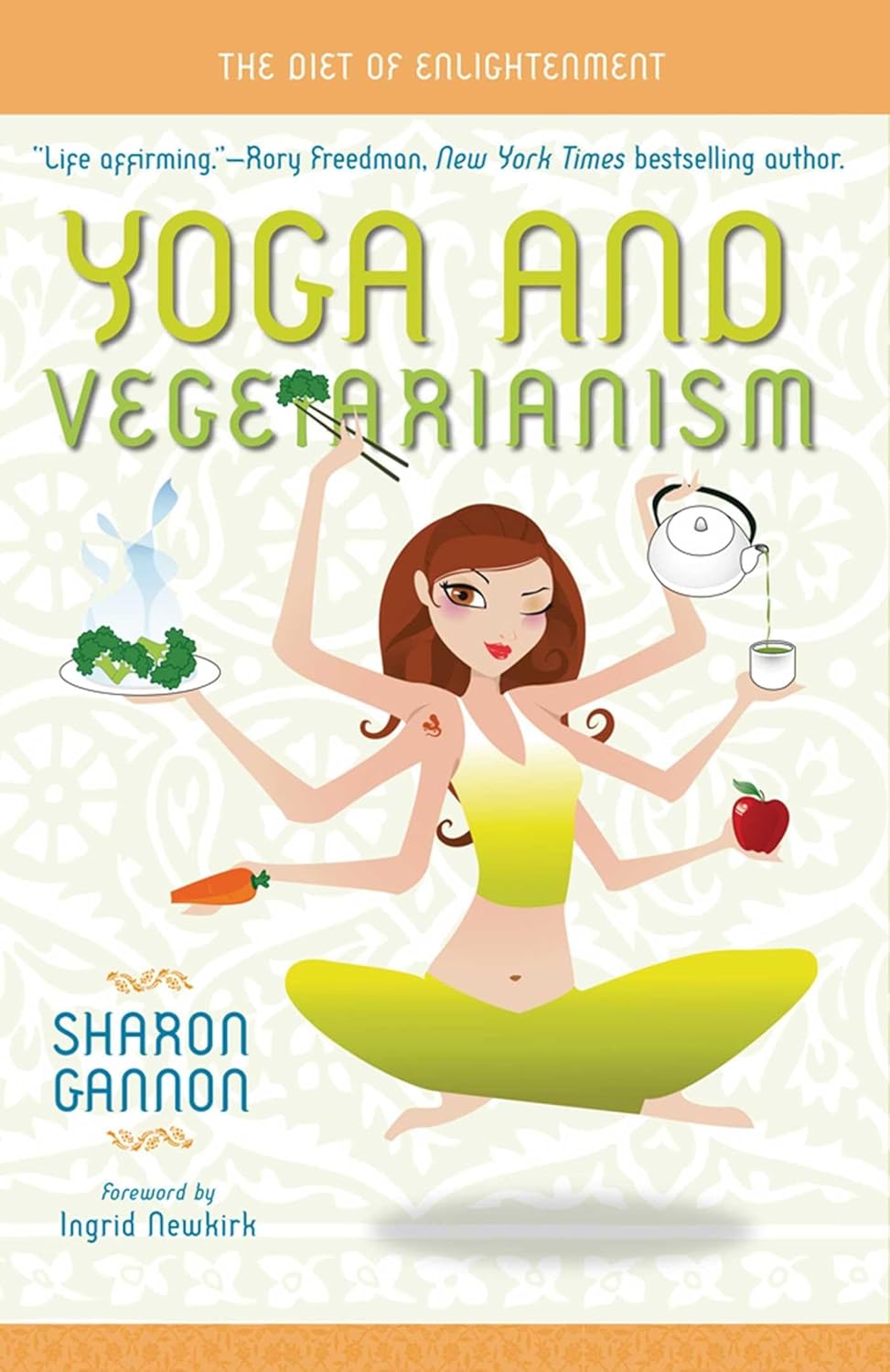
In Yoga and Vegetarianism, Sharon Gannon presents a compelling argument that the heart of true yogic practice lies in nonviolence (ahimsa) and that this principle must extend to all aspects of life, particularly one’s diet. The book connects the ancient teachings of Patanjali’s Yoga Sutras to contemporary ethical and environmental issues, demonstrating that practicing yoga without embracing a vegetarian or vegan lifestyle is incomplete and contradictory.
Gannon begins by discussing her personal journey—how childhood empathy for animals, a traumatic encounter involving the death of a snake, and a life-changing documentary about animal cruelty led her to become a committed vegan and activist. She argues that the suffering inflicted upon animals for food violates the ethical foundation of yoga. Quoting Patanjali, she explains that yamas—ethical restraints for yogis—include nonviolence (ahimsa), truthfulness (satya), nonstealing (asteya), sexual responsibility (brahmacharya), and nonpossessiveness (aparigraha), all of which support the case for compassionate living.
Central to Gannon’s philosophy is the belief that every action creates karma. What we do to others, including animals, returns to us. By consuming meat, dairy, and eggs, we support industries rooted in violence, exploitation, and environmental destruction, which in turn harm our own health and well-being. From a yogic perspective, harming other beings, whether directly or indirectly, interferes with our spiritual evolution and clouds our consciousness.
The book explains how yoga aims to remove the illusion of separateness and cultivate the realization of oneness. Eating animals reinforces the idea of “otherness,” creating disconnection rather than unity. By choosing a vegan lifestyle, we not only align ourselves with the ethics of yoga but also contribute to a more compassionate, sustainable, and enlightened world.
Gannon supports her arguments with scientific data about the devastating environmental impacts of animal agriculture: global warming, water pollution, deforestation, and the depletion of natural resources. She also highlights how a plant-based diet can prevent or reverse major diseases such as heart disease and cancer. Thus, veganism becomes not only a spiritual necessity but also a practical solution for personal health and global survival.
Throughout the book, Gannon urges readers to look deeply at their choices—how they live, eat, think, and speak—and how these choices affect the world. She emphasizes that yoga is more than physical postures (asana); it is a lifestyle and a path toward liberation. The practice of yoga begins with how we treat others, and animals are included in that “other.” By aligning our actions with compassion and wisdom, we prepare the inner conditions for enlightenment.
In conclusion, Yoga and Vegetarianism is a passionate, insightful, and transformative guide that urges yogis and spiritual seekers to embrace a lifestyle that honors all beings. Gannon’s message is clear: if we want to experience peace, freedom, and true yoga, we must stop harming others—including animals—and instead live in harmony with all of life.
100 important points from Yoga and Vegetarianism: The Diet of Enlightenment by Sharon Gannon:
Core Philosophy
- The foundation of yoga is ahimsa (nonviolence).
- A vegetarian/vegan diet is essential to practicing true yoga.
- Yoga is not just about postures (asana), but a holistic ethical path.
- Yoga seeks to dissolve the illusion of separateness.
- Enlightenment is realizing the oneness of all beings.
- Karma means our actions (thoughts, words, deeds) shape our reality.
- What we do to others returns to us.
- Causing suffering to animals creates negative karma.
- A compassionate lifestyle purifies our karmas.
- Our food choices reflect our spiritual evolution.
Patanjali’s Yoga Sutras
- The yamas are ethical restraints for yogis.
- The five yamas are: ahimsa, satya, asteya, brahmacharya, aparigraha.
- Each yama supports a vegetarian lifestyle.
- Ahimsa means not harming any being—including animals.
- Satya (truth) involves being honest about our choices and their impact.
- Asteya (non-stealing) means not stealing animal lives or resources.
- Brahmacharya (moderation) includes respectful energy use, including diet.
- Aparigraha (non-greed) is incompatible with exploiting animals.
- Patanjali says future suffering should be avoided.
- Yoga begins with restraint toward others, including animals.
Personal Journey
- Gannon became a vegan after witnessing animal cruelty.
- Childhood empathy played a major role in her path.
- An incident with a coral snake awakened her awareness of violence.
- A documentary (The Animals Film) opened her eyes to systemic cruelty.
- Yoga helped her recover physically and spiritually.
- She became a yoga teacher to advocate for animal rights.
- Yoga helped her integrate her activism and spiritual path.
Ethical Vegetarianism/Veganism
- Veganism avoids harm to animals, people, and the planet.
- Eating meat supports violence, fear, and death.
- Ethical vegetarians avoid dairy, eggs, and fish too.
- Veganism respects animals as individuals with rights.
- Exploiting animals is never spiritually justified.
- There’s no such thing as “humane slaughter.”
- Animals raised for food suffer immensely.
- Animals are not ours to use—for food, clothes, or entertainment.
Spiritual Development
- Yoga develops compassion and awareness.
- Enlightenment arises from dissolving “otherness.”
- What we eat affects our thoughts and actions.
- Eating animals hinders spiritual clarity.
- Veganism is a form of spiritual activism.
- Practicing yoga without compassion is incomplete.
- Nonviolence must include food choices.
- True freedom cannot be rooted in others’ suffering.
- Liberation involves extending kindness to all life.
- Our inner peace mirrors how we treat others.
Environmental Impact
- Animal agriculture is the leading cause of water pollution.
- It contributes more to climate change than transportation.
- Raising animals requires vast amounts of water and land.
- Oceans are depleted from fish farming and overfishing.
- Deforestation is driven by feed crops for livestock.
- Soy and corn are mostly fed to animals, not humans.
- Factory farms produce more waste than humans.
- Livestock emit massive methane and greenhouse gases.
- A vegan diet significantly reduces environmental damage.
- Protecting the Earth is part of spiritual practice.
Health & Science
- Vegan diets prevent and reverse heart disease.
- Animal products are linked to cancer and chronic illness.
- Meat is full of antibiotics and hormones.
- Factory farms are breeding grounds for disease.
- Plant-based diets increase vitality and longevity.
- Most major nutrition bodies support plant-based diets.
- Yoga is a powerful tool for physical and mental healing.
- Eating mindfully supports physical and emotional balance.
- A plant-based diet supports natural energy flow (prana).
- Spiritual evolution is linked to healthy, pure living.
Animal Sentience
- Animals feel joy, grief, and pain.
- Cows jump for joy when they solve puzzles.
- Prairie dogs use language and nouns.
- Elephants grieve their dead.
- Birds sing at inaudible frequencies.
- Fish tell time; octopuses decorate their dens.
- Animals have rich emotional and social lives.
- Every animal has a desire for freedom.
- Their lives are interwoven with ours.
- They are not beneath us—they are “other nations.”
Activism & Transformation
- You don’t need to be perfect to make a difference.
- Small changes—like your food—can have large impacts.
- Activism starts with personal responsibility.
- You change the world by changing yourself.
- Yoga is a powerful platform for social change.
- Self-reflection is the beginning of transformation.
- Awareness leads to compassionate choices.
- Compassion is a daily practice—especially through food.
- Each meal is an opportunity to reduce suffering.
- Spiritual seekers must walk their talk.
Yoga and Society
- Yoga is growing in popularity during global crisis.
- Our culture is built on disconnection and denial.
- Disconnection leads to war, violence, and ecological collapse.
- Yoga reconnects us to our bodies and Earth.
- Our present suffering stems from past karmas.
- Yoga teaches us to take full responsibility.
- Enlightenment requires alignment of thought, word, and deed.
- True yogis live with awareness and integrity.
- Being “political” means caring for the collective body.
- Yoga offers tools to heal the world from within.
Practical Wisdom
- Meditation and compassion go hand in hand.
- Anyone can practice compassion—three times a day, when they eat.
- Enlightenment is not separate from everyday choices.
- Every action matters, especially in a connected universe.
- Kindness, not perfection, is the path to liberation.
. . .