

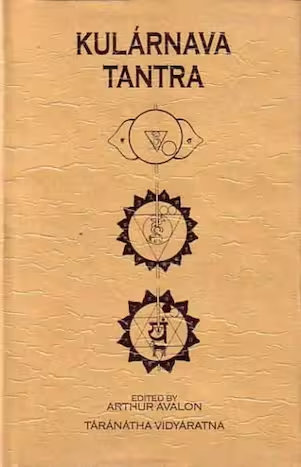
Kularnava Tantra Image
8/10 983 views Updated: 1 week ago

Kularnava Tantra

Kularnava Tantra is a seminal Tantric text emphasizing spiritual liberation through the harmonious integration of worldly enjoyment and ascetic practices. Presented as a dialogue between Devi and Lord Shiva, it covers themes such as the preciousness of human birth, the importance of a Guru, and the transformative power of inner purification. The text guides seekers on the Kaula path, blending ritual, devotion, and wisdom to ac...

Kularnava Tantra is a revered text in the Tantric tradition, considered one of the primary scriptures of the Kaula school. Authored in classical Sanskrit, the text unfolds profound philosophical insights, ethical teachings, and practical guidelines for spiritual seekers. It emphasizes the harmonious integration of spiritual liberation (moksha) with worldly enjoyment (bhukti), distinguishing it as a path that embraces both asceticism and engagement with life.

Structured in seventeen chapters comprising over two thousand verses, the text features a dialogue between Devi (the Divine Mother) and Lord Shiva. The Kularnava Tantra addresses essential themes such as the rarity and preciousness of human birth, the importance of a Guru, the efficacy of rituals and mantras, and the means to attain self-realization. It stresses the necessity of inner purification and warns against pseudo-paths that mix mundane pleasures with spirituality. This profound scripture is not only a spiritual guide but also a treasure trove of philosophical wisdom and ethical principles.


Why You Should Read Kularnava Tantra

Reading Kularnava Tantra offers unparalleled insights into one of the most esoteric yet practical branches of Indian spirituality. The text provides a balanced approach to life, where spiritual elevation does not necessitate the renunciation of worldly existence. For seekers of truth and individuals drawn to mystical traditions, this text unveils the secrets of self-realization through Tantra—a path often misunderstood in popular culture.

Moreover, the text provides guidance on overcoming life's distractions and pitfalls, helping readers cultivate a disciplined, joyful, and purposeful life. With its timeless wisdom, Kularnava Tantra is a beacon for modern spiritual practitioners seeking harmony between material success and spiritual fulfillment.


100 Important Points from Kularnava Tantra

  1. The rarity and supreme value of human birth.
  2. Life is transient, like a flash of lightning.
  3. Human birth is the only opportunity for liberation.
  4. The need for awareness and the urgency of spiritual pursuit.
  5. Attachment is the root cause of suffering.
  6. True liberation comes through self-realization.
  7. Rituals and austerities have limited value without inner knowledge.
  8. Knowledge of the Divine is the ultimate aim of life.
  9. Scriptures should guide but not bind; realization transcends books.
  10. The guidance of a Guru is indispensable.
  11. The Guru represents the voice of the World-Teacher.
  12. The Guru-disciple relationship is sacred and transformative.
  13. Kula-Dharma synthesizes Shiva and Shakti, consciousness and power.
  14. The Kaula path harmonizes material enjoyment and spiritual ascent.
  15. Bhoga (enjoyment) becomes Yoga (spiritual union) in Kaula.
  16. Success is achieved by transforming worldly elements into spiritual tools.
  17. The Kula path is not for the unqualified or unprepared.
  18. One's readiness depends on past births and purification.
  19. Devotion, humility, and obedience to the Guru are essential.
  20. External rituals are secondary to inner transformation.
  21. Faith and dedication to Kula-Dharma lead to liberation.
  22. Kaula transcends Vedic and Agamic boundaries.
  23. True Kaula practice is sacred and not about indulgence.
  24. The misuse of Kaula practices leads to ruin.
  25. Real spiritual union is the merging of consciousness and energy.
  26. Wine, flesh, and sexual rites are symbolic and require inner purity.
  27. Liberation is not obtained through mere external acts.
  28. Inner purification is vital for spiritual progress.
  29. The divine Mother’s grace is indispensable.
  30. True Kaula practitioners are humble and devoted.
  31. The Tantra emphasizes experiential knowledge over intellectual debates.
  32. Avoid pseudo-gurus who mislead seekers.
  33. Mere chanting or reading without realization is futile.
  34. All philosophies merge into the essence of Kula.
  35. Kula-Dharma upholds the essence of Vedic teachings.
  36. Practice must be aligned with the divine law.
  37. Liberation must be sought in this lifetime.
  38. Time is fleeting; do not postpone spiritual efforts.
  39. Adversities should not deter one from the spiritual path.
  40. Proper initiation by a competent Guru is crucial.
  41. Kula-Dharma offers immediate spiritual benefits.
  42. The true essence of scriptures must be grasped.
  43. Spiritual realization is a direct and immediate experience.
  44. Liberation transcends the ashramas and conventional rituals.
  45. Non-attachment is key to liberation.
  46. Holy company acts as a medicine for the soul.
  47. Knowledge must be integrated into one’s life.
  48. Spiritual progress is a ladder, each step building upon the previous.
  49. Direct realization is superior to verbal knowledge.
  50. The Sastras are infinite; wisdom lies in grasping their essence.
  51. True Kaula practitioners experience bliss and liberation.
  52. Dharma and Jnana are branches of the tree of liberation.
  53. One must cultivate faith and devotion.
  54. Seekers must obey the Guru’s commands.
  55. Proper attitude and sincerity are essential.
  56. Liberation is a gradual process of inner purification.
  57. The Tantra emphasizes harmony between worldly and spiritual life.
  58. Practice requires discipline and sincerity.
  59. Kula-Dharma is the culmination of all spiritual paths.
  60. The Guru’s word is the voice of ultimate truth.
  61. Without faith, liberation is not possible.
  62. Mere rituals do not guarantee enlightenment.
  63. The divine Mother’s guidance is essential.
  64. True Kaula practitioners are rare and revered.
  65. Liberation is the highest goal of human life.
  66. Inner purification leads to divine consciousness.
  67. Spirituality requires a sincere heart.
  68. Rituals should not become empty formalities.
  69. Seekers must constantly refine their understanding.
  70. Kaula-Dharma transcends sectarian boundaries.
  71. The divine path is accessible to all sincere seekers.
  72. The human body is a vehicle for spiritual realization.
  73. Spiritual practice must be adapted to one’s readiness.
  74. Progress is measured by inner transformation.
  75. Avoid distractions and pseudo-paths.
  76. Spirituality must integrate with daily life.
  77. Liberation requires intense effort and grace.
  78. Knowledge is power when aligned with divine truth.
  79. Spirituality is a journey, not a destination.
  80. The Guru’s grace accelerates liberation.
  81. The Kaula path is both sacred and scientific.
  82. Material desires must be transformed into spiritual aspirations.
  83. Awareness is the key to self-realization.
  84. Kula-Dharma emphasizes divine harmony.
  85. The Guru imparts transformative knowledge.
  86. Spirituality demands courage and perseverance.
  87. Divine grace must be sought through devotion.
  88. The path requires sincerity and humility.
  89. Liberation is attainable for those who seek it earnestly.
  90. Spiritual knowledge must be experiential.
  91. The Kaula tradition integrates ancient wisdom.
  92. The divine Mother nurtures sincere seekers.
  93. Seekers must cultivate divine virtues.
  94. The Kaula path is holistic and life-affirming.
  95. True knowledge is beyond dualism.
  96. The Guru removes ignorance and imparts wisdom.
  97. Kaula-Dharma is a practical path for modern seekers.
  98. Discipline and inner purity lead to success.
  99. Seekers must cherish divine teachings.
  100. .The ultimate truth is realized through devotion and grace.


. . .

Related Books Reviews