Yoga Styles

Power Yoga - Complete Guide, Benefits, and Poses

A vigorous, flowing style of yoga derived from Ashtanga, with no fixed sequence and an emphasis on strength and endurance.

Published: October 14, 2026 Updated: October 14, 2026

What Power Yoga Is

Power yoga is a vigorous, fitness-oriented style of flowing yoga. It borrows the breath-linked movement of Ashtanga but drops the fixed sequence, so each teacher builds their own class. Expect strength work, steady movement, and enough effort to get you sweating.

The name came out of the United States in the late 1980s, from two teachers who had both studied Ashtanga with K. Pattabhi Jois. In New York, Beryl Bender Birch had been teaching vigorous Ashtanga-based classes to runners at the New York Road Runners Club since the early 1980s and began calling them "power yoga" later that decade; her 1995 book Power Yoga spread the term nationally. In Los Angeles, Bryan Kest, who learned Ashtanga as a teenager from David Williams in Hawaii and studied with Jois in Mysore in 1983, started teaching in 1985 and founded Santa Monica Power Yoga in 1995. Jois himself objected to the name in a 1995 letter to Yoga Journal.

A Label, Not a Single Method

There is no governing body or standard sequence for power yoga. Classes vary a lot by teacher and studio, and some are taught in heated rooms. Read the class description before you go.

Key Characteristics

  • Continuous, breath-linked movement
  • No fixed sequence
  • Emphasis on strength and endurance
  • Room may be warm or heated
  • Few props, fast pace

What a Class Looks Like

Warm-Up

Several rounds of sun salutations, moving through Plank and Downward Dog to raise your heart rate.

Strength Flow

Standing sequences, lunges, longer holds in poses like Chair Pose, and core work. Some classes add arm balances.

Cool-Down

Seated stretches, a twist, and a few minutes in Corpse Pose before you leave.

What It Works On

Physical

  • Strength in the legs, shoulders and core
  • Muscular endurance from repeated flows
  • Flexibility worked while warm
  • Balance in one-legged poses

Mental

  • Focus on breath while working hard
  • A structured way to stay active
  • Quiet time at the end of class

Calories

The 2024 Adult Compendium of Physical Activities lists power yoga at 4.0 METs (an estimated value) and hatha yoga at 2.3 METs, so a power class costs more energy than a gentle one. Your actual burn depends on your body weight and the class. Use our yoga calories calculator for an estimate.

Common Power Yoga Poses

Plank

Works: Core, shoulders, arms

Easier option: Lower your knees to the mat and keep your body in a straight line from knees to head.

Downward Dog

Works: Shoulders, hamstrings, calves

Easier option: Bend your knees generously to keep your back long.

Chair Pose

Works: Thighs, glutes, back muscles

Easier option: Sit less deep and keep your hands at your chest.

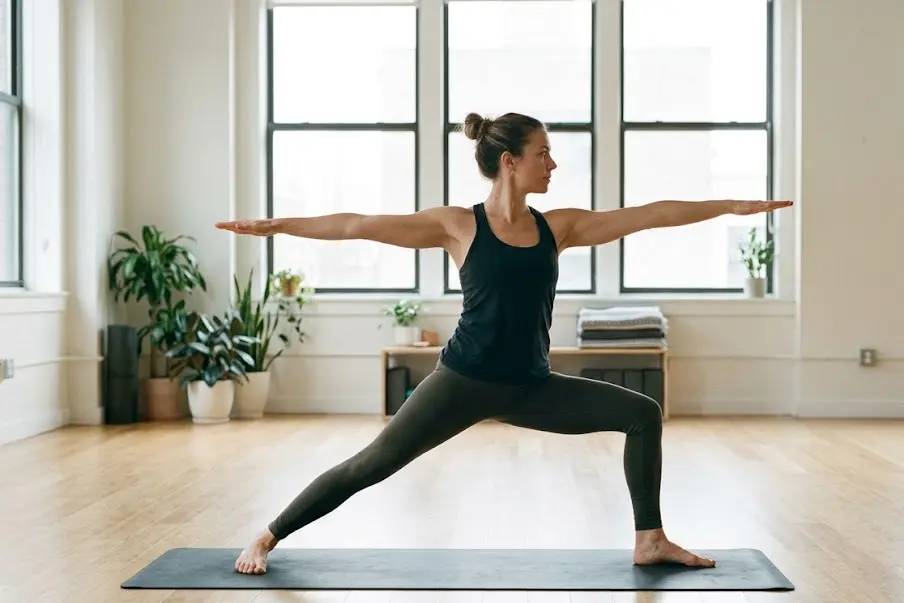
Warrior II

Works: Legs, hips, shoulders

Easier option: Shorten your stance and bend the front knee less.

Triangle Pose

Works: Legs, side body, hamstrings

Easier option: Rest your lower hand on a block or your shin.

Child's Pose

Use: Your rest stop

When: Any time you need to catch your breath. Rejoin the flow when you are ready.

Power Yoga vs. Vinyasa and Ashtanga

All three link movement with breath, and the lines between them are blurry in practice.

Power vs. Ashtanga

Ashtanga follows the same set series of poses every time. Power yoga keeps the pace and effort but lets the teacher choose the poses, so no two classes are the same.

Power vs. Vinyasa

Vinyasa covers everything from slow flows to hard ones. A class labeled "power" sits at the athletic end, with more strength work and less time on breathing or meditation.

If you want something slower, Hatha Yoga holds poses with rests between them, and Iyengar Yoga teaches the alignment of the same standing poses in detail. On recovery days, try Yin or Restorative Yoga.

Who It Suits and Who Should Modify

Good Fit For

People who are already fairly active and want yoga that feels like a workout, athletes looking for strength and mobility in one session, and yoga students ready for a faster pace.

If You're New

Look for a "Level 1" or "intro" power class, or learn the basic poses in a slower class first. Take Child's Pose whenever you need it.

Precautions

  • Heated classes carry a risk of overheating and dehydration; drink water
  • Pregnant: NCCIH advises avoiding hot yoga; ask your provider about vigorous classes
  • Wrist, shoulder or knee problems: repeated planks and lunges load these joints
  • Glaucoma or severe high blood pressure: ask about modifying inversions
  • Talk to your health care provider if you have a medical condition

What to Bring

Power classes need little equipment, but you will sweat.

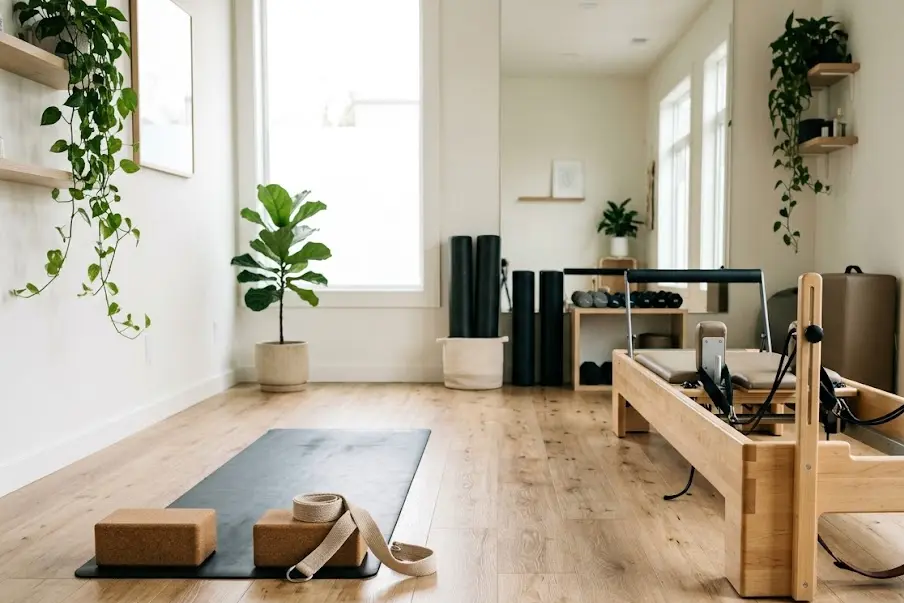
Grippy Mat

Water Bottle

Towel

Blocks (optional)

Beginner's Tip

Most yoga injuries come from pushing too hard. Keep your breathing steady; if you have to hold your breath to stay in a pose, back off. Our breathing exercises and routines are a good place to build the basics.

Power Yoga FAQ

Is power yoga good for beginners?

It can be hard as a first class. If you are new to yoga, start with an intro-level power class or learn the basic poses in a slower class first.

How many calories does power yoga burn?

The 2024 Adult Compendium of Physical Activities estimates power yoga at 4.0 METs, compared with 2.3 METs for hatha yoga. The calories you burn depend on your weight and how long you practice.

Is power yoga the same as hot yoga?

No. Some power classes are taught in heated rooms, but many are not. Check the class description if you want to avoid the heat. See hot yoga for what the heat does and who should skip it.

What is the difference between power yoga and Ashtanga?

Power yoga grew out of Ashtanga and keeps its pace, but it has no fixed sequence. Ashtanga repeats the same series of poses in the same order.

Sources: Kripalu, The Birth of Power Yoga (opens in a new tab); Wikipedia, Power Yoga (opens in a new tab); Wikipedia, Bryan Kest (opens in a new tab); 2024 Adult Compendium, Conditioning Exercise (opens in a new tab); Cleveland Clinic, Finding the Best Yoga Class (opens in a new tab); NCCIH, Yoga: Effectiveness and Safety (opens in a new tab). This page is general information, not medical advice.

Related Articles

Want to try yoga at home first?

Our free timed routines run from 2 to 20 minutes, with a timer that tells you when to switch poses.

Find a routine

Want to loosen up? Yoga for flexibility: 15 poses by body area and two routines.