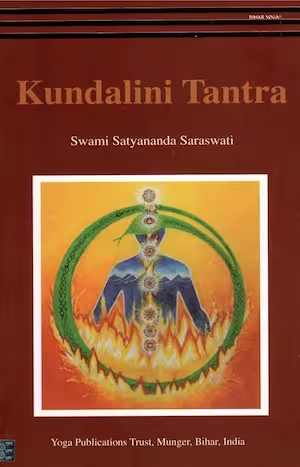


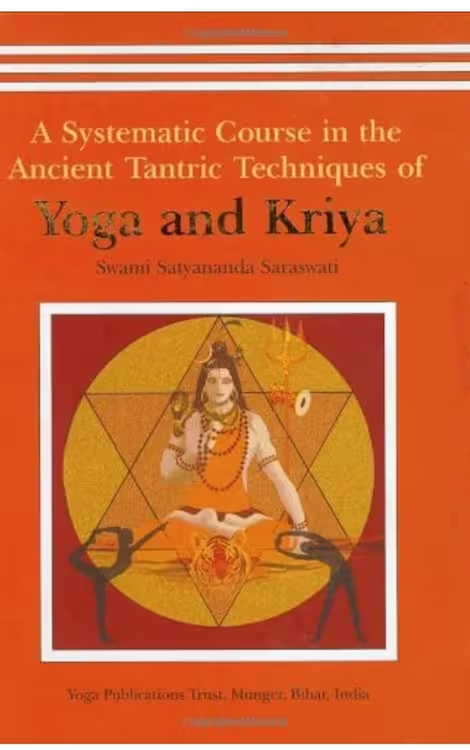
A Systematic Course in the Ancient Tantric Techniques of Yoga and Kriya By Satyananda Saraswati Image
8/10 776 views Updated: 1 week ago

A Systematic Course in the Ancient Tantric Techniques of Yoga and Kriya By Satyananda Saraswati

"Yoga and Kriya" is a comprehensive guide to the ancient science of Kriya Yoga, offering a systematic journey through physical, mental, and spiritual practices. The book integrates Hatha, Raja, Karma, Bhakti, and Jnana Yoga, emphasizing practical application and daily sadhana. By focusing on awareness, relaxation, and progressive techniques, it prepares practitioners for advanced kriya practices, leading to inner transformatio...

"Yoga and Kriya" by Swami Satyananda Saraswati is an in-depth guide to the science of yoga, particularly the ancient and powerful system of Kriya Yoga. The book presents a systematic and scientific approach to practicing integral yoga, leading the reader through a progressive journey of physical, mental, and spiritual development. Divided into three main sections, it offers a complete sadhana course, preparing beginners with foundational practices, building towards intermediate techniques, and culminating in the advanced practices of Kriya Yoga.

The text synthesizes various paths of yoga, including Hatha Yoga, Raja Yoga, Mantra Yoga, Karma Yoga, Bhakti Yoga, Jnana Yoga, and Kriya Yoga, with a focus on practical application rather than philosophical speculation. The ultimate aim is to transform one's life into an expression of joy, peace, and heightened awareness, fostering physical health, mental clarity, and spiritual awakening.

Why You Should Read "Yoga and Kriya"

  1. Comprehensive Guide: Offers a full spectrum of yogic practices, from basic asanas to advanced kriyas, ensuring a well-rounded spiritual and physical development.
  2. Practical Focus: The book emphasizes practice over theory, encouraging readers to cultivate a disciplined and transformative daily yoga practice.
  3. Spiritual Awakening: Provides not just physical exercises but a spiritual roadmap to inner transformation and self-realization.
  4. Self-Paced Learning: Designed to act as a personal teacher, allowing readers to progress at their own pace, while offering corrective insights for common challenges.
  5. Universal Wisdom: Integrates ancient yogic knowledge with contemporary relevance, making it suitable for anyone seeking meaning, balance, and growth.


100 Important Points from "Yoga and Kriya"

  1. Kriya Yoga is traditionally taught from guru to disciple, but this book breaks that tradition to meet modern needs.
  2. The word "kriya" means action or movement, indicating controlled movement of awareness and body.
  3. The right attitude is essential for successful Kriya Yoga practice.
  4. Non-expectation and effortlessness are key mental states for kriya.
  5. Consistent practice is emphasized over theoretical understanding.
  6. Kriya Yoga involves moving awareness along fixed pathways within the body.
  7. Proper preparation, including chakra sensitivity and ajapa japa, is required before starting kriya.
  8. A clean, peaceful, and consistent practice space enhances the effects of yoga.
  9. Cold showers help prevent drowsiness during early morning practices.
  10. The book offers a structured progression through kriyas, building up practice over time.
  11. Early kriyas focus on gross awareness, later kriyas move toward subtle internal symbols.
  12. Vipareeta Karani Mudra is the first kriya, involving inversion and breath awareness.
  13. Chakra Anusandhana focuses on rotating awareness through the chakras.
  14. Nada Sanchalana and Pawan Sanchalana are kriyas involving sound and breath flow.
  15. Maha Mudra and Maha Bheda Mudra combine physical locks and breathing techniques.
  16. The practice includes asanas, pranayama, and meditation.
  17. Yoga Nidra is presented as a powerful relaxation and meditation tool.
  18. Antar Mouna teaches inner silence and observation of thoughts.
  19. Daily practice is essential for transformation and spiritual growth.
  20. The book suggests 1% reading and 99% practice for true yogic experience.
  21. Regularity and sincerity in practice lead to inner and outer harmony.
  22. Surya Namaskara is recommended as a preparatory asana sequence.
  23. Awareness of psychic symbols develops with consistent practice.
  24. Each kriya builds upon the previous one, creating a complete spiritual journey.
  25. The goal of Kriya Yoga is to awaken dormant energy (Kundalini) and achieve higher consciousness.
  26. Physical and mental preparation prevents harm during advanced kriya techniques.
  27. Taking breaks to stretch or refocus during long practice sessions is advised.
  28. Practicing at the same time each day creates a positive energy field.
  29. The book offers multiple daily practice programs of varying lengths.
  30. Inner resolve and mental preparation are crucial for maintaining regular practice.
  31. The book draws from ancient tantric and Vedic traditions.
  32. Swami Satyananda emphasizes practical application over philosophical debate.
  33. Kriya Yoga requires developing sensitivity to chakra and kshetram points.
  34. The practice helps remove physical and mental ailments.
  35. Breath awareness and mantra chanting support kriya effectiveness.
  36. The use of a psychic symbol becomes central in later kriyas.
  37. Meditation on the lingam is a final stage of kriya practice.
  38. Sincere practice leads to physical health, mental clarity, and spiritual insight.
  39. Yoga Nidra can be practiced by anyone, regardless of age or health.
  40. The book encourages overcoming doubts and distractions through perseverance.
  41. Practicing under a mosquito net is allowed if there’s no body contact with the net.
  42. Antar Mouna meditation cultivates detachment from thoughts.
  43. Regular cold washing helps maintain alertness during practice.
  44. Awareness checks between kriyas help prevent mental wandering.
  45. The book stresses the importance of transforming oneself into a practitioner, not just a reader.
  46. Each lesson introduces new kriyas while maintaining previous ones.
  47. Consistent morning practice is recommended for optimal results.
  48. Advanced kriyas include Shambhavi and Amrit Pan.
  49. Integrating yoga into daily life brings spiritual awareness into ordinary activities.
  50. The book presents yoga as a means of living with joy, not just a spiritual discipline.
  51. The chakras play a crucial role in kriya practice.
  52. Spinal breathing balances the nervous system.
  53. Mantra chanting harmonizes mental vibrations.
  54. Trataka sharpens focus and mental clarity.
  55. Breath retention increases energy and awareness.
  56. Ujjayi breath generates internal heat and calmness.
  57. Kapalbhati cleanses the frontal brain region.
  58. Bhastrika energizes and balances the body.
  59. Nadi shodhana purifies energy channels.
  60. Mudras stimulate specific nerve plexuses.
  61. Bandhas lock and direct energy flow.
  62. Meditation develops one-pointed awareness.
  63. Inner sound awareness (Nada Yoga) reveals subtle realms.
  64. Kriya Yoga dissolves mental blocks and emotional imbalances.
  65. The spine is central to energy movement.
  66. Daily sadhana builds spiritual strength.
  67. Observation of thoughts leads to detachment.
  68. Advanced kriyas should be learned gradually.
  69. Consciousness expansion is the ultimate aim.
  70. Mental stillness arises naturally with practice.
  71. Chanting AUM deepens meditation.
  72. Visualizing energy movement strengthens awareness.
  73. Asana mastery supports meditation.
  74. Physical purification enhances mental clarity.
  75. Spiritual progress requires patience and consistency.
  76. Regular practice brings inner peace.
  77. Yoga is a way of life, not just an exercise.
  78. Kriya opens the door to transcendental consciousness.
  79. Awareness of prana is central to kriya.
  80. The book emphasizes humility and devotion.
  81. Hatha Yoga prepares the body for kriya.
  82. Breath and mind are interconnected.
  83. Kriya brings emotional balance.
  84. Ajna chakra activation increases intuition.
  85. Sahasrara chakra leads to spiritual enlightenment.
  86. The balance of ida and pingala is essential.
  87. Meditation on light raises vibrations.
  88. Observing silence enhances inner clarity.
  89. The journey of kriya is gradual and rewarding.
  90. Awareness of body, breath, and mind leads to self-mastery.
  91. Kriya integrates physical, mental, and spiritual dimensions.
  92. Gratitude and surrender amplify spiritual progress.
  93. Meditation reveals the true Self.
  94. Detachment from thoughts brings freedom.
  95. The practice leads to lasting inner joy.
  96. Sadhana transforms all aspects of life.
  97. Energy blocks dissolve with kriya practice.
  98. The journey inward is the goal of yoga.
  99. Kriya Yoga connects individual and universal consciousness.
  100. The ultimate fruit of kriya is liberation (moksha).


. . .

Related Books Reviews