

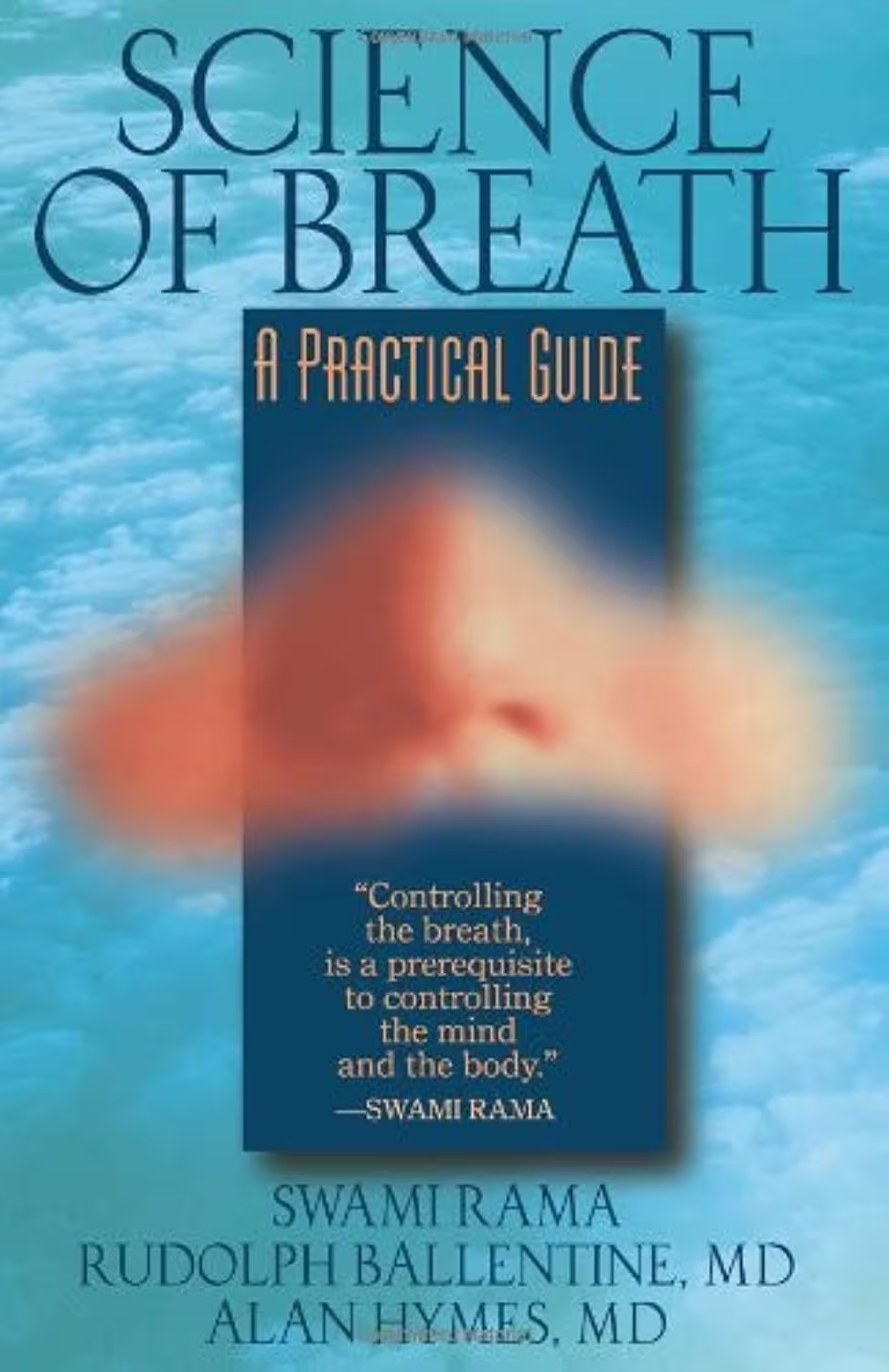
Summary of Science of Breath: A Practical Guide 📖
This book explores the profound connection between breath, mind, and body, presenting breath control as central to the yoga practice it describes. Through scientific insights and ancient wisdom, the authors describe breathing practices that the yoga tradition links to mental clarity and spiritual awareness. The work is rooted in the teachings of Swami Rama, who showcases the extraordinary capabilities of breath control, challenging conventional Western perspectives.
How the Book Is Organised
Science of Breath: A Practical Guide was written by Swami Rama with Rudolph Ballentine and Alan Hymes, and published by the Himalayan Institute. It sets two ways of looking at breath side by side: the physiology a Western reader would recognise, and the yogic view that breath carries prana, the vital energy. In broad terms, the book explains how breathing works and how the yoga tradition understands it, then moves on to practices. This summary groups the ideas by theme and does not follow the book’s chapter order.
Main Ideas on Breath, Nose and Diaphragm
The book also describes Swami Rama’s experiments in voluntary control. This summary reports those claims and does not test them.
On the physiology side, the book looks at the mechanics of breathing, including the diaphragm, the large muscle beneath the lungs. Swami Rama describes diaphragmatic breathing as the basic exercise on which the higher practices rest.
The book also looks at the nose, including its structure and ways of keeping it clear, and describes alternate nostril breathing (nadi shodhana) as a practice.
The authors present these practices as influencing the nervous system and the state of the mind. This summary cannot verify that, and it is not medical advice.
Why You Should Read It 🌟
1. Deepen Understanding of Breath
- Learn the dual nature of breath as both involuntary and voluntary, unlocking its potential for self-regulation.
2. Enhance Mind-Body Connection
- Read how the book connects breath control with mental clarity and emotional steadiness.
3. Gain Insights from Ancient Traditions
- Explore the wisdom of yoga and its practical approach to breath.
Who This Book Suits
It suits readers who want yoga’s account of breath next to a plain physiological explanation, and students of pranayama who want background to read alongside lessons with a teacher.
A sensible way to use it: read the explanatory sections first, and take the practices to a teacher rather than trying them cold.
- Breathing practices can be strong. Learn them from a qualified teacher, and check with your doctor first if you have a lung or heart condition or are pregnant.
13 Important Points from Science of Breath: A Practical Guide 🌬️
- Breath Control: Essential for mastering the mind and body.
- Autonomic Nervous System: Breath is the key to influencing this system.
- Dual Nature of Breath: It is both involuntary and voluntary.
- What the Book Says About Health: The book discusses breathing and respiratory function. This summary is not medical advice.
- Mental Clarity: The book presents breath control as a way to steady the mind.
- Emotional Stability: The book describes breath regulation as a way to work with emotions.
- Spiritual Awareness: Breath is a gateway to higher states of consciousness.
- Yoga Practices: Incorporates ancient techniques for breath control.
- Swami Rama’s Experiments: The book describes Swami Rama’s experiments in voluntary control, which it presents as challenging Western assumptions.
- Energy Flow: Breath is linked to the flow of energy in the body (prana).
- Nasal Function: The book discusses the role of nasal breathing in energy and health.
- Mindfulness: Breath awareness fosters a state of mindfulness and presence.
- Stress Reduction: The book describes controlled breathing as a way to settle body and mind.
 Sexual Energy & Yoga by Elisabeth Haich
 Introduction To Tantra Sastra by Sir John Woodroffe Arthur Avalon
 The Physiology of Yoga by M.D. Mcgonigle, Andrew, Matthew Huy
 Yoga Mala: The Original Teachings of Ashtanga Yoga Master Sri K. Pattabhi Jois
 Yoga for Ideal Weight and Shape by Noa Belling