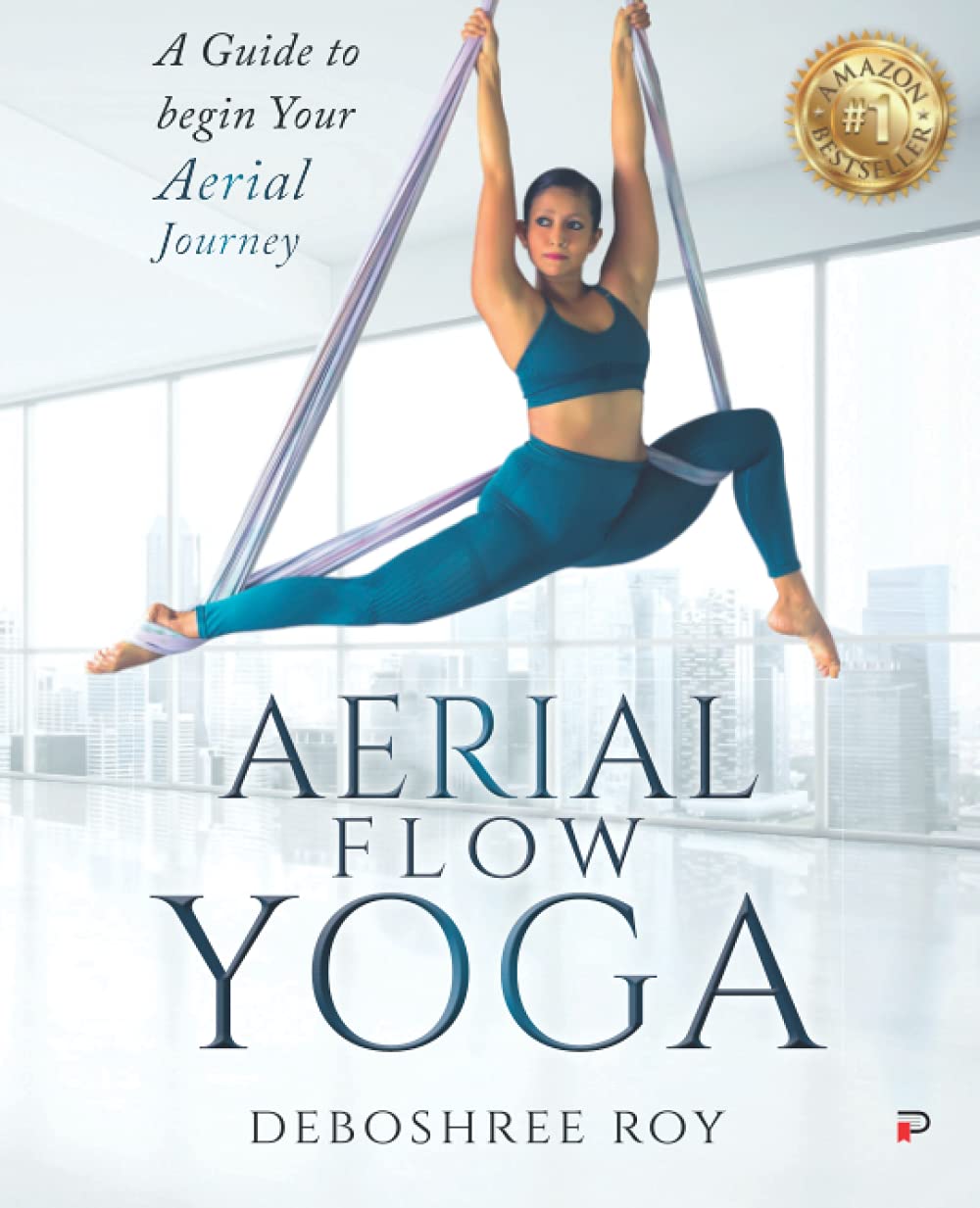
Aerial Flow Yoga by Deboshree Roy is a deeply personal, instructional, and inspiring guide to a unique form of yoga that combines traditional Hatha Yoga with aerial arts. The book begins with the author’s emotional journey—how she overcame childhood trauma, health misdiagnoses, and loss, ultimately finding healing through dance and later aerial yoga. Her story sets the tone: aerial yoga is not just about strength and flexibility, but about perseverance, healing, and reclaiming confidence.
The book introduces the meaning of aerial yoga—practicing yoga while suspended in air using a U-shaped hammock. Unlike traditional aerial silk (an acrobatic form), Aerial Flow Yoga is accessible and focuses on proper technique, safety, and body awareness. Roy emphasizes that anyone, regardless of fitness level, can begin aerial yoga with guidance, patience, and dedication.
Key foundational aspects include a safety checklist, terminology glossary, and body preparation advice. Roy insists on ensuring rig safety (having your hammock anchored properly), warming up thoroughly, focusing on shoulder and core strength, and always training with someone around, especially for beginners. Conditioning is stressed throughout the book to prevent injury and build endurance.
The book is structured to gradually introduce the reader to aerial practice. It begins with standing warm-up poses using the hammock to gently stretch and open the body, then progresses to Surya Namaskar on the floor to sync breath with movement. A variety of poses follow, from basic inversions and moving asanas to advanced aerial transitions like the Hanging Sirsasana, Double Sirsasana, Dandasana, and Upavistha Konasana Series. Each pose or flow includes detailed instructions, benefits, chakra focus, safety tips, and sometimes, variations for beginners and advanced practitioners.
A large portion of the book is dedicated to strength-building and conditioning exercises like hammock pull-ups, upside-down crunches, knee tucks, and tabletop variations. These help develop the physical foundation necessary for aerial work. Roy also presents moving series like lunges, warrior sequences, and backbends, each designed to work different parts of the body while cultivating balance, coordination, and confidence.
Advanced sequences explore deep backbends, full-body inversions, and dynamic transitions like Hanumanasana, Natarajasana, and Bhujangasana. She encourages practicing these only under professional supervision. Throughout, she weaves motivational insights, reminding practitioners to face fears, connect with their breath, and celebrate small victories.
Importantly, Roy addresses the mental and emotional growth that comes with aerial practice. She asserts that mastering moves once thought impossible cultivates real confidence, not one based on appearance or external validation, but rooted in self-effort and inner strength.
Aerial Flow Yoga is not just a manual; it’s a journey. It’s about reclaiming your body, facing internal resistance, and discovering the joy of flight. Roy’s compassionate tone, rich illustrations (in the original book), and emphasis on mindfulness make it a powerful tool for both yoga enthusiasts and those seeking personal transformation.
In the end, Deboshree Roy reminds us: sound technique removes fear, and applied technique builds fearlessness. Through Aerial Flow Yoga, one doesn’t just rise in the air, but also rises in spirit.
100 important points from Aerial Flow Yoga by Deboshree Roy:
Foundational Concepts
- Aerial Flow Yoga merges Hatha Yoga with aerial silk principles.
- The practice uses a U-shaped hammock suspended in air.
- It focuses on balance, strength, flexibility, and mindfulness.
- Aerial yoga is accessible to beginners with proper guidance.
- Sound technique removes fear; applied technique builds fearlessness.
- Breath coordination with movement is central to aerial flow.
- The floor is the best teacher before moving into the air.
- Warm-ups and conditioning are essential for injury prevention.
- Aerial Flow Yoga builds authentic, body-based confidence.
- Aerial practice is both physical and emotional healing.
Safety & Preparation
- Always get your rig checked by a structural engineer.
- Use a crash/safety mat for complex poses.
- Warm up thoroughly before beginning aerial work.
- Never train alone—always have someone nearby.
- Shoulder and core strength are critical in aerial yoga.
- Don’t skip extremity training—feet and fingers must stay active.
- Practice on the floor before trying aerial versions.
- Beginners should train under a qualified instructor.
- Use wrist locks and proper hammock positioning to prevent strain.
- Keep knees slightly bent if you have back or hamstring issues.
Breathing & Chakras
- Deep belly breathing enhances focus and control.
- Movement-breath harmony fosters meditative awareness.
- Each pose can activate different chakras.
- Common chakras targeted: Root, Sacral, Solar Plexus, Heart, Ajna.
- Proper breath helps reduce injury and tension.
Terminology & Poses
- Sirsasana: Headstand, used in aerial inversions.
- Dandasana: Staff pose, transitional or resting position.
- Upavistha Konasana: Wide-legged seated stretch.
- Straddle: Inverted position with both legs open and feet pointed.
- Virabhadrasana 3: Warrior 3, builds balance and lower-body strength.
- Trikonasana: Triangle pose for hips and spine.
- Prasarita Padottanasana: Wide-legged forward bend.
- Navasana: Boat pose, strengthens core.
- Uttanasana: Forward bend for spine and hips.
- Naukasana: Boat pose done mid-air with the hammock.
Conditioning Exercises
- Hammock Pull-ups: Build arm and shoulder strength.
- Upside-Down Crunches: Strengthen core muscles.
- Point-Flex & Kick-Ups: Improve leg articulation.
- Knee Tucks: Activate lower abs.
- Tabletop: Develop shoulder and core endurance.
- Pull-up Bent Elbow Hold: Builds biceps and back.
- Straddle Backs: Train inversion and core control.
Movement Series
- Movement Series develops hip mobility and coordination.
- Lunge Series targets hamstrings and balance.
- Warrior 3 Series strengthens glutes and backline.
- Sliding Natarajasana improves full-body extension.
- Lateral stretches help open the chest and obliques.
- Point-flex drills activate ankles and knees.
- Twists detoxify organs and improve spinal flexibility.
- Forward bends reduce stress and elongate muscles.
Advanced Asanas & Sequences
- Hanging Sirsasana provides spinal decompression.
- Sarvangasana improves circulation and supports the spine.
- Dandasana (seated in air) fosters balance and focus.
- Chair Pull-ups build full-body control.
- Upavistha Konasana Series transitions into Dhanurasana.
- Double Sirsasana leads to complex variations.
- Hasta Padangusthasana enhances leg flexibility mid-air.
- Bhujangasana (cobra) develops spinal mobility.
- Natarajasana cultivates balance and grace.
- Kapotasana to Shalabhasana strengthens lower back and glutes.
Mental & Emotional Growth
- Aerial yoga helps confront fear and hesitation.
- It builds confidence through small achievements.
- The practice teaches patience and perseverance.
- Overcoming a difficult pose becomes emotional healing.
- Practicing regularly transforms self-doubt into strength.
- It reconnects practitioners with their inner child.
- Encourages self-expression through movement.
- Helps release trauma stored in the body.
- Promotes mental resilience and adaptability.
- Nurtures body positivity regardless of past experiences.
Tips & Reminders
- Practice barefoot for better grip.
- Keep your fingers and toes alive and extended.
- Keep the pelvis neutral in most poses.
- Use props like blocks if needed.
- Always check elbow and knee alignment.
- Avoid arching the lower back unnecessarily.
- Keep your abdominal muscles engaged throughout.
- Let the hammock support your weight—don’t resist it.
- Trust your body and breath to guide you.
- Celebrate every small win.
Mindfulness & Growth
- Yoga is about being present with your breath.
- Surya Namaskar prepares the body and mind.
- Repetition cultivates muscle memory and flow.
- Mindful transitions matter more than flashy poses.
- Learning the basics builds long-term aerial confidence.
- Don’t compare your journey with others.
- Stay consistent for real transformation.
- Strength isn’t just physical—it’s mental too.
- Keep shoulders open and chest lifted.
- Return to Samasthiti to reset your mind.
Encouragement & Empowerment
- If the author could do it, so can you.
- Keep the little girl or boy inside you alive.
- Practice with joy, not pressure.
- Your dreams matter—honor them.
- Falling is part of the learning process.
- Aerial yoga is an invitation to fly—inside and out.
- There’s no such thing as “too old” or “too weak.”
- Let go of shame and judgment.
- Let your body lead your mind—not the other way around.
- The sky is not the limit—it’s your playground.
. . .