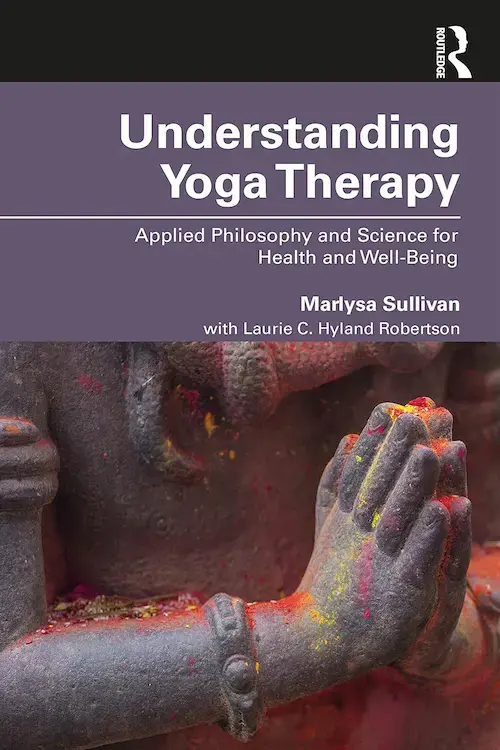
Understanding Yoga Therapy by Marlysa Sullivan is a comprehensive exploration of yoga therapy as a distinct, integrative healthcare discipline rooted in ancient philosophy and informed by modern science. Sullivan emphasizes that yoga therapy is not merely the application of yoga postures for symptom relief, but a holistic system addressing the underlying causes of suffering—physical, mental, emotional, and spiritual.
The book draws on foundational yogic texts including the Upanishads, Bhagavad Gita, Samkhya Karika, and Patanjali’s Yoga Sutras, highlighting their relevance to contemporary therapeutic contexts. Concepts such as dharma (right action), the gunas (qualities of nature), koshas (layers of being), and the nature of awareness are presented alongside modern frameworks like polyvagal theory, interoception, resilience science, and the biopsychosocial–spiritual model of health. This integration creates a shared language for healthcare providers, allowing yoga therapy to be both philosophically authentic and scientifically comprehensible.
A central theme is the distinction between hedonic well-being (transient pleasure) and eudaimonic well-being (steadfast joy, meaning, and fulfillment). Sullivan argues that yoga therapy aims to cultivate eudaimonic well-being by helping individuals connect with their unchanging inner awareness, fostering equanimity and resilience regardless of external circumstances. This deeper orientation toward meaning and purpose aligns with research showing positive health effects, such as improved immune function and reduced inflammation.
The book is organized into three parts. Part I covers the philosophical foundations of yoga therapy, presenting yoga as both a state of unity and a set of practices leading toward liberation from suffering. Through stories like the Bhagavad Gita’s battle between Arjuna and his inner doubts, Sullivan illustrates yoga’s role in guiding transformation, letting go of limiting beliefs, and aligning with one’s deeper truth.
Part II introduces theoretical and explanatory frameworks that connect yogic philosophy with contemporary science. Sullivan outlines a model that bridges traditional concepts with evidence-based health principles, enabling yoga therapy to fit within integrative healthcare settings without losing its roots. The discussion covers neuroscience, psychophysiology, and systemic regulation, explaining how yogic tools like asana, pranayama, meditation, and ethical principles work together to promote well-being.
Part III focuses on practical application. Instead of prescriptive “yoga for X condition” sequences, Sullivan offers guidelines for developing individualized practices that address the whole person. She describes methods for fostering body–mind regulation, interoceptive skills, discriminative wisdom, and resilience. Clinical examples and experiential exercises invite readers to directly engage with philosophical concepts through bodily awareness, reflection, and personal interpretation.
Throughout, Sullivan stresses the importance of maintaining yoga therapy’s integrity as a living tradition—adapting to modern healthcare while remaining anchored in its philosophical and spiritual roots. She also highlights the need for cultural sensitivity, inclusive language, and individualized approaches that honor each client’s beliefs and context.
Ultimately, Understanding Yoga Therapy is both a scholarly and practical guide. It offers yoga therapists, healthcare professionals, and dedicated practitioners a framework to integrate ancient wisdom with modern science, enabling a deeper approach to health—one that moves beyond symptom management toward transformation, meaning, and enduring well-being.
100 important points from Understanding Yoga Therapy by Marlysa Sullivan.
Foundations & Philosophy
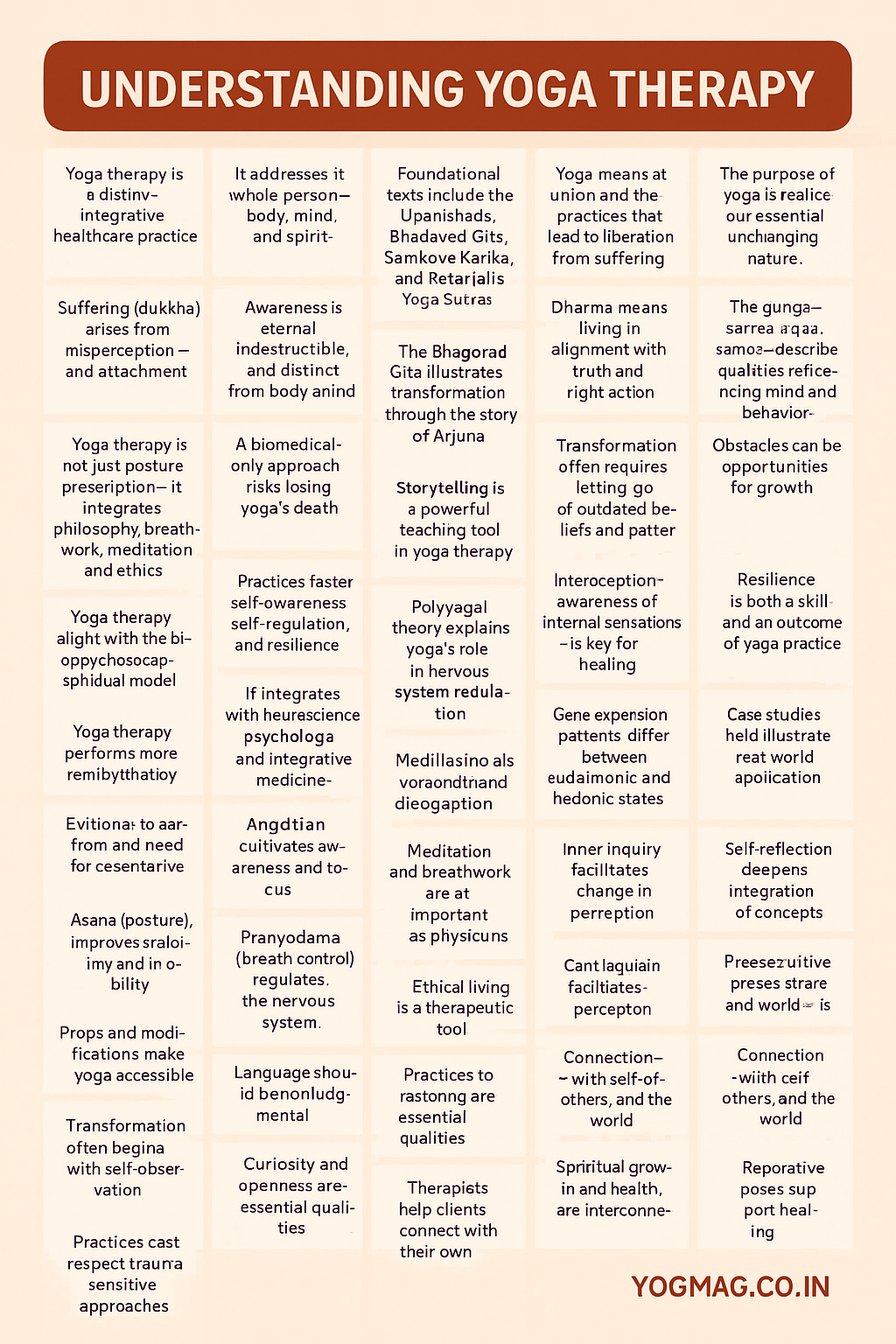
- Yoga therapy is a distinct, integrative healthcare practice rooted in ancient wisdom.
- It addresses the whole person—body, mind, and spirit—not just symptoms.
- Foundational texts include the Upanishads, Bhagavad Gita, Samkhya Karika, and Patanjali’s Yoga Sutras.
- Yoga means both union and the practices that lead to liberation from suffering.
- The purpose of yoga is to realize our essential, unchanging nature.
- Suffering (dukkha) arises from misperception and attachment.
- Awareness is eternal, indestructible, and distinct from body and mind.
- The Bhagavad Gita illustrates transformation through the story of Arjuna.
- Dharma means living in alignment with truth and right action.
- The gunas—sattva, rajas, tamas—describe qualities influencing mind and behavior.
Yoga Therapy Perspective
- Yoga therapy is not just posture prescription—it integrates philosophy, breathwork, meditation, and ethics.
- A biomedical-only approach risks losing yoga’s depth.
- The framework addresses root causes, not just physical manifestations.
- Client-centered care is essential.
- Therapy must be individualized for each person’s needs.
- It incorporates ethical and lifestyle principles (yamas and niyamas).
- Practices foster self-awareness, self-regulation, and resilience.
- Storytelling is a powerful teaching tool in yoga therapy.
- Transformation often requires letting go of outdated beliefs and patterns.
- Obstacles can be opportunities for growth.
Scientific Integration
- Yoga therapy aligns with the biopsychosocial–spiritual model.
- It integrates with neuroscience, psychology, and integrative medicine.
- Polyvagal theory explains yoga’s role in nervous system regulation.
- Interoception—awareness of internal sensations—is key for healing.
- Yoga supports top-down and bottom-up regulation.
- Eudaimonic well-being is yoga’s aim—steadfast joy and meaning.
- Hedonic well-being is fleeting pleasure.
- Research shows eudaimonia improves immunity and reduces inflammation.
- Gene expression patterns differ between eudaimonic and hedonic states.
- Resilience is both a skill and an outcome of yoga practice.
Clinical Practice
- There is no one-size-fits-all sequence for conditions.
- Practices should be adapted to the person’s life context.
- Assess the body–mind–environment relationship.
- Language should be inclusive and culturally sensitive.
- Shared language builds trust with clients.
- Clients’ beliefs should be respected and integrated into therapy.
- Meditation and breathwork are as important as physical postures.
- Ethical living is a therapeutic tool.
- Inner inquiry facilitates change in perception.
- Case studies help illustrate real-world application.
Practical Tools
- Asana (posture) improves stability and mobility.
- Pranayama (breath control) regulates the nervous system.
- Meditation cultivates awareness and focus.
- Visualization can enhance emotional regulation.
- Self-reflection deepens integration of concepts.
- Movement can embody philosophical ideas.
- Practices can be subtle—like observing sensations.
- Short, frequent practices may be more effective than long ones.
- Props and modifications make yoga accessible.
- Restorative poses support healing.
Role of the Therapist
- Yoga therapists guide, not dictate.
- The therapeutic relationship is collaborative.
- Listening deeply is a core skill.
- Therapists help clients connect with their own wisdom.
- The goal is empowerment, not dependence.
- Language should be nonjudgmental.
- Curiosity and openness are essential qualities.
- Therapists should maintain their own practice.
- Continued study of philosophy enriches therapy.
- Boundaries must be respected in the therapeutic setting.
Awareness & Transformation
- Transformation often begins with self-observation.
- Awareness creates space between stimulus and response.
- Equanimity is a sign of progress.
- Joy can be experienced even in pain.
- Spiritual growth and health are interconnected.
- Disidentification from thoughts and emotions reduces suffering.
- Old habits may resist change but can be reshaped.
- Awareness can be described in secular or spiritual terms.
- Remembering moments of unity supports healing.
- Connection—with self, others, and the world—is vital.
Special Considerations
- Practices must respect trauma-sensitive approaches.
- Chronic conditions require a gentle, steady approach.
- Emotional release can occur through physical practice.
- Yoga therapy can complement medical treatment.
- Adaptations may be necessary for disabilities.
- Mindfulness is a foundation for progress.
- Some clients may prefer a scientific explanation.
- Others resonate more with spiritual language.
- Therapist flexibility is essential.
- Progress is not always linear.
Integration into Healthcare
- Yoga therapy can work alongside physical therapy, psychotherapy, and medicine.
- Clear frameworks help communicate with other professionals.
- Documentation can support integration into clinics.
- Research evidence strengthens credibility.
- Outcome measures should include quality-of-life changes.
- Yoga therapy can address both prevention and rehabilitation.
- Education for healthcare providers increases acceptance.
- Group programs can be effective.
- Self-practice empowers clients beyond sessions.
- Community connections enhance results.
Closing Insights
- Yoga therapy is a living tradition—adaptable yet rooted.
- Philosophy must be lived, not just studied.
- Healing is a journey, not a destination.
- Suffering can be a catalyst for awakening.
- Well-being is possible even in illness.
- Inner freedom is the highest goal.
- Therapists should embody the qualities they teach.
- The path of yoga therapy is collaborative exploration.
- True health includes mental, emotional, and spiritual harmony.
- The essence of yoga therapy is helping people reconnect with their innate wholeness.
. . .