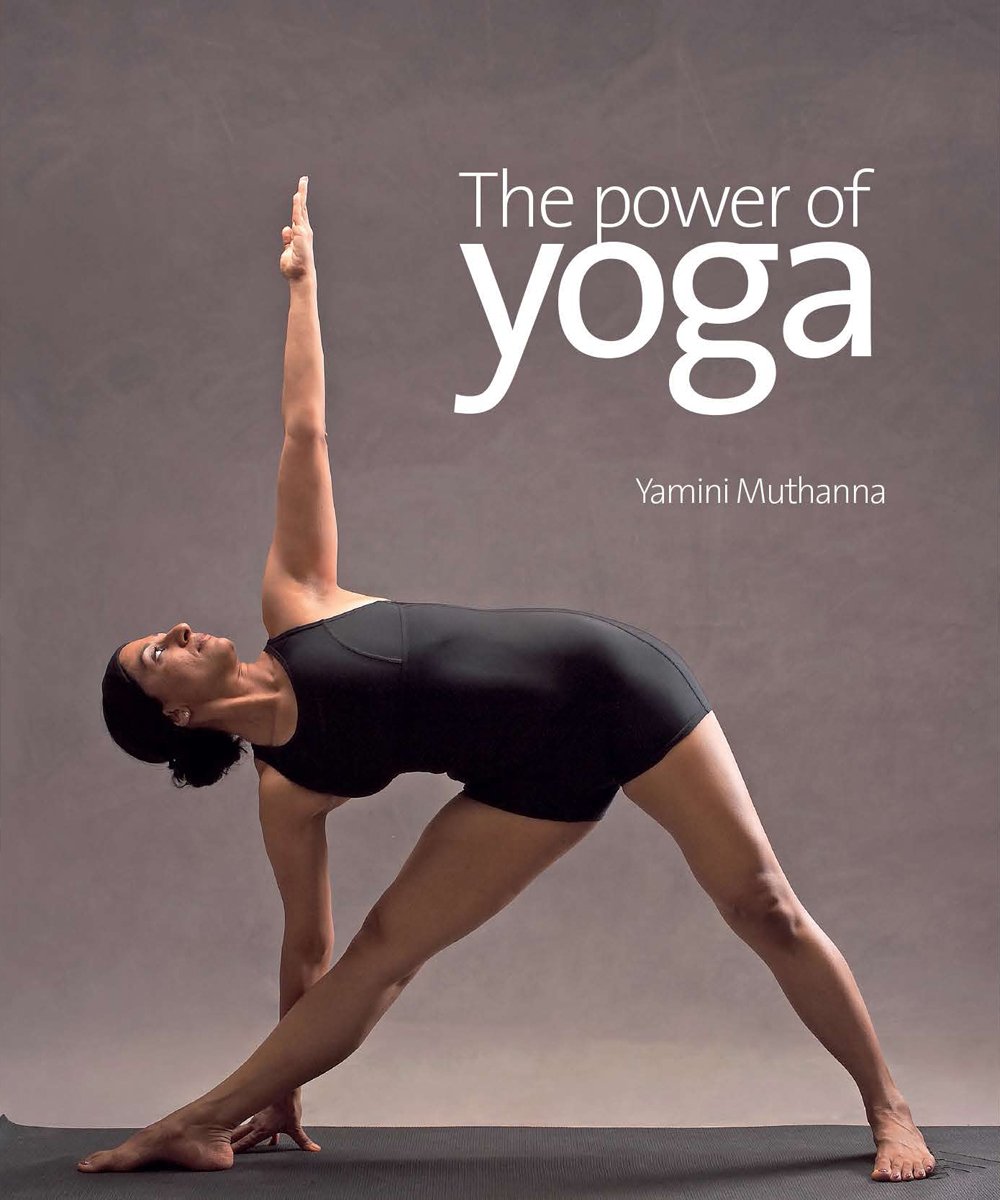
The Power of Yoga is a comprehensive guide to Hatha Yoga that blends traditional yogic philosophy with modern lifestyle practices. Authored by Yamini Muthanna, a seasoned yoga teacher and practitioner, the book offers a detailed and personal approach to yoga as a holistic system—not just as physical exercise, but as a discipline of mental clarity, emotional healing, and spiritual awareness.
The book begins with Muthanna’s own journey into yoga, recounting her early days as a teenager training under renowned yoga guru B.N.S. Iyengar. Her transformation from a student to a teacher is rooted in discipline, devotion, and a deepening understanding of the self through yoga.
The philosophical foundation of the book is drawn from Patanjali’s Yoga Sutras. Muthanna explains the eightfold path of Ashtanga Yoga—yama (moral restraints), niyama (personal observances), asana (postures), pranayama (breath control), pratyahara (withdrawal of senses), dharana (concentration), dhyana (meditation), and samadhi (absorption)—and how each limb contributes to a calm, focused, and spiritually enriched life.
A central feature of the book is its sequencing of asanas. Muthanna emphasizes that yoga postures are not random but must follow principles of balance and counterbalance, informed by the chakras (energy centers in the body) and doshas (bodily constitutions in Ayurveda). The book includes over 20 thoughtfully curated yoga sequences tailored to specific physical and emotional issues such as anxiety, depression, anger, poor digestion, low energy, hormonal imbalances, and more.
She further explains the concept of chakras in detail—from Muladhara (root) to Sahasrara (crown)—describing their physical, emotional, and spiritual roles. Each sequence in the book is designed to activate or balance specific chakras to promote well-being.
Muthanna also introduces mudras, bandhas, pranayama, and meditative practices, showing how they integrate into a complete yoga sadhana. These advanced techniques are explained with clarity, always stressing the importance of gradual, mindful practice under guidance when necessary.
Importantly, the book warns against injuries due to improper practice and provides safety tips for students. She offers personal insights, alignment cues, breathing instructions, and philosophical reflections that bridge classical yogic wisdom with real-life applications.
The book is visually rich, featuring step-by-step photo guides for each asana and sequence. Muthanna’s teaching style encourages personalization of practice—honoring one’s body, energy, and emotional state on a given day. She believes yoga is a path to living with alertness, equanimity, and inner strength, and not just a tool for physical fitness.
In conclusion, The Power of Yoga serves both as an instructional manual and a philosophical guide. It is ideal for beginners and experienced practitioners alike who wish to deepen their understanding of yoga beyond the mat. With passion, discipline, and grace, Yamini Muthanna offers a sincere contribution to the evolving world of modern yoga, rooted in ancient tradition.
100 important points from The Power of Yoga by Yamini Muthanna, covering philosophy, practice, sequencing, anatomy, and spiritual insight:
🧘 PHILOSOPHY & FOUNDATIONS
- Yoga unites body, mind, and spirit—not just a physical practice.
- Derived from Patanjali’s Yoga Sutras, it is a systemized path to inner balance.
- The eight limbs of yoga guide the practitioner from ethics to enlightenment.
- Ashtanga Yoga includes yama, niyama, asana, pranayama, pratyahara, dharana, dhyana, and samadhi.
- Yoga is relevant to modern life, addressing stress, anxiety, and physical imbalances.
- The practice of yoga must be personalized.
- Yoga philosophy sees the mind as the origin of suffering and transformation.
- Five states of mind: Kshipta, Mugdha, Vikshipta, Ekagra, Nirudha.
- The goal is to transition from distracted states to calm awareness.
- Inner stillness is cultivated by conscious practice.
🔁 ASANA & SEQUENCING
- Asanas should follow patterns of balance and counterbalance.
- Repetition and holding are two ways to practice asanas.
- A correct sequence should engage and counter each muscle group.
- Lateral, backward, and forward stretches serve different therapeutic purposes.
- Daily sequencing should adapt to lifestyle, energy, and emotional state.
- Each practice must end with a cooling or relaxation asana.
- Always begin with a purpose—flexibility, detox, digestion, etc.
- Daily sequences are included for Monday through Saturday.
- Avoid practicing unfamiliar poses without teacher guidance.
- Asana practice must integrate breath, alignment, and awareness.
⚖️ CHAKRAS
- There are seven major chakras aligned along the spine.
- Muladhara governs survival and security (element: earth).
- Svadhisthana governs reproduction and creativity (element: water).
- Manipura governs power and will (element: fire).
- Anahata governs love and compassion (element: air).
- Vishuddha governs communication and expression (element: ether).
- Ajna governs intuition and insight (element: mind).
- Sahasrara governs spiritual awareness (no element).
- Specific asanas stimulate specific chakras.
- Chakra imbalance may manifest as mental, physical, or emotional issues.
🌬️ PRANAYAMA & BREATH
- Pranayama is breath control that energizes and calms the mind.
- Kapalabhati is a cleansing breath.
- Ujjayi controls the breath with sound and warmth.
- Bhastrika stimulates energy and circulation.
- Brahmari calms the nervous system.
- Omkara harmonizes the body with vibrational resonance.
- Breath links body and mind.
- Breath must be synchronized with movement.
- Proper breathing expands capacity and control.
- Faulty breathing creates stress and poor posture.
🔗 BANDHAS & MUDRAS
- Bandhas are internal locks that direct pranic energy.
- Mula Bandha engages the pelvic floor.
- Uddiyana Bandha lifts abdominal energy upward.
- Jalandhara Bandha seals the throat and calms the mind.
- Traya Bandha combines all three.
- Mudras seal energy and promote inner focus.
- Nabho Mudra helps stress reduction.
- Kaki Mudra tones facial muscles.
- Vajroli Mudra enhances sexual vitality.
- Shambhavi Mudra improves concentration and vision.
⚠️ SAFETY & ALIGNMENT
- Never push into pain—honor resistance.
- Misaligned poses lead to injury.
- Counterposes are essential after intense asanas.
- Props may assist alignment and balance.
- Modify poses based on age, condition, or limitation.
- Injuries often occur from overconfidence or lack of awareness.
- Savasana (corpse pose) is non-negotiable for integration.
- Awareness of spine alignment is crucial in all postures.
- Breath should never be held forcibly.
- Beginners must avoid advanced inversions without guidance.
🧠 MIND & MEDITATION
- Meditation brings clarity and calm.
- Pratyahara allows withdrawal from sensory overload.
- Dharana is focused concentration on a single point.
- Dhyana is effortless meditation and flow.
- Samadhi is blissful absorption in the self.
- Yoga is not about escape but conscious engagement.
- Peace arises when inner chatter quiets.
- Stillness is trained, not stumbled upon.
- Daily practice is the foundation of transformation.
- Intention matters more than duration.
🌱 KOSHAS & DOSHAS
- There are 5 koshas (layers of being):
- Annamaya (physical body).
- Pranamaya (energy body).
- Manomaya (mental/emotional body).
- Vijnanamaya (intellectual body).
- Anandamaya (bliss body).
- Yoga activates and purifies all koshas.
- Ayurveda classifies individuals by doshas: Vata, Pitta, Kapha.
- Imbalanced doshas affect mind and body.
- Sequences can be modified based on dosha imbalance.
💪 PRACTICAL APPLICATION
- Each day can be aligned with a unique sequence.
- Asana builds strength, stamina, and resilience.
- Mental focus improves with consistent practice.
- Yoga supports emotional detox and clarity.
- The body is a vehicle for inner awakening.
- Yoga improves sleep, digestion, and metabolism.
- Hormonal balance can be supported with specific poses.
- Yoga prevents aging and improves circulation.
- Sequences can calm anger, stress, or anxiety.
- Yoga reprograms unhealthy habits gently and mindfully.
🙏 SPIRITUAL & PERSONAL GROWTH
- True yoga is about self-inquiry and transformation.
- Discipline is key to progress.
- Awareness must be cultivated, not forced.
- Each person’s journey is unique.
- Yoga is both effort and surrender.
- A teacher can help guide but not replace personal practice.
- Regular practice leads to detoxification on all levels.
- Yoga connects you to your higher self.
- Inner harmony reflects in outer life.
- The journey never ends—it deepens.
. . .