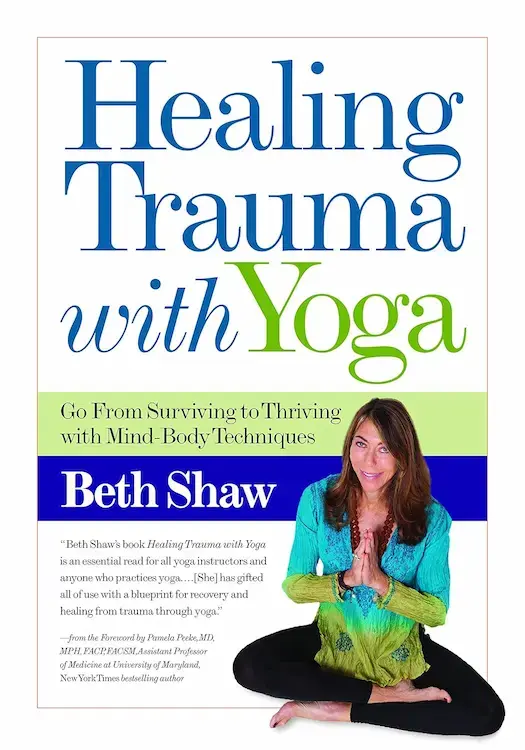
Healing Trauma with Yoga by Beth Shaw is a comprehensive guide that blends personal narrative, scientific research, and practical tools to address the impact of trauma and promote recovery through yoga and mind-body practices. Shaw begins by defining trauma as an overwhelming experience that disrupts the mind-body connection, often leaving survivors with chronic stress, illness, and emotional distress. She explains that trauma’s effects vary by individual, shaped by genetics, environment, and life history, and can stem from abuse, loss, accidents, war, natural disasters, or even seemingly minor events.
Drawing on neuroscience, Shaw details how trauma rewires the brain—overstimulating the amygdala, impairing the hippocampus, and keeping the nervous system locked in “fight-or-flight” mode. She introduces concepts like the ACE (Adverse Childhood Experiences) test to help readers understand their trauma history and links unresolved trauma to physical conditions such as heart disease, chronic pain, and immune disorders. The book also addresses transgenerational trauma, vicarious trauma from media exposure, and the addictive patterns that often develop as coping mechanisms.
Central to Shaw’s approach is yoga as a path to resilience and healing. She explains how practices like pranayama (breathwork), asana (postures), meditation, mantra, and sound therapy can release stored trauma, calm the nervous system, and restore a sense of safety in the body. Shaw emphasizes that yoga is not limited to physical exercise—it is a holistic system that fosters self-awareness, presence, and emotional balance. The “Essence of YogaFit” principles—breathing, feeling, listening to the body, letting go of judgment, and staying present—form the foundation of her trauma-sensitive methodology.
The book weaves in survivor stories, including military veterans and civilians, illustrating how yoga has helped them manage PTSD, anxiety, and depression. These narratives highlight yoga’s role in reducing flashbacks, hypervigilance, and emotional numbness while fostering reconnection to joy, community, and self-compassion. Shaw also discusses how trauma-informed yoga teachers can create safe, inclusive environments, recognizing potential triggers and offering choices in movement and engagement.
Beyond yoga, Shaw incorporates complementary approaches such as Ayurveda, clean eating, and lifestyle changes to support mental and physical health. She encourages readers to take an empowered role in their healing, integrating multiple tools and strategies rather than relying solely on medication or traditional talk therapy. She also addresses the importance of trust—both in the instructor and in oneself—and the need for patience, as healing is an ongoing, non-linear process.
The book concludes as both a resource and an invitation: trauma may leave lasting marks, but with consistent practice and compassionate self-care, the mind and body can recalibrate, restore balance, and thrive. Shaw’s message is one of hope—yoga offers not just symptom relief, but a transformative journey toward wholeness, where survivors can reclaim their inner strength, live with greater awareness, and extend healing to others.
In essence, Healing Trauma with Yoga is part memoir, part manual, and part scientific exploration, offering readers a roadmap to move from surviving to thriving through the integration of mind-body tools, personal empowerment, and the timeless wisdom of yoga.
100 important points from Healing Trauma with Yoga by Beth Shaw, capturing its core teachings, tools, and insights:
Understanding Trauma
- Trauma is an overwhelming event that disrupts mental, emotional, and physical balance.
- The word “trauma” comes from the Greek “trávma” meaning “wound.”
- Trauma is subjective—two people can experience the same event differently.
- Genetics, environment, and life history influence trauma responses.
- Trauma can be acute (one-time event) or chronic (ongoing).
- Transgenerational trauma passes stress patterns to future generations.
- Vicarious trauma can occur from repeated exposure to others’ suffering (e.g., via news).
- Trauma can stem from abuse, neglect, accidents, war, disasters, or illness.
- Even seemingly minor events (e.g., loud noises, medical procedures) can be traumatic.
- Unresolved trauma often manifests as illness or chronic tension.
Science of Trauma
- Trauma keeps the sympathetic nervous system in constant “fight-or-flight.”
- The amygdala becomes overactive, perceiving threats everywhere.
- The hippocampus can shrink due to stress hormones, impairing memory processing.
- Trauma disrupts the balance between the brain’s emotional and logical centers.
- Peptides in the brain can create “addictions” to negative emotional states.
- The body can store trauma, leading to physical pain and dysfunction.
- Animals shake after threats to release trauma—humans often suppress this.
- Chronic trauma rewires the brain to expect danger.
- Intrusive symptoms (flashbacks, nightmares) pull survivors out of the present.
- Avoidance behaviors keep people from facing triggers but prolong suffering.
PTSD & Symptoms
- PTSD symptoms include intrusion, avoidance, dissociation, numbing, and hyperarousal.
- Complex PTSD can result from long-term neglect or abuse.
- Physical symptoms include headaches, digestive issues, skin problems, and chronic pain.
- Emotional symptoms include shame, low self-worth, and distrust.
- Hypervigilance makes survivors scan constantly for threats.
- Exaggerated startle response is common.
- PTSD can lead to addiction as a coping mechanism.
- Addiction changes brain chemistry, making healing harder.
- Trauma can weaken the immune system.
- Healing is possible with targeted, consistent practices.
Healing Through Yoga
- Yoga means “union” of mind, body, and spirit.
- Hatha yoga balances masculine (“ha”) and feminine (“tha”) energies.
- Yoga offers tools for calming the nervous system.
- Breathwork (pranayama) activates the parasympathetic nervous system.
- Asana (postures) help release stored trauma in muscles.
- Meditation increases self-awareness and presence.
- Mantra and sound healing shift mental states and reduce anxiety.
- Yoga encourages embodiment—reconnecting with one’s body safely.
- Yoga is adaptable to any level of fitness or mobility.
- Yoga teaches acceptance of discomfort as part of growth.
Essence of YogaFit Principles
- Breathing mindfully.
- Feeling sensations without judgment.
- Listening to the body’s signals.
- Letting go of judgment and expectations.
- Staying present in the moment.
- Using yoga as a daily practice, not just exercise.
- Creating a safe, non-competitive environment.
- Modifying poses for accessibility.
- Providing choices to students to avoid triggers.
- Avoiding hands-on adjustments unless consented.
Ayurveda & Lifestyle
- Ayurveda is India’s ancient system of health.
- Diet affects mood and mental clarity.
- Clean eating supports emotional stability.
- Avoiding alcohol and drugs aids mental healing.
- Regular sleep patterns improve nervous system health.
- Self-care is essential for trauma recovery.
- Nature exposure boosts healing.
- Journaling can help process emotions.
- Mindful eating connects body and mind.
- Daily routines create stability for the nervous system.
Survivor Insights
- Trauma-informed yoga helps survivors regain control.
- Safe spaces allow survivors to explore movement without fear.
- Personal mantras can anchor survivors in the present.
- Yin and restorative yoga are grounding for trauma recovery.
- Vinyasa flow can release stored energy when done mindfully.
- Yoga nidra offers deep relaxation and healing.
- Transformational language fosters safety and trust.
- Touch can be triggering—must be approached with care.
- Triggers can be unpredictable (smells, sounds, poses).
- Reconnection with emotions is part of healing.
Mindset for Healing
- Healing is non-linear—setbacks are normal.
- Self-compassion is crucial in recovery.
- Avoid rushing the process.
- Trust your own pace and readiness.
- Small, consistent actions create lasting change.
- Breath is the bridge between body and mind.
- Gratitude shifts focus from fear to abundance.
- Presence prevents being trapped in the past.
- Affirmations rewire thought patterns.
- Healing yourself helps heal others.
Teacher’s Role
- Trauma-sensitive training is vital for yoga teachers.
- Teachers must recognize signs of distress.
- Class structure should allow choice and autonomy.
- Language should be invitational, not commanding.
- Avoid overwhelming students with complex sequences.
- Slow, mindful pacing benefits trauma survivors.
- Offer grounding techniques after intense poses.
- Create a welcoming, judgment-free space.
- Respect personal boundaries and space.
- Encourage self-exploration over performance.
Long-Term Recovery
- Yoga can reduce dependency on medication over time.
- Mind-body tools can prevent relapse into old coping patterns.
- Healing can restore joy and playfulness.
- Recovery includes spiritual reconnection.
- The “inner child” holds keys to resilience.
- Love and kindness are core to lasting healing.
- Community support strengthens recovery.
- Teaching yoga can be part of a survivor’s purpose.
- Trauma may shape you, but it doesn’t have to define you.
- With dedication, it’s possible to move from surviving to thriving.
Download the mind map here.
. . .