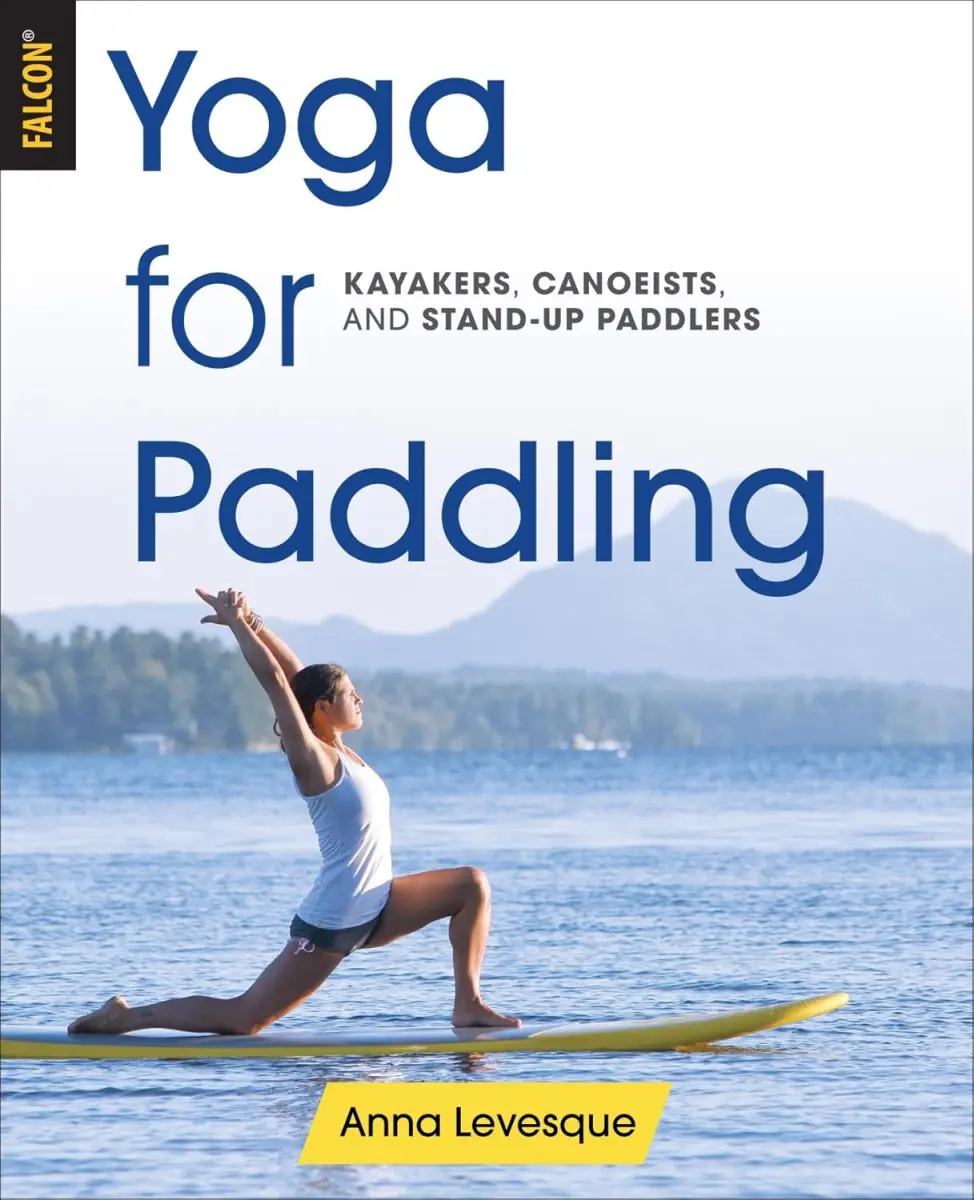
Yoga for Paddling by Anna Levesque is a specialized guide that merges the ancient practice of yoga with the modern athleticism of kayaking, canoeing, and stand-up paddleboarding (SUP). Drawing from her personal experience as a world-class paddler and yoga instructor, Levesque explains how yoga can significantly enhance a paddler’s strength, flexibility, alignment, recovery, and mental clarity.
The book begins with Levesque’s personal journey—how yoga initially served as a way to reduce stress and support her intense paddling lifestyle. Over two decades of paddling 200+ days a year, she credits yoga for preventing injuries, speeding recovery, and maintaining optimal physical and mental health. She describes how her understanding of yoga evolved from fast, vigorous flows to a more mindful, alignment-based practice that prioritizes self-awareness over ego.
Levesque introduces foundational yoga principles tailored specifically for paddlers. These include understanding the body's anatomical imbalances caused by repetitive paddling motions—such as overactive hip flexors, tight shoulders, and underused glutes and upper back muscles. She highlights the importance of using yoga to correct these imbalances before they lead to chronic pain or injury.
The book dives into practical instruction with chapters dedicated to specific muscle groups: low back, hips, legs, side body, neck, shoulders, core, and more. Each chapter features step-by-step yoga sequences, alignment cues, and suggested props to safely and effectively target these areas. Levesque also emphasizes the role of breathwork (pranayama), stress reduction, and relaxation as essential tools for paddling longevity and overall health.
Levesque doesn’t just focus on postures—she includes deeper yogic philosophies, including Ayurveda, the sister science of yoga that centers on individualized diet, lifestyle, and self-care. Her own experience studying Ayurveda led to significant improvements in her digestion, energy, and well-being, and she encourages paddlers to explore these practices as complementary to physical training.
The book also features success stories, including that of her husband Andrew Holcombe, a professional paddler who healed serious back injuries through yoga and physical therapy. This underscores the book’s core message: yoga is not only for recovery but is also a powerful form of preventive care for athletes.
Importantly, Yoga for Paddling isn’t about being flexible or performing acrobatic postures. Levesque demystifies yoga, making it accessible for everyone—from competitive athletes to weekend river explorers. Her tone is supportive, practical, and rooted in experience. She urges paddlers to meet themselves where they are, practicing with mindfulness rather than perfectionism.
In the final chapters, Levesque offers guidance on how to build a consistent home yoga practice, including routines for pre-paddling warm-ups, post-paddling recovery, and even SUP-specific yoga sessions. The book closes by reinforcing the holistic benefits of yoga—mental focus, body awareness, alignment, and long-term vitality.
100 important points from Yoga for Paddling by Anna Levesque:
Foundations of the Book
- The book combines yoga with paddlesports (kayaking, canoeing, SUP).
- Anna Levesque is both a world-class paddler and certified yoga instructor.
- Yoga enhances strength, flexibility, recovery, and alignment.
- It helps prevent injuries caused by repetitive paddling movements.
- Yoga also improves mental clarity and emotional resilience.
- Alignment-based yoga is emphasized over fast-flow practices.
- The goal is not deep stretches but optimal body function and awareness.
- Yoga is about both steadiness and ease—not just strength or flexibility.
- The book is rooted in 20+ years of Anna’s personal paddling and yoga experience.
- It includes guidance for both beginners and advanced practitioners.
Physical Benefits
- Yoga improves postural alignment for paddlers.
- It strengthens underused muscles (e.g., glutes, upper back).
- It lengthens overused muscles (e.g., hip flexors, shoulders).
- It reduces chronic muscle tightness and spasms.
- Yoga corrects imbalances from repetitive paddling motions.
- It supports spinal alignment and healthy movement.
- Specific poses target paddling-related muscle groups.
- Paddling often leads to contracted pecs and deltoids—yoga helps release them.
- Core strength is essential for powerful strokes.
- Improving posture reduces shoulder injuries.
Mental and Emotional Benefits
- Yoga calms the nervous system.
- It helps manage stress and anxiety.
- Breathwork is essential in regulating mental focus.
- Yoga enhances mind-body awareness.
- Mindfulness cultivated in yoga improves paddling presence.
- Mental clarity supports better performance in rapids and competition.
- Yoga helps athletes deal with failure and self-doubt.
- It cultivates compassion toward self and others.
- The practice promotes inner stillness—similar to paddling in nature.
- Yoga supports long-term emotional resilience.
Injury Prevention & Healing
- Yoga is effective for injury recovery (e.g., rotator cuff, low back).
- Levesque healed her shoulder through yoga and PT.
- Her husband Andrew healed disk herniations with yoga.
- Regular yoga prevents injury from cumulative stress.
- Counterbalance is key—paddling contracts; yoga releases.
- Overstretching can be harmful; alignment matters more.
- Alignment reduces wear and tear on joints.
- Self-awareness helps catch imbalances early.
- Yoga is safer and more sustainable than aggressive cross-training.
- Prevention is better than rehab.
Anatomy Awareness
- Paddling overuses hip flexors, pecs, and deltoids.
- It underuses glutes, rhomboids, and middle traps.
- Poor posture leads to disk issues and shoulder impingement.
- Alignment principles help reeducate the body.
- Anatomy knowledge improves movement choices.
- Contracted hip flexors tilt the pelvis and cause low back pain.
- Rounding the back (sacral sitting) increases spinal stress.
- Misalignment in one area impacts the entire system.
- Proper muscle activation is more important than flexibility.
- One-sided paddling (e.g., canoeing) creates asymmetry.
Alignment Principles
- Shift weight into heels to activate glutes.
- Keep knees soft—not hyperextended.
- Tilt pelvis forward (sitz bones back and apart).
- Tuck front low ribs to avoid back shearing.
- Draw shoulder blades down and together.
- Engage deep spinal extensors (erector spinae).
- Maintain neutral pelvis to reduce back strain.
- Spread fingers and distribute hand weight in poses.
- Use props to support healthy alignment.
- Small changes create big improvements in pain relief.
Practical Yoga for Paddlers
- Yoga routines are organized by muscle groups.
- Warm-ups, core, twists, relaxation—all are covered.
- Breathwork (pranayama) is included for stress regulation.
- Home practice guidance helps build consistency.
- SUP yoga chapter included for balance and stability.
- Relaxation is essential—not a luxury.
- Props like blocks and straps enhance alignment.
- No prior flexibility is required to start.
- Poses can be modified for injury or stiffness.
- Each paddler should tailor the practice to their body.
Yoga Philosophy & Lifestyle
- Yoga means “union” or “connection.”
- It connects us to the present moment.
- Ego-driven goals increase injury risk.
- Yoga promotes self-knowledge and inner listening.
- Ayurveda complements yoga with lifestyle and diet.
- Health includes diet, rest, movement, and breath.
- Self-care is vital for long-term paddling.
- Lifestyle choices affect performance and longevity.
- There’s more to yoga than poses.
- Stillness and awareness are as important as motion.
Success Stories & Examples
- Andrew Holcombe avoided spinal surgery through yoga.
- He trained like an athlete to heal—not passively.
- Alignment-based yoga helped Libby Hinsley treat injuries.
- Aaron Rodgers credited yoga for better sleep and performance.
- NBA players use yoga to balance training loads.
- Kayakers experience less pain when practicing yoga.
- Canoeists benefit from core and hip-focused poses.
- SUP paddlers improve balance through yoga work.
- Yoga helps aging paddlers continue their sport.
- Even 10–15 minutes a day can have a huge impact.
Mindset & Long-Term Vision
- Focus on awareness, not performance.
- Let go of perfection—start where you are.
- Be consistent, even if practice is short.
- Repetition builds resilience.
- Healing and alignment take time and patience.
- Use yoga as a lifelong tool—not a quick fix.
- Listen to your body daily; it will teach you.
- Adapt your practice as your life evolves.
- Enjoy the journey, not just the outcome.
- Yoga helps you paddle better—and live better.
. . .