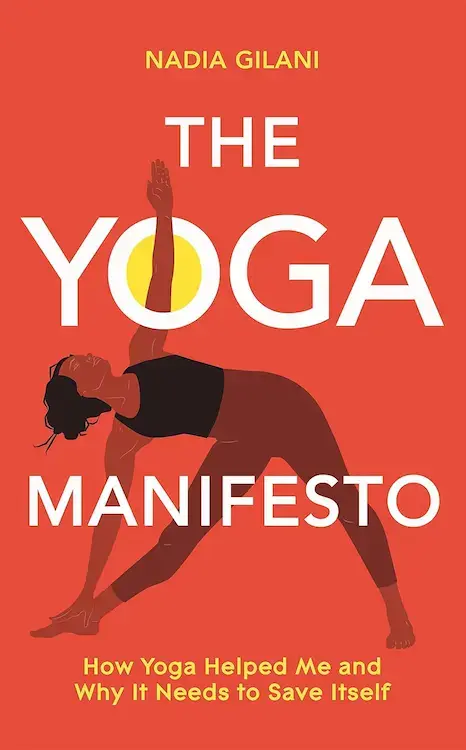
In The Yoga Manifesto, Nadia Gilani blends memoir, social commentary, and a call-to-action to reclaim yoga’s authentic purpose. She opens by crediting punk musician Viv Albertine with inspiring her to write in short, honest bursts—an approach mirrored in the book’s vignette-style structure. Gilani explains that she is neither an industry “guru” nor an all-knowing expert, but someone who has practised yoga in various forms for over 25 years. For her, yoga has been a friend, a discipline, and sometimes a point of contention—an ever-present anchor amid personal struggles with eating disorders, alcohol abuse, anxiety, and life’s instability.
Introduced to yoga at 16 by her mother during a time of severe body-image issues and bulimia, Gilani initially resisted the practice. While it didn’t “save” her overnight, it offered moments of calm and gradually became a meaningful part of her life. She underscores that yoga is far more than physical postures: its roots lie in ancient philosophical systems designed for self-inquiry and unity with universal consciousness. The physical practice prepares the body for meditation, fostering mental clarity and self-awareness.
Gilani’s narrative moves into her experiences teaching yoga—especially outside the glossy, commercialized studio environment. She describes working with marginalized communities, such as refugee teenagers and immigrant women, in settings with no mood lighting, incense, or expensive props. These raw, grassroots classes often contrasted sharply with the billion-dollar wellness industry’s airbrushed image of slim, flexible bodies in luxury activewear. She critiques how yoga has been commodified, whitewashed, and detached from its roots, often catering to affluent, already “well” individuals while ignoring those who could benefit most.
One vivid story recounts teaching a group of teenage refugee boys—many skeptical at first—using Ashtanga Yoga, a structured, breath-linked sequence. While challenging, the class breaks barriers and sparks moments of connection, reinforcing her belief that yoga can serve people outside the typical consumer demographic. Another account describes leading Bengali and Somali women in East London, where hijabs, long skirts, and the joyful chaos of children running between mats were the norm. For Gilani, these classes embodied the real, inclusive spirit of yoga, even if they were unpaid or underfunded.
She also critiques the precarious economics of teaching yoga, particularly community-based work. Low pay, lack of pastoral support, and industry gatekeeping make sustaining such efforts difficult. Despite this, she finds deep satisfaction in serving groups overlooked by mainstream wellness culture.
Throughout, Gilani challenges misconceptions: yoga doesn’t require expensive gear, a plant-based diet, or a certain body type. Nor is it meant to be just a workout or a lifestyle brand. Instead, it’s a practice for everyone, adaptable yet rooted in principles that encourage reflection, resilience, and compassion. She argues for a political, socially aware yoga that remains accessible and relevant while honoring its origins.
Ultimately, The Yoga Manifesto is both personal testimony and a rallying cry. It urges practitioners, teachers, and the industry at large to strip away commercial distractions, reconnect with yoga’s essence, and ensure it serves all—especially those for whom it could be life-changing.
100 key points from The Yoga Manifesto by Nadia Gilani:
Personal Journey & Background
- Nadia Gilani discovered yoga at 16, introduced by her mother.
- She initially resisted but attended her first class at the YMCA.
- She was struggling with an eating disorder and low self-esteem at the time.
- Yoga didn’t cure her instantly but planted a lasting seed.
- She battled bulimia for years, alongside anxiety and alcohol misuse.
- Her relationship with yoga evolved over 25 years.
- Yoga became a recurring refuge during difficult periods.
- She often returned to yoga after destructive habits.
- Her early teachers were practical and non-performative.
- She discovered Ashtanga Yoga in the late 1990s.
Understanding Yoga
- Yoga is more than physical postures.
- It originates from ancient philosophical systems for self-inquiry.
- Postures are meant to prepare the body for meditation.
- True yoga fosters awareness, clarity, and self-acceptance.
- The practice helps separate self from destructive thought patterns.
- Breath control is central to yoga’s transformative effect.
- Yoga can help process trauma by regulating the nervous system.
- Meditation is challenging but integral.
- The goal is practice, not perfection.
- Yoga can be a faith, discipline, lifestyle, and friend.
Critique of the Wellness Industry
- The modern yoga industry is highly commercialized.
- It’s dominated by affluent, slim, flexible, often white practitioners.
- Marketing often alienates marginalized communities.
- Social media fuels unrealistic yoga imagery.
- Expensive gear and props are not necessary.
- The industry caters to those already “well.”
- Yoga has been whitewashed and Westernized.
- Wellness branding often contradicts yoga’s principles.
- A billion-dollar industry has grown detached from yoga’s roots.
- She advocates for reclaiming authenticity.
Teaching Experience
- Gilani became a yoga teacher after years of practice.
- She worked extensively with marginalized groups.
- She taught refugee teenagers in North London.
- She led Bengali and Somali women’s classes.
- Community classes often lacked frills—no incense or mood lighting.
- She used adaptable, accessible teaching methods.
- Ashtanga Yoga, though strict in reputation, can be inclusive.
- She often modified sequences for mixed-level groups.
- Trauma-awareness influenced her approach.
- Building trust with students was essential.
Community Work & Challenges
- Charity work was often unpaid or poorly paid.
- Financial strain made sustaining community teaching difficult.
- There was little pastoral support for teachers.
- Ethnic diversity among teachers was lacking.
- The most meaningful work was often the least lucrative.
- Teaching vulnerable groups is emotionally demanding.
- Building long-term relationships in classes creates deeper impact.
- Constantly covering drop-in studio classes is draining.
- She preferred courses and workshops for depth.
- She believes in planting seeds, even if results aren’t immediate.
Inclusivity & Representation
- Yoga should be for everyone, not just elites.
- Representation matters—students need relatable role models.
- Accessibility requires adapting practices.
- Yoga clothes and bodies in media don’t reflect real classes.
- Older adults, disabled people, and those with mental illness deserve inclusion.
- Refugees and immigrants benefit from safe yoga spaces.
- Yoga should not require a specific diet.
- Flexibility is not a prerequisite.
- Teachers should meet students where they are.
- Inclusivity means breaking stereotypes.
Philosophy & Practice
- Yoga works when we believe in it.
- Practice reveals what’s in our hearts.
- Everyone’s path through yoga is unique.
- Religion, relationships, and careers can coexist with yoga.
- Adapting yoga for modern life is acceptable if principles remain.
- Roots and history must still be honored.
- Yoga has political and social dimensions.
- Practice can be both disciplined and flexible.
- Yoga teaches acceptance of the present moment.
- Observing breath and body reduces overthinking.
Ashtanga Yoga Insights
- Ashtanga links breath with movement.
- Repetition helps build confidence and memory.
- It’s beneficial for restless or anxious people.
- Teenagers can thrive with Ashtanga’s structure.
- Ashtanga influenced modern styles like Vinyasa Flow.
- Strict adherence is optional—adaptation is possible.
- She sometimes skips postures for time or accessibility.
- Ashtanga is wrongly labeled “too hard” by some.
- Following a set sequence removes decision fatigue.
- It helps focus on present-moment awareness.
Social & Political Commentary
- Yoga must engage with real-world issues.
- It should challenge injustice, not ignore it.
- Cultural appropriation in yoga must be addressed.
- Western imperialism shaped modern yoga’s image.
- Inclusivity is a political act.
- Teachers should acknowledge yoga’s Indian roots.
- Yoga must evolve without losing authenticity.
- Grassroots projects preserve community spirit.
- Wellness myths can alienate beginners.
- Yoga can counter the pace of modern life.
Life Lessons & Closing Thoughts
- Personal healing is non-linear.
- Yoga is a long-term relationship, not a quick fix.
- Teachers must also be students.
- Skepticism can turn into curiosity with time.
- Physical practice is a gateway to deeper work.
- True success is helping people feel better.
- Profit should not override purpose.
- Accessibility requires systemic change in the industry.
- Yoga’s future depends on inclusivity and honesty.
- Gilani’s manifesto calls for a yoga that heals people, not just sells to them.
. . .