

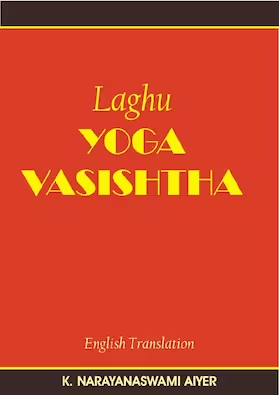
Laghu YOGA VASISHTHA BY K. NARAYANASWAMI AIYER
"Laghu Yoga Vasistha" is a spiritual text rooted in Advaita Vedanta, featuring teachings from Sage Vasistha to Lord Rama. Through philosophical discussions and allegorical stories, it explores the nature of the mind, ego, and self-realization. The text emphasizes liberation (moksha) through inquiry, detachment, and mastering the mind. Key teachings include the importance of a Guru, inquiry into the Self, and transcending ego-d...
The "Laghu Yoga Vasistha," an abridged version of the Yoga Vasistha, is a philosophical and spiritual text attributed to Sage Valmiki. It presents the teachings of Sage Vasistha to Lord Rama, focusing on Advaita Vedanta (non-dualism). The text addresses profound existential questions, including the nature of the mind, self-realization, and the universe's illusory nature. It uses illustrative stories and dialogues to convey spiritual truths, emphasizing the path toward liberation (moksha) through knowledge, renunciation, and meditation.
Why You Should Read It
- Timeless Wisdom: The text provides valuable insights into the nature of existence, suffering, and the self, making it a transformative guide for spiritual seekers.
- Advaita Vedanta Philosophy: For those interested in non-dualistic thought, it offers profound teachings on the unity of the self with the universal consciousness.
- Practical Life Lessons: Through allegorical stories, the text imparts practical lessons on leading a balanced, meaningful life.
- Mind Mastery: It guides readers on controlling the mind and detaching from worldly distractions to attain inner peace.
- Spiritual Progress: It outlines the steps toward self-realization and provides tools for navigating life's challenges with wisdom.
100 important points derived from Laghu Yoga Vasistha:

Foundational Teachings
- The mind is the root cause of bondage and liberation.
- Liberation (moksha) can be attained by controlling and mastering the mind.
- Vairagya (detachment) is a prerequisite for self-realization.
- The four sentinels at the gates of liberation are Shanti (peace), Vichara (inquiry), Santosha (contentment), and Sadhu-Sanga (association with the wise).
- The world is an illusory projection of the mind (Maya).
- Brahman is the ultimate reality, infinite and beyond mental comprehension.
- Self-inquiry leads to liberation.
- The ego (Ahankara) is the root of human suffering.
- Real happiness is independent of external objects and situations.
- Discriminating between the real (Brahman) and the unreal (world) is essential for spiritual growth.
Nature of the Universe and Reality
- The universe exists as a projection of the cosmic mind.
- Everything perceived by the senses is transient and illusory.
- Brahman remains unaffected by creation, preservation, or destruction.
- The world manifests due to divine Sankalpa (will).
- The dissolution of the world occurs when the divine will withdraws.
- All dualities, such as pleasure and pain, are products of Maya.
- The substratum of all existence is Brahman, pure consciousness.
- Space, time, and causation are mental constructs.
- Liberation involves realizing the oneness of the individual self with Brahman.
- The ego sustains the illusion of separateness.
Role of Guru and Spiritual Practice
- A qualified Guru is essential for imparting spiritual knowledge.
- The disciple must approach the Guru with humility and sincerity.
- Listening (Shravana), reflection (Manana), and deep meditation (Nididhyasana) lead to realization.
- Faith in the Guru's teachings is vital for progress.
- Practical spiritual instructions must be diligently followed.
- Mental purification (Chitta Shuddhi) is required before self-inquiry.
- Surrendering the ego to the Guru accelerates progress.
- A balanced lifestyle supports spiritual growth.
- Detachment from sensual pleasures fosters clarity of mind.
- Pranayama (breath control) aids in mental control.
States of Consciousness and Self-Realization
- The three states of consciousness are waking, dreaming, and deep sleep.
- The fourth state, Turya, transcends all other states and reveals the Self.
- The Self is ever-present and does not undergo any changes.
- Realization occurs when one transcends mental distractions.
- Meditation (Dhyana) stabilizes the mind and reveals the truth.
- Samadhi is the culmination of meditation, where the ego dissolves.
- Realization is not a new attainment but the recognition of one's true nature.
- Ignorance (Avidya) veils the Self from awareness.
- Direct perception (Aparoksha Anubhava) of the Self dissolves ignorance.
- The realized person sees no distinction between themselves and the world.
Ethics and Right Living
- Compassion and non-violence are essential virtues.
- Contentment (Santosha) is a supreme virtue leading to peace.
- Self-discipline (Dama) strengthens spiritual resolve.
- Mental equanimity is the hallmark of a wise person.
- Renouncing desires brings lasting peace.
- Pure speech and truthful communication foster harmony.
- Integrity in actions leads to inner strength.
- Serving others without attachment purifies the heart.
- Forgiveness liberates the mind from bitterness.
- Humility is the foundation of spiritual progress.
Stories and Allegories for Spiritual Growth
- The story of Akasaja illustrates the origin of the ego from Brahman.
- The tale of Lila demonstrates the illusory nature of time and space.
- Karkati’s story symbolizes the mind’s ability to afflict or liberate.
- The tale of Aindhava teaches the importance of self-mastery.
- Indra’s deceit shows the transient nature of worldly pleasures.
- The story of Suka illustrates the role of direct realization.
- Viduratha’s tale emphasizes devotion and detachment.
- King Janaka exemplifies spiritual wisdom amidst worldly duties.
- Gadhi’s story underscores the nature of Maya and its transcendence.
- Sikhidwaja's story highlights true renunciation beyond external rituals.
Nature of Liberation
- Liberation is a state of supreme peace and bliss.
- The Jivanmukta lives in the world without being affected by it.
- Liberation does not require physical withdrawal from society.
- The Videhamukti transcends all physical and mental limitations.
- Liberation involves freedom from desires and attachments.
- A liberated person perceives unity in diversity.
- The self-realized being experiences uninterrupted bliss.
- Liberation dissolves all karmic bonds.
- Awareness of the eternal present is a sign of liberation.
- True liberation involves mental equanimity amidst all circumstances.
Philosophical Concepts
- The universe is an aspect of Brahman’s consciousness.
- Jiva (individual soul) is a reflection of Brahman.
- The mind creates the illusion of duality.
- Maya sustains the appearance of the world.
- Time and space are relative and illusory.
- Consciousness remains unaffected by changes in the world.
- Karma operates within the realm of duality but dissolves in realization.
- Sankalpa (will) drives worldly experiences.
- Non-duality (Advaita) is the highest truth.
- The distinction between subject and object is a mental construct.
Spiritual Practices and Techniques
- Self-inquiry dissolves ignorance.
- Detachment from sense pleasures purifies the mind.
- Meditation brings clarity and peace.
- Chanting sacred mantras stabilizes the mind.
- Pranayama aids in controlling mental fluctuations.
- Visualization techniques can calm the mind.
- Reflecting on impermanence fosters detachment.
- Offering actions to the divine purifies ego-driven tendencies.
- Daily contemplation strengthens awareness of the Self.
- Living in the present moment reduces mental agitation.
Qualities of a Realized Being
- Equanimity in pleasure and pain.
- Spontaneous compassion for all beings.
- Absence of ego and selfishness.
- Unwavering inner peace.
- Detached engagement with worldly activities.
- Constant awareness of Brahman.
- No desire for name, fame, or wealth.
- Radiating wisdom and love naturally.
- Remaining unaffected by praise or criticism.
- Living as a source of inspiration for others.