

Introductory Yoga Poses to Start Your Practice: A Beginner’s Guide
Are you new to yoga and not sure where to begin? Don’t worry—you’re not alone. Many people feel overwhelmed when they first step onto a yoga mat, but the truth is yoga is one of the most beginner-friendly practices you can start today. Whether your goal is to increase flexibility, reduce stress, improve posture, or build strength, yoga has something to offer everyone. The best way to start your journey is with introductory yoga poses—simple, safe, and easy-to-learn positions that lay the foundation for a lifelong practice. In this blog, we’ll guide you through beginner-friendly yoga, explain its benefits, and break down step-by-step poses you can practice daily, even from the comfort of your home.

Why Start with Introductory Yoga Poses?
Starting with introductory yoga poses is essential because they:
- Build confidence – You don’t need advanced flexibility or balance to begin.
- Strengthen your foundation – These poses train your body for more advanced postures later.
- Prevent injuries – Starting simple ensures you learn correct alignment.
- Improve overall wellness – Even the most basic yoga poses can boost energy, calm the mind, and improve circulation.
Think of them as the ABCs of yoga—without learning them, it’s difficult to form the “sentences” of more advanced flows and sequences.
Benefits of Beginner-Friendly Yoga
Before diving into the poses, let’s understand why yoga is so powerful for beginners:
- Reduces stress and anxiety – Deep breathing and mindful movement calm the nervous system.
- Improves flexibility – Even 10 minutes of daily stretching makes a difference.
- Enhances strength – Yoga tones muscles naturally without heavy equipment.
- Boosts posture – Counteracts the effects of sitting at a desk or using mobile devices.
- Supports weight management – Gentle movements stimulate metabolism and digestion.
- Increases focus and clarity – The meditative aspect of yoga sharpens concentration.
Most importantly, yoga is adaptable. No matter your age, body type, or fitness level, there’s always a way to practice.
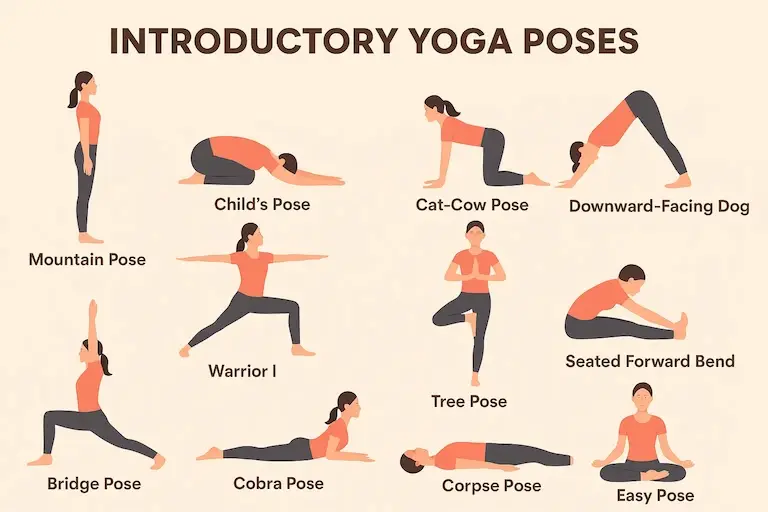
12 Introductory Yoga Poses for Beginners
Here’s a step-by-step guide to introductory yoga poses you can try today. Practice them slowly, focus on your breath, and don’t push beyond your comfort level.
1. Mountain Pose (Tadasana)
Purpose: Builds balance, improves posture, and creates awareness of the body.
How to Do It:
- Stand tall with feet hip-width apart.
- Keep arms relaxed by your side, palms facing forward.
- Engage thighs, lift chest, and lengthen spine.
- Hold for 5–10 breaths.
Tip: This may look simple, but it’s the foundation for all standing poses.
2. Child’s Pose (Balasana)
Purpose: Relieves stress, stretches the back, and calms the mind.
How to Do It:
- Kneel on the mat, touching big toes together.
- Sit back on your heels and stretch your arms forward.
- Rest your forehead on the floor.
- Hold for 30–60 seconds.
Tip: Great for taking a break anytime during practice.
3. Cat-Cow Pose (Marjaryasana–Bitilasana)
Purpose: Improves spinal flexibility and relieves back tension.
How to Do It:
- Begin on all fours with hands under shoulders and knees under hips.
- Inhale, arch back, lift head and tailbone (Cow).
- Exhale, round spine, tuck chin to chest (Cat).
- Repeat 5–10 times.
4. Downward-Facing Dog (Adho Mukha Svanasana)
Purpose: Stretches hamstrings, calves, and shoulders while strengthening arms.
How to Do It:
- Start on all fours.
- Lift hips toward the ceiling, straightening legs.
- Press heels toward the floor and lengthen spine.
- Hold for 5–8 breaths.
Tip: Keep knees bent if hamstrings feel tight.
5. Warrior I (Virabhadrasana I)
Purpose: Strengthens legs, improves balance, and opens chest.
How to Do It:
- Step your right foot forward into a lunge.
- Turn left foot slightly outward.
- Raise arms overhead, palms facing each other.
- Hold for 5–8 breaths, then switch sides.
6. Warrior II (Virabhadrasana II)
Purpose: Builds stamina, tones legs, and enhances focus.
How to Do It:
- From Warrior I, open hips and arms to the side.
- Extend arms parallel to the floor.
- Gaze over your front hand.
- Hold for 5–8 breaths on each side.
7. Tree Pose (Vrikshasana)
Purpose: Improves balance, strengthens legs, and develops concentration.
How to Do It:
- Stand tall in Mountain Pose.
- Place right foot on inner left thigh (or calf if balance is difficult).
- Bring palms together at chest.
- Hold for 5–10 breaths, then switch sides.
8. Seated Forward Bend (Paschimottanasana)
Purpose: Stretches hamstrings, spine, and calms the mind.
How to Do It:
- Sit with legs extended forward.
- Inhale, raise arms, exhale, and fold forward.
- Hold feet, ankles, or shins.
- Stay for 5–10 breaths.
Tip: Bend knees slightly if hamstrings are tight.
9. Bridge Pose (Setu Bandhasana)
Purpose: Strengthens glutes, back, and improves posture.
How to Do It:
- Lie on your back with knees bent, feet flat on the floor.
- Lift hips while keeping shoulders grounded.
- Interlace fingers under your back.
- Hold for 5–8 breaths.
10. Cobra Pose (Bhujangasana)
Purpose: Strengthens back muscles and opens the chest.
How to Do It:
- Lie on your stomach, hands under shoulders.
- Inhale, lift chest slightly off the floor.
- Keep elbows close to ribs.
- Hold for 3–5 breaths.
11. Corpse Pose (Savasana)
Purpose: Relaxes the entire body and integrates your practice.
How to Do It:
- Lie flat on your back.
- Spread arms and legs comfortably apart.
- Close eyes and focus on deep breathing.
- Stay for 5–10 minutes.
12. Easy Pose (Sukhasana)
Purpose: Encourages mindfulness and meditation.
How to Do It:
- Sit cross-legged with a straight spine.
- Place hands on knees, palms facing up.
- Breathe deeply and stay present.
How to Practice as a Beginner
- Start slow – Just 10–15 minutes a day is enough at the beginning.
- Focus on breathing – Deep breathing is the heart of yoga.
- Use props if needed – Blocks, straps, or even a cushion make poses easier.
- Practice regularly – Consistency is more important than perfection.
- Listen to your body – Never force yourself into pain.
A Simple 15-Minute Beginner Yoga Routine
Here’s a sample flow combining the poses above:
- Mountain Pose – 1 min
- Cat-Cow – 5 rounds
- Downward Dog – 5 breaths
- Warrior I & II – 5 breaths each side
- Tree Pose – 5 breaths each side
- Seated Forward Bend – 5 breaths
- Bridge Pose – 5 breaths
- Child’s Pose – 1 min
- Cobra Pose – 5 breaths
- Corpse Pose – 5 mins
This sequence is gentle yet effective for beginners.
Common Mistakes Beginners Should Avoid
- Holding the breath – Always keep breathing, even in challenging poses.
- Forcing flexibility – Progress takes time; never push into pain.
- Comparing yourself – Yoga is personal; focus on your journey.
- Skipping relaxation – Savasana is as important as any other pose.
- Inconsistent practice – A little daily practice is better than a long session once a week.
Final Thoughts
Starting yoga can feel intimidating, but with the right guidance and mindset, it becomes an enjoyable and transformative journey. By practicing these introductory yoga poses, you’ll build confidence, improve flexibility, and nurture both your body and mind.
Remember—yoga is not about perfection, but about presence. Take it one breath at a time, one pose at a time, and soon, you’ll notice not only physical improvements but also greater peace of mind.
So, roll out your mat today, try these beginner-friendly yoga poses, and start your journey toward a healthier, calmer, and more balanced life.
Frequently Asked Questions
Popular posts
- 🧘♂️ 10 Best Free Meditation Apps to Reduce Stress and Anxi...
- 20 notable yogis and spiritual practitioners who lived more...
- Yoga Poses for Flexibility and Strength: Build a Balanced, S...
- Tantra Yoga for Beginners - A Complete Guide
- Easy Starting Yoga Poses for Daily Routine: Beginner-Friendl...
- Yoga Poses to Prepare Your Body for Stillness in Meditation
Related posts



0 Comments
Subscribe to our mailing list!

No comments yet. Be the first to comment!