

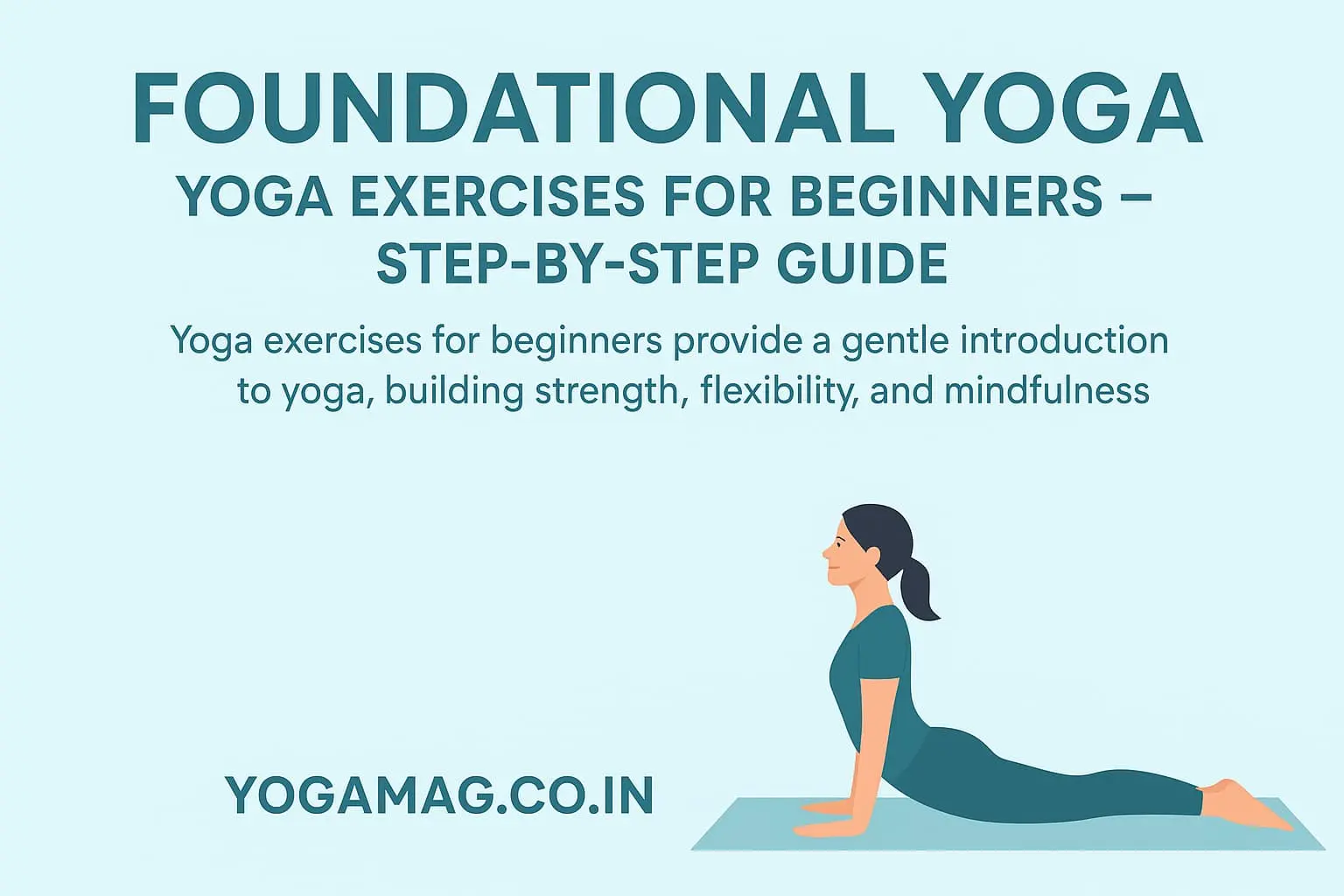
Foundational Yoga: Yoga Exercises for Beginners – Step-by-Step Guide
Yoga has become one of the most popular wellness practices in the world. Whether you are looking to improve flexibility, reduce stress, strengthen your body, or find inner balance, foundational yoga is the perfect place to begin. For beginners, starting with the right yoga exercises ensures safety, builds confidence, and sets a strong base for future practice.

What is Foundational Yoga?
Foundational yoga refers to the basic yoga poses and practices that introduce new students to the principles of yoga. These exercises focus on:
- Breath awareness (Pranayama)
- Simple yoga postures (Asanas)
- Mind-body connection
- Relaxation and meditation
Instead of rushing into advanced poses, foundational yoga emphasizes gentle, step-by-step progression, making it suitable for all ages and fitness levels.
Benefits of Foundational Yoga for Beginners
Starting with foundational yoga offers numerous physical, mental, and emotional benefits:
1. Physical Benefits
- Improves flexibility and mobility
- Strengthens muscles and joints
- Enhances posture and balance
- Supports healthy weight management
2. Mental Benefits
- Reduces stress and anxiety
- Improves focus and concentration
- Promotes relaxation and better sleep
3. Emotional Benefits
- Encourages mindfulness and self-awareness
- Boosts self-confidence
- Creates a sense of inner peace
These benefits show why yoga exercises for beginners are more than just workouts – they’re a holistic practice for overall well-being.
Step-by-Step Guide to Yoga Exercises for Beginners
Let’s explore the most important foundational yoga poses (asanas) that every beginner should learn.
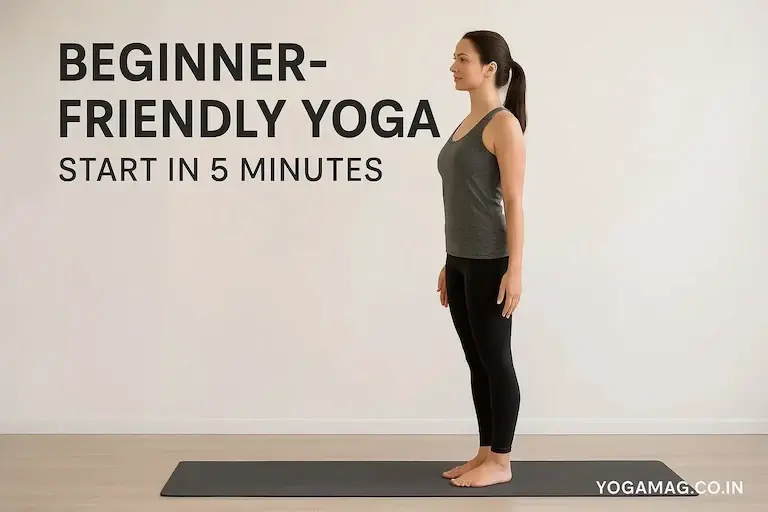
1. Mountain Pose (Tadasana)
How to Do It:
- Stand tall with feet hip-width apart.
- Ground your feet firmly into the floor.
- Engage your thighs, lengthen your spine, and relax your shoulders.
- Keep arms by your side or palms together at your chest.
- Breathe deeply for 5–10 breaths.
Benefits:
- Improves posture
- Enhances body awareness
- Strengthens legs and core
2. Downward Facing Dog (Adho Mukha Svanasana)
How to Do It:
- Start on hands and knees in a tabletop position.
- Spread fingers wide and press hands firmly into the mat.
- Lift hips upward, straightening legs gradually.
- Keep head between arms and heels reaching toward the ground.
- Hold for 5–7 breaths.
Benefits:
- Stretches hamstrings and calves
- Strengthens arms and shoulders
- Energizes the body
3. Child’s Pose (Balasana)
How to Do It:
- Kneel on the mat with toes together and knees apart.
- Sit back onto heels.
- Extend arms forward, resting forehead on the mat.
- Breathe deeply and relax.
Benefits:
- Calms the mind
- Relieves back and neck tension
- Promotes deep relaxation
4. Cat-Cow Pose (Marjaryasana-Bitilasana)
How to Do It:
- Begin on hands and knees in a tabletop position.
- Inhale, arch back (Cow Pose), lifting head and tailbone.
- Exhale, round spine (Cat Pose), tucking chin to chest.
- Continue for 5–10 rounds.
Benefits:
- Increases spinal flexibility
- Relieves stress and fatigue
- Improves circulation
5. Warrior I (Virabhadrasana I)
How to Do It:
- Stand in Mountain Pose.
- Step one foot back about 3–4 feet.
- Bend front knee while keeping back leg straight.
- Raise arms overhead, palms facing inward.
- Hold for 5 breaths, then switch sides.
Benefits:
- Builds strength in legs and arms
- Improves balance and stamina
- Opens hips and chest
6. Warrior II (Virabhadrasana II)
How to Do It:
- From Warrior I, open hips sideways.
- Stretch arms parallel to the floor.
- Keep gaze forward over front hand.
- Hold for 5–7 breaths, then switch sides.
Benefits:
- Strengthens legs and shoulders
- Improves stability
- Enhances focus
7. Tree Pose (Vrikshasana)
How to Do It:
- Stand tall in Mountain Pose.
- Shift weight onto one leg.
- Place opposite foot on inner thigh or calf (not knee).
- Bring palms together at the chest or overhead.
- Hold for 5 breaths, then switch sides.
Benefits:
- Improves balance and focus
- Strengthens legs and core
- Builds confidence
8. Bridge Pose (Setu Bandhasana)
How to Do It:
- Lie on your back with knees bent and feet hip-width apart.
- Press feet and arms into the floor.
- Lift hips toward the ceiling.
- Hold for 5–10 breaths, then lower gently.
Benefits:
- Strengthens back, glutes, and thighs
- Opens chest and shoulders
- Reduces stress and anxiety
9. Corpse Pose (Savasana)
How to Do It:
- Lie flat on your back with arms at sides.
- Close eyes and relax entire body.
- Breathe naturally for 5–10 minutes.
Benefits:
- Promotes deep relaxation
- Restores energy
- Integrates benefits of practice
Foundational Breathing Exercise: Pranayama for Beginners
Breathwork is a key part of yoga. One simple practice is Three-Part Breathing (Dirga Pranayama).
Steps:
- Sit comfortably with a straight spine.
- Inhale deeply into your belly, ribs, and chest.
- Exhale slowly in reverse order.
- Repeat for 5–10 rounds.
Benefits:
- Reduces anxiety
- Increases lung capacity
- Improves focus and mindfulness
Beginner-Friendly Yoga Sequence (10–15 Minutes)
If you’re new to yoga, here’s a short daily routine to get started:
- Mountain Pose – 1 minute
- Cat-Cow – 1 minute
- Downward Dog – 1 minute
- Warrior I & II – 2 minutes each side
- Tree Pose – 1 minute each side
- Child’s Pose – 2 minutes
- Bridge Pose – 2 minutes
- Savasana – 5 minutes
This sequence combines strength, flexibility, balance, and relaxation, making it the perfect yoga exercise for beginners.
Tips for Beginners Practicing Yoga at Home
- Start slow: 10–15 minutes a day is enough in the beginning.
- Focus on breath: Proper breathing enhances the benefits of every posture.
- Listen to your body: Never force a pose. Modify if needed.
- Use props: Yoga blocks, straps, or cushions can support flexibility.
- Be consistent: Progress comes with regular practice, not intensity.
Common Mistakes Beginners Should Avoid
- Holding breath during poses
- Comparing progress with others
- Overstretching and risking injury
- Skipping relaxation (Savasana)
- Expecting instant results
Remember, yoga is a journey of self-discovery, not competition.
Conclusion: Begin Your Yoga Journey Today
Foundational yoga lays the groundwork for a lifetime of practice. By mastering these beginner yoga exercises, you will not only improve physical health but also experience greater mental clarity and emotional balance.
Whether your goal is fitness, stress relief, or spiritual growth, starting with these simple postures will give you the confidence to progress further.
So, roll out your mat, take a deep breath, and begin your journey with foundational yoga today.

Download the infographic
Frequently Asked Questions
Popular posts
- 🧘♂️ 10 Best Free Meditation Apps to Reduce Stress and Anxi...
- 20 notable yogis and spiritual practitioners who lived more...
- Yoga Poses for Flexibility and Strength: Build a Balanced, S...
- Tantra Yoga for Beginners - A Complete Guide
- Easy Starting Yoga Poses for Daily Routine: Beginner-Friendl...
- Yoga Poses to Prepare Your Body for Stillness in Meditation
Related posts




0 Comments
Subscribe to our mailing list!

No comments yet. Be the first to comment!