

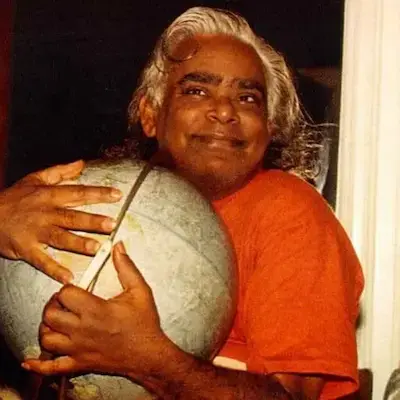
Swami Vishnudevananda
Hindu Monk
Yoga master, peace activist, author, teacher
About Swami Vishnudevananda
Swami Vishnudevananda – Disciple of Swami Sivananda and Founder of Sivananda Yoga Vedanta Centers
Swami Vishnudevananda Saraswati was a towering figure in the modern yoga movement. As a direct disciple of Swami Sivananda of Rishikesh, he carried his master's spiritual legacy to the West, pioneering the spread of classical yoga worldwide. Here is a pointwise exploration of his life, mission, and legacy.
1. Early Life and Background
- Swami Vishnudevananda was born in 1927 in Kerala, South India.
- His birth name was Kuttan Nair, and he showed signs of spiritual inclination from a young age.
- He was drawn to philosophy and the ancient scriptures of India early in life.
- His destiny changed when he came across a leaflet by Swami Sivananda that read: An ounce of practice is worth tons of theory.
2. Meeting Swami Sivananda
- Inspired by the leaflet, he traveled to Rishikesh and joined the Divine Life Society, founded by Swami Sivananda.
- Swami Sivananda immediately recognized the potential in the young seeker and welcomed him.
- Kuttan Nair was initiated into the monastic order and given the name Swami Vishnudevananda Saraswati.
- Under Swami Sivananda’s mentorship, he underwent rigorous training in yoga, Vedanta, and selfless service (seva).
3. Discipleship and Learning
- Swami Vishnudevananda spent about 10 years at the Sivananda Ashram in Rishikesh.
- He mastered the five points of yoga: proper exercise (asanas), proper breathing (pranayama), proper relaxation (savasana), proper diet (vegetarian), and positive thinking and meditation (Vedanta and Dhyana).
- He served as a Hatha Yoga instructor, training thousands of aspirants, both Indian and foreign.
- Swami Sivananda, seeing his disciple's capacity to teach and organize, gave him the mission to spread yoga to the West.
4. Journey to the West
- In 1957, Swami Sivananda sent Swami Vishnudevananda to the West with a one-way ticket and his blessings.
- He arrived in North America during a time when yoga was still relatively unknown in the mainstream.
- Swamiji overcame cultural and linguistic barriers to begin teaching the ancient science of yoga to Western audiences.
5. Founding of Sivananda Yoga Vedanta Centers
- In 1959, he established the first Sivananda Yoga Vedanta Center in Montreal, Canada.
- Over time, he founded more centers across North and South America, Europe, Asia, and Africa.
- The centers emphasize a holistic approach to yoga, rooted in Swami Sivananda’s teachings.
- His organization grew into the International Sivananda Yoga Vedanta Centres (ISYVC) – now a global network of ashrams and centers.
6. Creation of the Sivananda Yoga Teacher Training Course (TTC)
- Swami Vishnudevananda created one of the first structured Yoga Teacher Training Courses (TTC) in the West in 1969.
- The program trained thousands of yoga teachers, many of whom went on to establish their own centers.
- His TTC continues to be one of the most widely respected and attended yoga certification programs globally.
7. The Five Points of Yoga
Swami Vishnudevananda systematized yoga into five principles:
- Proper Exercise (Asanas) – promotes flexibility and vitality.
- Proper Breathing (Pranayama) – enhances energy and mental clarity.
- Proper Relaxation (Savasana) – relieves stress and promotes peace.
- Proper Diet (Vegetarian) – supports health and spiritual growth.
- Positive Thinking and Meditation – fosters mental discipline and inner harmony.
8. Message of Peace – The “Flying Swami”
- Swami Vishnudevananda became known as the “Flying Swami” due to his unique peace missions.
- He flew a small airplane over various conflict zones, dropping leaflets promoting peace.
- His peace flights took him over Belfast, the Berlin Wall, Israel-Egypt border, and India-Pakistan border, among others.
- He firmly believed that peace begins with the individual, and inner transformation leads to world peace.
9. Books and Teachings
- Swamiji was also an author who wrote several influential books:
- The Complete Illustrated Book of Yoga – A foundational text for modern yoga practitioners.
- Meditation and Mantras – A detailed guide to spiritual practices and yogic philosophy.
- Karma and Disease – Exploring the connection between karmic law and physical health.
- His teachings combined practical yogic techniques with deep spiritual wisdom.
10. Philosophy and Influence
- Swami Vishnudevananda's philosophy was rooted in Vedanta and the teachings of the Bhagavad Gita.
- He stressed discipline, selfless service, and devotion to truth.
- His approach was non-sectarian, welcoming people of all faiths and backgrounds.
- He believed in experiential learning – one must practice yoga to truly understand it.
11. Ashrams and Global Impact
- He established multiple ashrams around the world, including in:
- Val Morin, Quebec (Sivananda Headquarters in North America)
- Neyyar Dam, Kerala, India
- Woodbourne, New York
- Orleans, France
- These ashrams became spiritual sanctuaries for intensive practice, learning, and self-discovery.
- His legacy lives on through the thousands of teachers and millions of students who continue his work.
12. Final Years and Mahasamadhi
- Swami Vishnudevananda continued teaching, traveling, and guiding disciples until his last breath.
- He attained mahasamadhi (conscious departure from the body) on November 9, 1993, in India.
- He was cremated at the Sivananda Ashram in Neyyar Dam, Kerala.
13. Lasting Legacy
- Swami Vishnudevananda’s legacy continues through the International Sivananda Yoga Vedanta Centres.
- His structured yoga training programs and peace missions inspired countless lives.
- Today, his teachings bridge East and West, ancient wisdom and modern need, and personal transformation and global peace.
Conclusion
Swami Vishnudevananda was more than a yoga teacher—he was a spiritual warrior, a global peace advocate, and a pioneer of classical yoga in the modern world. Through his teachings, institutions, and boundless energy, he laid the foundation for what yoga is today in the West. His life exemplifies the power of one individual’s commitment to truth, discipline, and love to impact the world profoundly.
Profile Information
in Kerala, India (exact village: Irinjalakuda in Thrissur District, Kerala)
Top profiles
Ram Dass
Professor
Psychologist, Professor, Spiritual Teacher, Author, Lecturer

Jessamyn Stanley
Yoga Teacher
Yogi, Author, Advocate, Influencer
Swami Rama
Yoga Teacher
Yoga Teacher, Author
Sri Aurobindo
Indian yogi
Indian yogi, maharishi, and Indian nationalist.
Richard Freeman
Yoga Teacher
Yoga Teacher, Author
Mata Amritanandamayi
Spiritual Leader
Saint, Humanitarian, Guru
Related Profiles
Swami Shivananda Saraswati
Hindu Monk
Indian yogi, mystic, and founder of Divine Life Society.
Swami Vivekananda
Hindu Monk
Indian Hindu monk, philosopher, author, spiritual teacher, and the chief discipl...
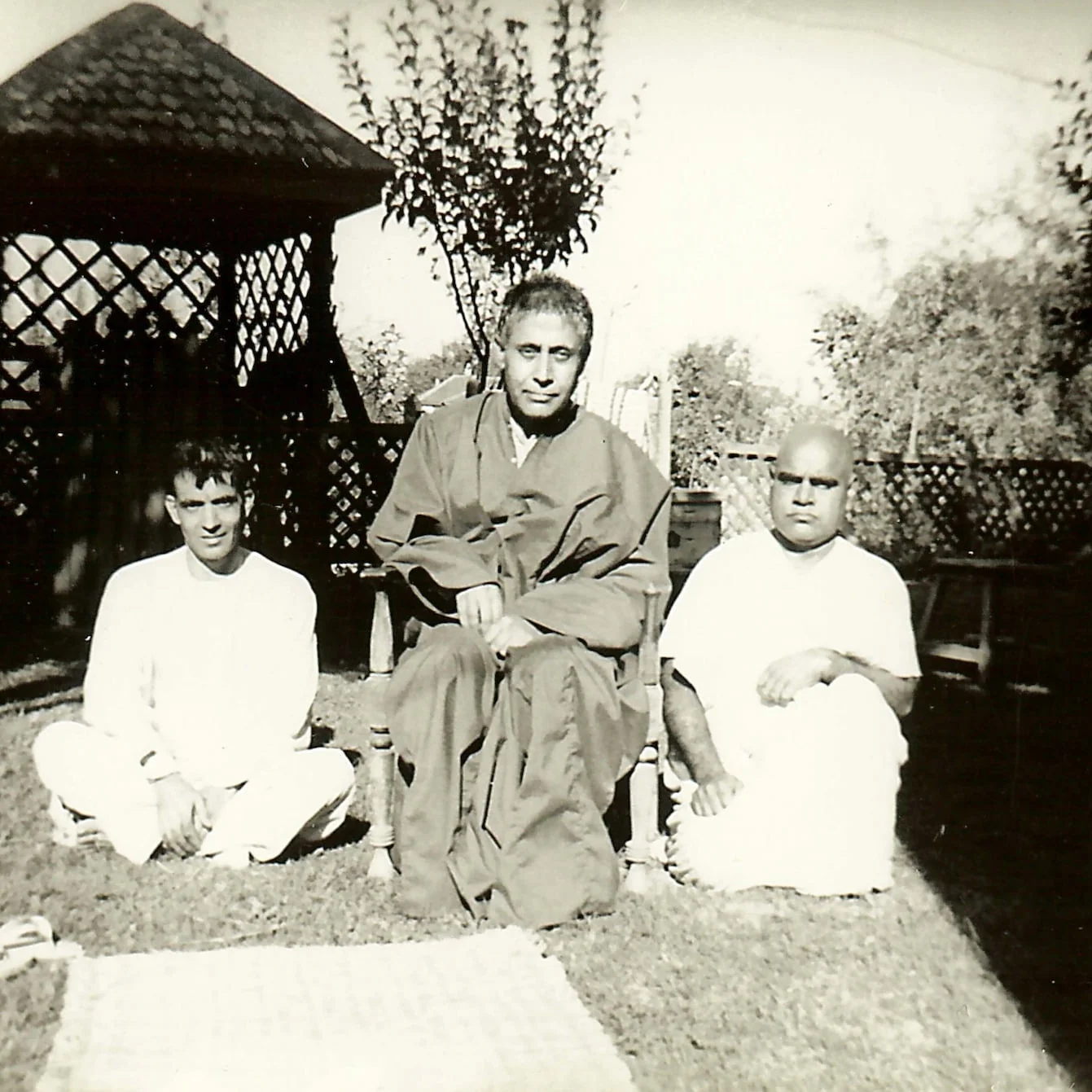
Swami Lakshmanjoo
Hindu Monk
Kashmiri Shaivism scholar, yogi, mystic, teacher
Satyananda Saraswati
Hindu Monk
Swami, Yogi, Teacher