

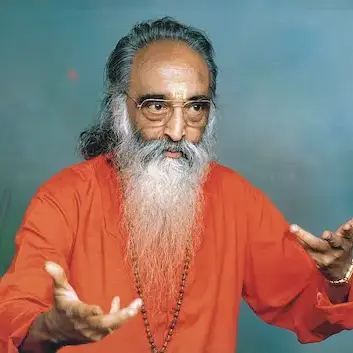
Swami Chinmayananda
Hindu Monk
Spiritual Master, Vedanta Teacher, Visionary Leader, Chinmaya Mission Founder
About Swami Chinmayananda
Swami Chinmayananda: The Torchbearer of Vedantic Wisdom
Swami Chinmayananda is one of the most revered spiritual luminaries of modern India. His life, teachings, and legacy have transformed the global understanding of Advaita Vedanta and made ancient Hindu scriptures accessible to modern audiences.
Below is a comprehensive, pointwise look into his life, philosophy, and contributions.
1. Early Life and Education
- Swami Chinmayananda was born as Balakrishna Menon on May 8, 1916, in Ernakulam, Kerala, India.
- He hailed from a traditional aristocratic Nair family.
- He was an inquisitive and bright student who pursued English literature and law at Lucknow University.
- During his college years, he developed a strong sense of nationalism and was drawn to India's freedom struggle.
2. Role in the Indian Freedom Movement
- He briefly joined the Indian independence movement and worked with journalism to support nationalist causes.
- He wrote for The National Herald, a paper aligned with the Indian National Congress.
- His nationalistic fervor eventually led to his arrest by British authorities.
3. Spiritual Quest Begins
- Balakrishna Menon was initially skeptical of religious orthodoxy and spiritual leaders.
- To investigate what he thought were superstitious practices, he visited Swami Sivananda in Rishikesh.
- That experience was transformative. He realized the depth of Vedantic wisdom and chose to pursue a spiritual path.
4. Initiation into Sannyasa
- In 1949, he was initiated into the monastic order by Swami Sivananda and given the name Swami Chinmayananda Saraswati.
- He later studied under Swami Tapovan Maharaj in Uttarkashi, a highly revered Vedantic scholar.
- Under his guru’s guidance, he underwent intense scriptural study and yogic discipline for several years.
5. Mission to Spread Vedanta
- Swami Chinmayananda felt that the wisdom of the Upanishads and Bhagavad Gita was not reaching the common man.
- In 1951, he left the Himalayas and began his mission to disseminate spiritual knowledge to the masses.
- He wanted to demystify Vedanta and remove the gap between sacred knowledge and modern life.
6. First Jnana Yajna
- His first series of public discourses, called Jnana Yajna (sacrifice of knowledge), was held in Pune in 1951.
- The lectures were based on the Bhagavad Gita and delivered in English—a bold move to engage the educated class.
- These talks drew huge crowds and ignited a spiritual awakening, especially among urban Indians.
7. Establishment of Chinmaya Mission
- In 1953, Swami Chinmayananda founded the Chinmaya Mission to provide an organized platform for teaching and service.
- The mission operates with the motto “To give maximum happiness to the maximum number for the maximum time.”
- Today, it has hundreds of centers globally, promoting Vedantic study, community service, and value-based education.
8. Unique Teaching Style
- Swami Chinmayananda had a dynamic, charismatic, and humorous style of teaching.
- He used English and simple analogies to explain complex Sanskrit scriptures.
- He emphasized self-effort, clarity of thought, and application of knowledge in daily life.
- His logical, rational approach made Vedanta appealing to youth and intellectuals.
9. Scriptural Commentary and Publications
- Authored more than 95 books on Vedanta, including commentaries on:
- Bhagavad Gita
- Upanishads
- Yoga Vasistha
- Patanjali Yoga Sutras
- His most famous commentary is on the Bhagavad Gita, which is widely read and studied today.
- He also founded the Chinmaya Publications Trust, which continues to publish spiritual literature globally.
10. Chinmaya Vidyalayas and Educational Initiatives
- Understanding the importance of early value-based education, he initiated a network of Chinmaya Vidyalayas (schools).
- These institutions integrate academic excellence with Indian cultural and ethical values.
- Today, over 100 schools, several colleges, and a university function under the Chinmaya banner.
11. Global Impact
- Swami Chinmayananda was among the first modern spiritual teachers to take Vedanta to the West.
- He conducted discourses in the USA, UK, Australia, South Africa, and the Middle East.
- He built a global following that transcended race, religion, and geography.
12. Vision for Youth and Society
- He founded the Chinmaya Yuva Kendra (CHYK) to channel youth energy into spiritual and societal transformation.
- Also initiated Seva programs including hospitals, rural development, orphanages, and disaster relief.
- Believed in "Spirituality in action"—that the highest worship is serving others.
13. Reviving Hindu Culture
- Aimed to counter the colonial narrative that Hindu scriptures were outdated or impractical.
- Emphasized that Vedanta is timeless, universal, and scientific.
- Encouraged pride in India's spiritual heritage, not in a dogmatic way, but through deep understanding.
14. Final Days and Mahasamadhi
- Swami Chinmayananda attained Mahasamadhi (conscious exit from the body) on August 3, 1993, in San Diego, California.
- His last words were: “If I rest, I rust.” These encapsulate his tireless commitment to the mission.
15. Legacy and Continuing Mission
- His disciple Swami Tejomayananda and now Swami Swaroopananda carry forward his work.
- The Chinmaya International Foundation, Chinmaya University, and numerous social service initiatives continue to flourish.
- His work has inspired generations of seekers, students, and spiritual teachers.
Conclusion: A Modern Sage for All Times
Swami Chinmayananda's greatest gift was the ability to translate the eternal truths of Vedanta into the language of modern life. Whether you are a student, a professional, a homemaker, or a retiree, his teachings provide clarity, purpose, and peace.
His life reminds us that true spirituality is not escapism, but engagement—with ourselves, with our duties, and with the world—based on the profound wisdom of the Self.
Profile Information
in Ernakulam, Kerala, India
Top profiles
Ram Dass
Professor
Psychologist, Professor, Spiritual Teacher, Author, Lecturer

Jessamyn Stanley
Yoga Teacher
Yogi, Author, Advocate, Influencer
Swami Rama
Yoga Teacher
Yoga Teacher, Author
Sri Aurobindo
Indian yogi
Indian yogi, maharishi, and Indian nationalist.
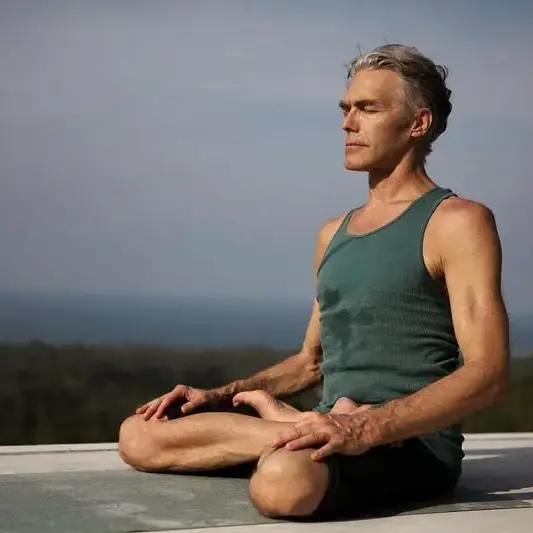
Richard Freeman
Yoga Teacher
Yoga Teacher, Author
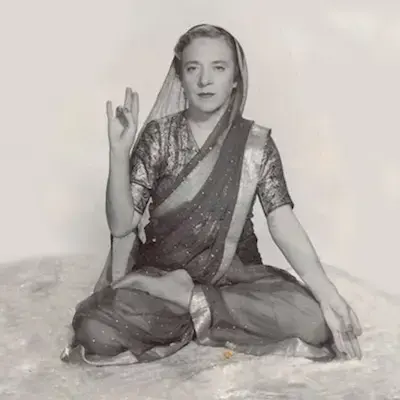
Indra Devi
Yoga Teacher
Yoga Teacher, First Lady of Yoga
Related Profiles
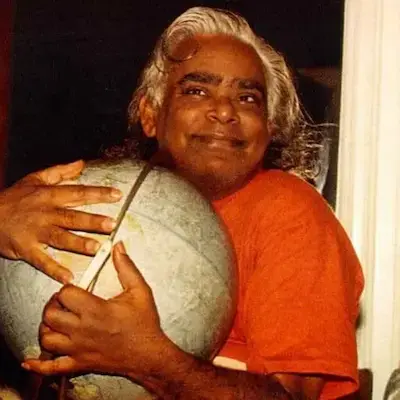
Swami Vishnudevananda
Hindu Monk
Yoga master, peace activist, author, teacher
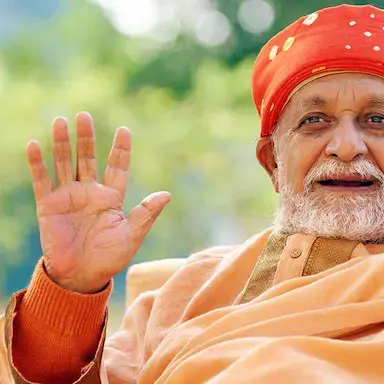
Satyananda Saraswati
Hindu Monk
Swami, Yogi, Teacher
Swami Lakshmanjoo
Hindu Monk
Kashmiri Shaivism scholar, yogi, mystic, teacher
Swami Shivananda Saraswati
Hindu Monk
Indian yogi, mystic, and founder of Divine Life Society.