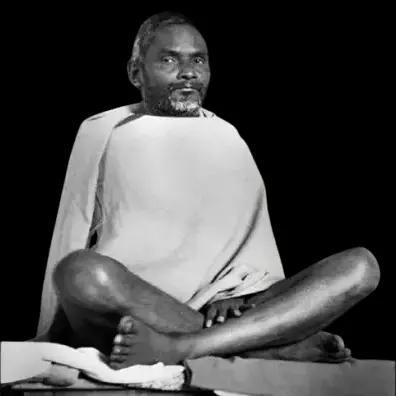
Swami Nityananda of Ganeshpuri
Avadhuta
Mystic, saint, spiritual teacher, healer
About Swami Nityananda of Ganeshpuri
Swami Nityananda of Ganeshpuri – The Silent Saint of Supreme Consciousness
Swami Nityananda of Ganeshpuri is regarded as a spiritually awakened being and a revered master in India’s modern saintly lineage. A mysterious figure who revealed little about his origins, he is known not through biography but through the profound impact of his spiritual presence and teachings. This blog post outlines his life, path, and legacy in a concise pointwise format.
1. Unknown Origins – A Child of Mystery
- Swami Nityananda was reportedly born around 1897, though his exact date and place of birth remain uncertain.
- He is believed to have been found as an abandoned infant and adopted by a devout couple in Kerala.
- Named Raman in childhood, he showed spiritual powers and signs of enlightenment from a young age.
- He wandered extensively through India and the Himalayas in his youth, meditating in forests and caves.
2. Early Spiritual Powers and Austerities
- From childhood, Nityananda displayed miracles and supernatural abilities, such as healing and materializing objects.
- Undertook intense tapasya (austerity) in isolation, practicing deep meditation and self-discipline.
- Known to often sit in samadhi (superconscious trance) for long hours or even days.
3. Arrival in South India and Karnataka
- Spent years in the South Canara region (modern-day Karnataka), especially in towns like Kanhangad and Udipi.
- At Kanhangad, he established the now-famous Nityananda Ashram, including meditation caves for seekers.
- He built schools, wells, roads, and other public services, often mysteriously funding them without soliciting money.
- His seva (selfless service) transformed the lives of thousands, especially the poor.
4. Arrival in Ganeshpuri – The Final Abode
- In the 1930s, Swami Nityananda settled in the small village of Ganeshpuri, near Mumbai.
- The village was then undeveloped, surrounded by hot springs and forest.
- His mere presence began attracting devotees, seekers, and even skeptics.
- Ganeshpuri became a powerful spiritual hub, with Nityananda meditating, blessing, and silently teaching all who came.
5. The Silent Guru
- Swami Nityananda rarely gave formal discourses; his teachings were transmitted silently, through presence.
- He communicated through short phrases, gestures, or silence, conveying deep truths.
- Despite the lack of elaborate teachings, many had transformative spiritual experiences simply by being near him.
- He often said, The heart is the hub of all sacred places. Go there and roam.
6. Miracles and Supernatural Acts
- Known for healing the sick, raising the dead, and manifesting food or objects when needed.
- Controlled nature – storms, snakes, wild animals – reportedly obeyed his command.
- Despite such powers, he lived simply and discouraged attachment to miracles.
7. Disciples and Lineage
- Swami Nityananda did not formally initiate many disciples, but inspired thousands.
- His most prominent disciple was Swami Muktananda, who later founded the Siddha Yoga path.
- Through Muktananda, the teachings and energy of Nityananda spread globally.
8. Teachings and Philosophy
- Though not a philosopher in the traditional sense, his words carried the essence of Advaita (non-dualism).
- Emphasized:
- Seva (selfless service)
- Meditation and silence
- Contentment and simplicity
- Surrender to the inner Guru
- Key sayings include:
- God is not separate from you.
- One who sees me sees the Self.
- Guru is your own Self in a purified form.
9. Bhakti and Devotion of Followers
- Devotees experienced spontaneous bliss and inner awakening in his presence.
- He was often regarded as a living Shiva – silent, compassionate, and all-knowing.
- Many offered paduka puja (worship of his sandals), considering them a symbol of divine grace.
10. Death and Mahasamadhi
- Swami Nityananda took mahasamadhi (conscious exit from the body) on August 8, 1961, at Ganeshpuri.
- He had foretold his departure well in advance.
- His body was interred in a samadhi shrine, which has become a major pilgrimage site.
11. The Samadhi Shrine at Ganeshpuri
- The Nityananda Samadhi Mandir is located at the center of Ganeshpuri.
- Devotees gather there daily for arati, meditation, and chanting.
- The nearby hot springs (Bhoothnath Kund), which Nityananda sanctified, are used by pilgrims for ritual bathing.
- The shrine remains alive with his shakti (spiritual energy) even decades after his passing.
12. Global Influence Through Siddha Yoga
- Swami Muktananda, Nityananda’s successor, founded the Siddha Yoga path in the 1970s.
- This movement introduced millions across the world to kundalini awakening, mantra meditation, and guru-disciple tradition.
- Nityananda’s influence, though subtle, continues through these teachings and lineages.
13. Books and Literature
- Swami Nityananda left behind no formal writings.
- His recorded teachings are compiled in a small collection called The Chidakasha Gita – a series of aphorisms and utterances.
- His biography has been written by devotees, notably:
- Nityananda: In Divine Presence
- He Lived Among Us
14. Legacy and Reverence Today
- Swami Nityananda is venerated across India and abroad as a realized master.
- His life is a symbol of divine mystery, selfless service, and silent wisdom.
- Temples and ashrams dedicated to him exist in India, the U.S., the U.K., and Australia.
- His photograph is often used on altars, regarded as radiating divine presence.
15. Conclusion – A Beacon of Living Consciousness
Swami Nityananda of Ganeshpuri remains a towering spiritual figure whose life defied logic, words, and form. His divine silence, supernatural grace, and unshakable presence continue to uplift those who seek truth. Though he spoke little, his message echoes eternally:
The heart is the true temple. Dwell there in peace.
Profile Information
in Tuneri, Koyilandy, Madras Presidency, British India (now in Kozhikode district, Kerala)
Top profiles
Ram Dass
Professor
Psychologist, Professor, Spiritual Teacher, Author, Lecturer

Jessamyn Stanley
Yoga Teacher
Yogi, Author, Advocate, Influencer
Swami Rama
Yoga Teacher
Yoga Teacher, Author
Sri Aurobindo
Indian yogi
Indian yogi, maharishi, and Indian nationalist.
Richard Freeman
Yoga Teacher
Yoga Teacher, Author
Indra Devi
Yoga Teacher
Yoga Teacher, First Lady of Yoga